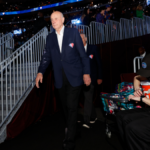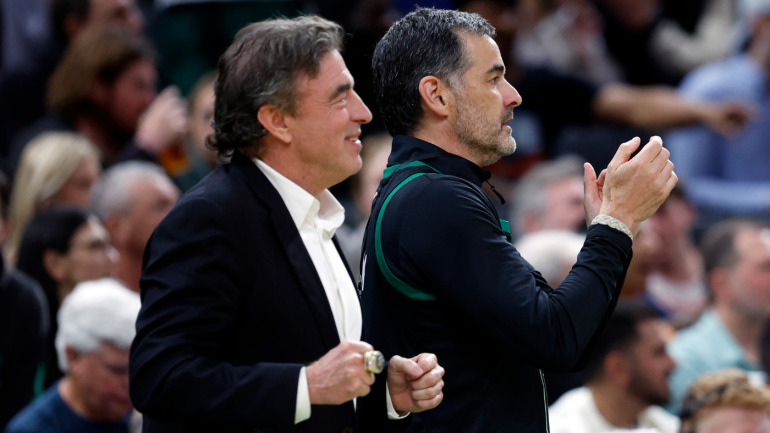
When the information surfaced in March that the Boston Celtics were to be acquired for $6.1 billion by a consortium of financiers headed by Bill Chisholm, the formal announcement also included that Wyc Grousbeck, the then-principal owner, would remain as the leading representative to the NBA until 2028. The understanding was that Grousbeck would continue in his capacity and manage the team’s athletic endeavors until the 2027-28 season to facilitate a smooth transference of power to the incoming ownership entity. However, this has now been adjusted, with reports from ESPN on Tuesday indicating that Grousbeck will no longer serve as the team’s governor and that Chisholm will assume the governor’s role “imminently.”
This represents a substantial modification, though not entirely unexpected, as a similar situation recently unfolded with the Dallas Mavericks. Mark Cuban, the former principal owner of the Mavericks, had repeatedly stated his intention to maintain oversight of the team’s basketball operations even after the sale to Miriam Adelson. Yet, the official announcement made no mention of Cuban’s continued involvement in basketball-related matters. He later verified that he did not, in fact, retain control over basketball operations, a point he emphasized following Dallas’s surprising decision to trade Luka Dončić to the Lakers back in February.
That action was spearheaded by Mavs general manager Nico Harrison and endorsed by Adelson’s son-in-law, Patrick Dumont, who has stepped into the role of team governor. Cuban has expressed on multiple occasions that had he retained decision-making authority, that specific trade would not have transpired.
Although not as drastic as the situation in Dallas, it’s noteworthy that Grousbeck will no longer oversee basketball matters, contrary to the initial declaration. Nevertheless, this is not altogether surprising, considering that new ownership frequently desires to implement their own strategies and make independent choices.
However, the timing of this decision is curious, given the Celtics’ efforts throughout the summer to reduce their payroll to fall below the second luxury-tax threshold, thereby avoiding the stringent penalties associated with being a high-spending team. This was achieved through trades involving Kristaps Porziņģis and Jrue Holiday, as well as the non-renewal of contracts for Luke Kornet and Al Horford. Did the incoming ownership group concur with these decisions? Would they have approached these trades in a different manner? Their support for payroll reduction is evident, especially considering Jayson Tatum’s Achilles injury, which implies the team will be in the play-in tournament next season. Yet, some factor must have influenced Chisholm’s determination that Grousbeck should relinquish his role.
The central question now revolves around Chisholm’s vision for the Celtics’ future. The upcoming season will be affected due to Tatum’s absence. However, will the Celtics aim to regroup and construct another contender around Tatum and Jaylen Brown for the 2027-28 season? Will they contemplate trading either of these players? These are now inquiries for Chisholm to address, and we await further information to ascertain whether Boston shifts direction or modifies its team-building approach under his complete leadership.