Sam Warburton has articulated his endorsement for the potentially divisive proposition of reducing Welsh professional rugby from its current four regions to just two. He contends that the existing structure is unsustainable given the country’s available player pool and financial resources.
During an appearance on The Big Jim Show podcast, hosted by former Scotland lock Jim Hamilton, the former Wales and Lions captain conceded that while not his ideal scenario, the WRU’s suggested course of action seems the most pragmatic way forward for Welsh rugby.
“I’d suggest that many individuals, perhaps unbeknownst to the wider public, might actually support the reduction to two regions. This appears to be the Welsh union’s leading proposal. While there’s opposition, I suspect there’s a silent majority who agree but are hesitant to voice their support, primarily to avoid criticism for backing the idea.
“So, credit to them for taking a stance. If pressed for a quick answer – a simple yes or no – on whether I agree with it, I would say yes. And here’s why,” the former Cardiff captain clarified.
“Is it the perfect solution currently? In my view, yes. Is it my preferred outcome? No. Ideally, I’d want all four current teams to excel in the domestic league, alongside a fifth team in North Wales. That would be the dream, representing all of Wales. However, we’re far from achieving that. We lack the financial stability and player depth to sustain such a model without relying heavily on foreign players, which defeats the purpose.
Fixture
United Rugby Championship

Cardiff Rugby

Lions
“My ideal scenario would involve five teams: the four existing entities and a successful northern RGC side, thriving commercially and on the field, akin to what Wrexham football has accomplished. But is that feasible now? No. The most practical solution at the moment is likely condensing into two teams – both from a financial and player resource perspective.
“The difficulty people have in envisioning this is because the tier below is currently far from adequate. However, I’ve always drawn inspiration from New Zealand. Their NPC – the equivalent of Taranaki against North Harbour, Wellington, Auckland – serves as an exceptional proving ground for players stepping up to Super Rugby. The two-team model could succeed, but it requires revitalizing what’s known as the Super Rugby Cymru, the teams beneath.
“We’d need to bring back Neath, bring back Pontypridd. These are significant brands in Welsh rugby, deeply rooted in passionate communities. We need a ten-team league. Any player not selected for Wales would participate in that league. Coaching standards would improve, facilities would be upgraded, and investments would pour in. These teams could then draw crowds of three or four thousand, surpassing the attendance of some regional matches currently. This would revive the tribal spirit that is a strength of Welsh rugby.
“If we can elevate it to that standard, it’ll be viable. I recall visiting New Zealand; it’s a different context, but we played against a team from their NPC, which would be our Super Rugby Cymru, and I was astonished by the level. That should be our benchmark. If we can bring our Super Rugby Cymru – Newports, Pontys, Cardiffs, Neaths, Llanellis, Bridgends, a team from North Wales, the biggest rugby cities and towns historically – up to that caliber, then the two-team model can function.
“As for the composition of those two teams, I’m uncertain. East and West? Mergers? I honestly don’t know. However, I believe that if one of those teams is competing in a Champions Cup semi-final against Toulouse, with Dupont in town, people will tune in. Success on the field will generate success off it.
“So, is it the ideal solution now? Yes. Is it what everyone desires? No. The WRU would prefer all four teams to be flourishing, perhaps even adding another. But unfortunately, we’re not in that position, which necessitates making a difficult decision. One doesn’t need to be a business expert to see that.”
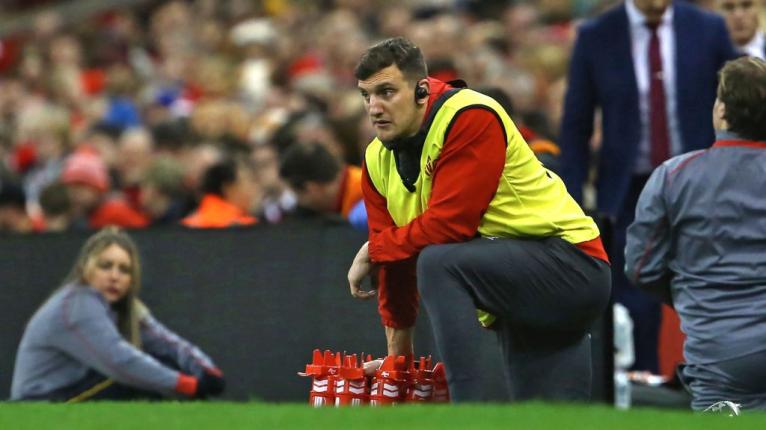
Hamilton, the discussion’s host, concurred that the existing state of affairs was unsustainable, making challenging choices inevitable.
“We can discuss it because it’s self-evident,” Hamilton stated. “The stadiums are sparsely populated. Examining the pathway for emerging players reveals a struggle. So, I view it as a positive step.
“The irony is that the decision-making is being carried out by three English individuals. I say that somewhat humorously, but it must be an uncomfortable position for them. They are currently navigating a difficult situation, but there appears to be no alternative.”
Warburton also posited that Wales simply lacks the rugby-playing population required to sustain the current number of teams.
“I was presented with some data – I can’t recall the exact figures – but the gist was that when comparing the number of registered rugby players in England, France, and South Africa to that of Wales, proportionally, Wales should only have about one team. Wales has significantly more teams relative to its registered player base than any of the other leading rugby nations.
“If Wales had a larger pool of players, it could potentially support four teams. But it doesn’t. The talent is spread too thinly. Scotland faced a similar predicament and had to reduce to two teams. Wales does not possess the same player resources as France, South Africa, or England. Economically, Wales is not the wealthiest nation, making commercial viability for these entities even more challenging.
“That’s why difficult decisions are being made. Communities will be negatively impacted, but I believe that any fallout at the top two levels could be mitigated by significantly enhancing the Super Rugby Cymru, which is what the communities deserve.”
Hamilton expressed that the grassroots community game in Wales had been allowed to decline.
“The focus on the community aspect is where things went wrong. The heart and soul of Welsh rugby resided in Neath and Bridgend. I also include Pontypridd – when I was younger, visiting there felt like experiencing the very essence of Welsh rugby,” said the 63-cap Scotland international.
“Scotland reduced to two teams. I visited Melrose recently – and there’s a strong sense of community there. I’m unsure how they achieve it, but they have a semi-professional league in place. A full commitment is needed to that semi-pro level, as that’s where the majority of players are, that’s where the numbers lie, that’s where the tribalism is.
“There needs to be a cup competition that galvanizes the community, sparking renewed interest in rugby. That will be the difficult part, because when people are lost – and with the rise of Wrexham and football – it will be challenging to win them back. But I think it’s possible. I believe there’s still a spark of passion.”