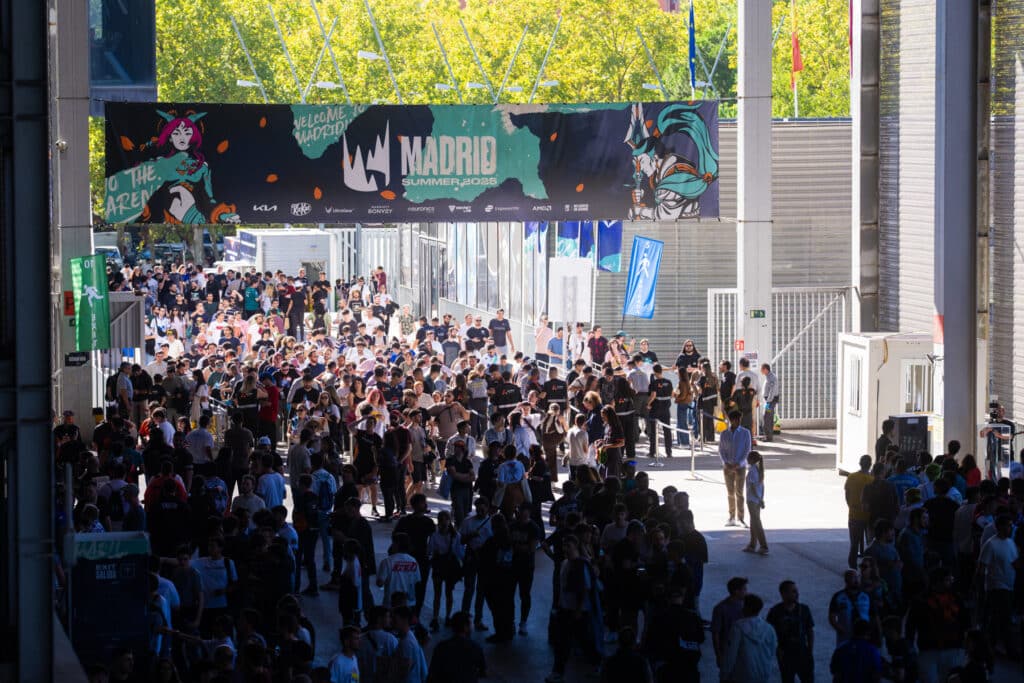
The city of Madrid played host to a multitude of esports enthusiasts during the summer of 2025, coinciding with the League of Legends European Championship Summer Finals. The event underscored the city’s capability to accommodate significant global gaming competitions.
The competition assembled the best European teams and shone a light on Madrid’s attempts to foster a regional infrastructure for both esports and the broader realm of video games.
- 10 Years of LEC Finals: fan memories from 2015 and stories of 2025
- G2 Esports’ Caps highlights competitive year following LEC Summer Finals win
- Riot bids farewell to the LTA as LCS and CBLOL return in 2026
The Summer Finals featured Movistar KOI, a Spanish team, as they faced G2 Esports. In the end, G2 secured a decisive 3-0 victory, ending the tournament before a subdued local audience.
Thousands of fans, hailing from across Spain and the larger EMEA region, journeyed to Madrid for the culminating matches, populating the Caja Magica venue and injecting capital into the local businesses. Riot Games reported that more than 17,000 attendees were present. The LEC Finals showcased the rising enthusiasm for esports in Spain and presented the city with global exposure while improving its position as a host for major competitive gaming events.
Beyond the contests within the arena, the LEC XPO took place at Plaza de España, offering an interactive experience designed for League of Legends players as well as all varieties of gamers. The XPO presented a range of activities, panel discussions, and game demonstrations, drawing in both devoted enthusiasts and casual tourists, linking them to the city’s gaming-related resources.
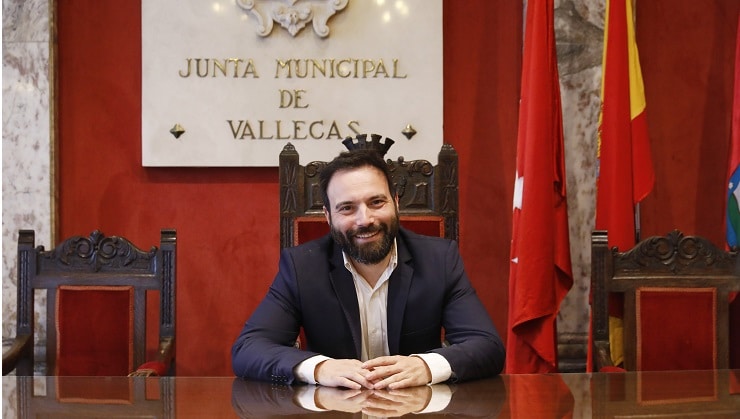
Speaking to Esports Insider, Ángel Niño, a City Councillor for Innovation and Entrepreneurship in Madrid, shared the city administration’s stance on hosting high-profile esports competitions.
He highlighted initiatives like the LEC Finals and “Madrid en Game” which aim to integrate gaming into the city’s economic and cultural fabric, by appealing to talent and stimulating investment.
Madrid Aims to Become a Hub for Esports and Video Games
The city has a vision of gaming and esports embodied in the initiative “Madrid en Game,” which Niño characterizes as an extensive program designed to advance the gaming field.
“‘Madrid en Game’ is the City Council’s effort to attract the gaming world to Madrid,” he stated.
“It is made up of a three-pavilion campus; one for promoting the industry, another where people can engage with esports for free, and a third that is designed to draw in, provide assistance to, and develop both startup companies and video game studios within the city.”
By creating accessible arenas, launching startup support programs, and putting on high-profile events, the city intends to foster both local and international talent. Putting on international competitions is a key element of the strategy for enhancing Madrid’s profile within the technology, gaming, and esports spheres — with the goal to solidify the city’s standing, as Niño mentioned.
These actions are envisioned to form a viable setting where players, teams, and studios can collectively develop in the same local environment.
“If you have local players, they become local role models, and that in turn creates more players and teams. The same applies to video game studios. We are in the early phases of establishing a strong ecosystem, but this journey has only been ongoing for a couple of years. Our aim is to create that ecosystem from the ground up,” he explained.
Despite these actions and investments, Spain is encountering common difficulties shared by other countries hoping to grow a regional gaming community, primarily concerning the absence of formal recognition and regulation for the sector.
Challenges of Regulating and Recognising Esports in Spain
Spain is like other countries that do not have clear-cut rules for esports, which has legal consequences for anyone running a tournament, organization, or team. Without a solid legal basis, local talents may not grow or improve as quickly as they could.
“In Spain, the problem is that there’s no specific regulation for esports players,” Niño explained.
“Right now that implies the regulations are equal to those for other professional sports players. As a result, many esports athletes do not reside in Spain because they are subjected to higher taxes if they reside in the country for more than 180 days. It may be more advantageous to reside in Turkey or Estonia, for instance.”
The gaming sector does not benefit from the same incentives as other creative industries. Niño mentioned that the film sector in Spain has “tax benefits specifically for cinema.” The councilman said that the lack of regulations and incentives for gaming and esports sectors “needs to be corrected,” to foster growth.
Advocating for recognition is challenging because lawmakers do not consider gaming a high priority, even though it has “huge” numbers, according to Niño.
He stated that the LEC Finals in Madrid demonstrate the benefits of mixing international esports events, public activities, and initiatives. It could be an example for cities that want to grow gaming ecosystems, showing that investments and events can help talent grow and gain international attention.
The post Madrid councilman discusses the impact of LEC Summer Finals on the city appeared first on Esports Insider.