Life presents unique experiences, moments of unparalleled significance. Witnessing your child’s initial smile, listening to Pink Floyd’s timeless ‘Shine on You Crazy Diamond,’ or securing the crucial score that propels your team into the Rugby World Cup are among these unforgettable instances.
Interestingly, Santiago Videla experienced the latter not just once, but twice. After delivering the decisive penalty kick that triumphed over the USA, granting Chile its inaugural World Cup entry three years prior, he replicated his feat by slotting the conversion that guaranteed Los Condores consecutive appearances in the prestigious competition this month.
This wasn’t a stroke of luck. The adaptable back has played a pivotal role in several of Chile’s most remarkable accomplishments and milestones, and he holds the position of second-highest points scorer among the world’s leading 20 nations this year. In fact, within that elite group, no one has amassed more points through kicks than this accomplished Chilean.
Videla’s involvement with rugby truly gained momentum in 2015. During that period, his time was split between rugby and various other sports, and his path might have taken a different direction were it not for the intervention of the Saavedra twins, Clemente and Domingo, both Chilean internationals.
“I wasn’t anticipating a call-up for the U20s, especially with a minimum of 45 players vying for squad inclusion, and I wasn’t even on the preliminary selection list,” recalls Videla, who currently represents Miami Sharks. “However, Domingo and Clemente Saavedra engaged in a discussion with the head coach, Bernard Charreyre. Their advocacy was so persuasive that I received an invitation to participate in the training sessions and demonstrate my capabilities. It was a transformative moment in my life.”
From that moment onward, Videla committed himself to the pursuit of becoming his nation’s foremost rugby player. Following his contributions to the Sudamericano U20, he became a key figure in the national youth setup. Eventually, he earned a call-up to the senior squad in 2016, making his debut the following year in a Test match against Kenya.
Despite his current recognition as one of the premier centres in the Emerging Nations scene, Videla’s initial appearance saw him sporting the number 10 jersey, and he also had spells at both wing and full-back positions.
“I am fairly certain that I have played at least once in every position across the backline,” remarks the 27-year-old. “It provided me with opportunities to enhance my overall game, but there were also challenging moments, especially when I was deployed on the wing. While it wasn’t my preferred role, my primary focus was on supporting the team, so I dedicated myself fully during my time as a 14.”
Rugby was mainly a sport found in schools connected to English people living abroad. It wasn’t about being an elite sport; it simply wasn’t originally from here.
Videla’s early experiences as a senior player occurred during a transitional phase for rugby in Chile. Although they are now capturing attention and affection, the Condores had to navigate their share of adversity, enduring difficult periods marked by infrequent victories.
“When I was first introduced to rugby, the number of people playing it was relatively small,” Videla explains. “Rugby was mainly a sport found in schools connected to English people living abroad. It wasn’t about being an elite sport; it simply wasn’t originally from here. However, its status has undergone a complete shift and is progressively becoming a more widely accepted sport. The presence of 20,000 fans cheering us on at Estadio Sausalito demonstrates how the entire nation now embraces rugby.”
Gradually, Chile initiated a transformation, securing a few Test match wins and posing challenges for their South American counterparts, such as Uruguay. The qualification for the 2023 World Cup served as a turning point for them, as Videla himself confirms.
“That World Cup participation brought us into the public eye, drawing increased attention from fans, including those not traditionally involved in rugby. I grew up witnessing Chile’s men’s football team triumph in the Copa América and qualify for the World Cup; today, we have youngsters growing up watching Chile’s men’s rugby team secure their spot in the World Cup, and that will undoubtedly influence participation rates in the years to come.”
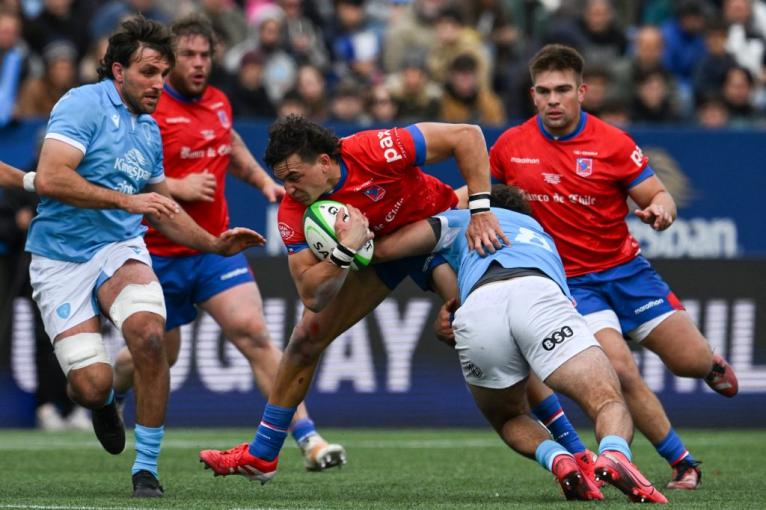
The World Cup qualification wasn’t a spontaneous occurrence; it was the result of significant investments made by the union and clubs, who have heightened their efforts with their sights set on Australia 2027. For Videla, the progression is undeniable, and the possibilities are exciting.
“There’s a collaborative and dedicated effort to elevate rugby’s prominence in Chile. Our infrastructure has seen improvements in both quality and scale. Greater numbers of individuals are participating as players, coaches, volunteers, and administrators at every level, and this positive change has been felt throughout the entire nation. Our goal is to earn and secure the respect of the global rugby community, and I am confident that surpassing even Uruguay is within our grasp.”
At the core of these developments is Pablo Lemoine. In Videla’s perspective, the head coach has been crucial in realizing Chile’s potential and strengthening their rugby infrastructure and resources.
“Pablo Lemoine has had a profound effect on Chilean rugby, and I believe his contributions merit even greater recognition,” Videla emphasizes. “During the initial two years, we didn’t secure any victories, but he remained steadfast in his belief in us, consistently pushing us to evolve into better players and athletes. Pablo successfully cultivated depth within our squad, instilling in us the motivation to strive for improvement. We placed our trust in him and the staff’s strategies, and now we are preparing for our second World Cup appearance.”
Lemoine has assembled a formidable team characterized by passion and skill. It also features several sets of brothers, with four pairs selected in 2023: Santiago and his brother Benjamin, the Saveedra twins, Nicolas and Matias Garafulic, and Alfonso and Diego Escobar.
Chile’s sense of family goes beyond blood relations; it encompasses everyone. That’s why we’ve been able to achieve so many extraordinary feats together.
“It is truly remarkable!” Videla exclaims. “But Chile’s sense of family goes beyond blood relations; it encompasses everyone. That’s why we’ve been able to achieve so many extraordinary feats together. That’s what defines us: unity and communion.”
Videla is one of five siblings, all of whom, as one might imagine, thoroughly enjoyed competing against each other. Benjamin, two years younger and primarily a half-back, is a rising star.
“It is a wonderful experience to play alongside my brother,” Santiago acknowledges. “While we possess different playing styles, he surpasses my abilities. His energy, unwavering self-belief, intense ‘ganas’ [desire], and relentless work ethic are both inspiring and contagious. We usually teamed up against two of our other siblings, which led to an even deeper connection.”
While Benjamín was uncapped leading up to France 2023, he started alongside Santiago in both of the recent 2027 qualifiers against Samoa. The 31-12 victory in Chile ignited exuberant celebrations, with fans gathering in Santiago, the nation’s capital, and rejoicing in yet another World Cup qualification.
“Although it doesn’t occur frequently, I still haven’t grown accustomed to being recognised by fans,” Santiago admits. “In the week following our World Cup qualification, we were approached by fans who expressed their ongoing emotional state and shed tears over our accomplishments. It deeply resonated with us, and it is the driving force behind our dedication to this sport we call rugby.”
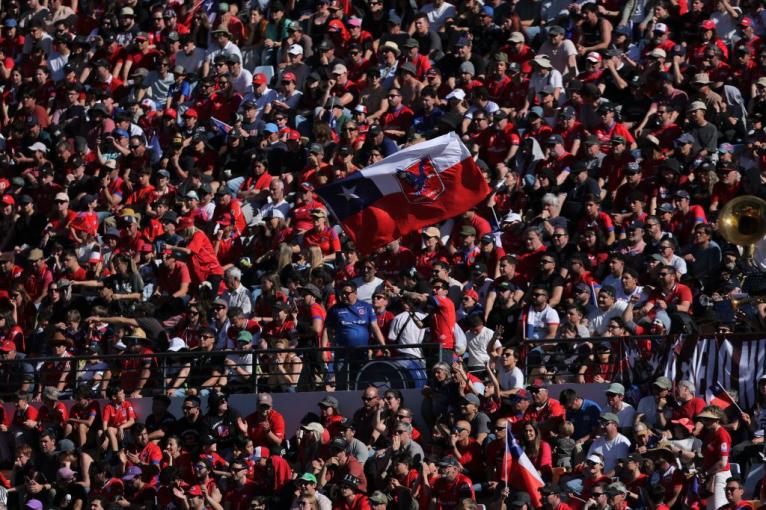
With another World Cup approaching, Videla is still relishing the incredible events of that unforgettable afternoon, recalling every remarkable play, such as Nicolás Saab’s final try.
The contrast between the past and the present is striking. Videla experienced a prolonged period of stagnation – but now, the future appears bright and promising.
“Fifteen years ago, we lacked clear goals and objectives,” he reflects. “Players would give their best efforts, but there were no overarching ambitions to drive them. Today, we compete to achieve what some might consider unrealistic dreams. It is a new chapter for Chile and for the Condores.”