George Russell, a driver for Mercedes in Formula 1, believes it is premature to evaluate the latest iteration of F1 vehicles, despite ongoing critiques regarding their handling characteristics.
During the initial three-day testing session in Bahrain, F1 competitors had their first real opportunity to experience the highly anticipated 2026 model vehicles under typical circumstances, with considerable effort directed at refining the challenging hybrid power regulations.
These vehicles obtain fifty percent of their total power from an electric engine; however, due to the rapid depletion of their batteries during a lap, drivers must devise innovative methods and fine-tune software configurations to recuperate energy while cornering. Such methods involve unconventional actions such as extended periods of lifting off the throttle and coasting on straightaways, alongside sustaining elevated engine revolutions through slow-speed turns to restore power.
The intricate management required for these cars has not met with universal approval among drivers, as evidenced by Max Verstappen’s strong condemnation, labeling the updated regulations as “anti-racing” and akin to “Formula E on steroids”.
Conversely, Russell considers it premature to assess the revised regulations, attributing this to the considerable development trajectory awaiting the teams. He also expressed satisfaction with the current season’s cars being more lightweight, compact, and agile.
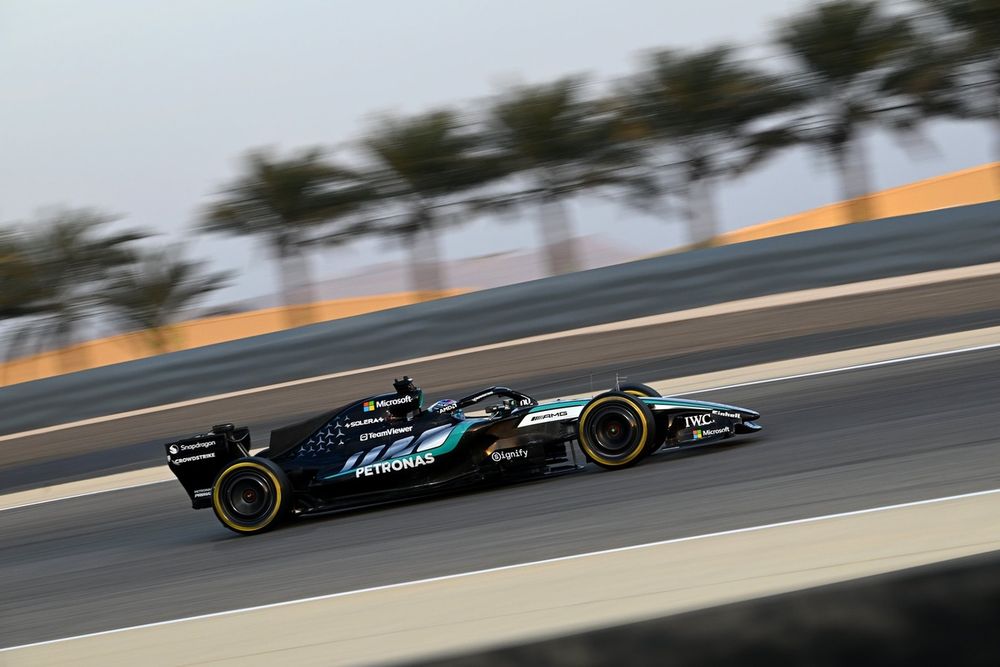
George Russell, Mercedes
Photo by: Guido De Bortoli / LAT Images via Getty Images
Russell stated, “I genuinely believe this represents an advancement, and I prefer to allow new developments time to prove themselves. We are only four days into a regulatory period designed to span more than three years, and the advancements all participants will achieve in these initial months are expected to be substantial.”
The vehicles are significantly more enjoyable to operate. Having only twice experienced the more compact generation of F1 automobiles, I was astonished by the noticeable improvement in the car’s agility due to its reduced weight and size. This aspect is highly encouraging.
The power units are exceptionally intricate, and frankly, they likely present a greater challenge for the engineering teams than for the drivers themselves. Nonetheless, Barcelona and Bahrain are arguably among the least demanding venues for the engine. Therefore, I’m hesitant to draw conclusions prematurely before we reach circuits such as Melbourne or Jeddah, where the demands on the engines and energy management will be considerably higher.
Russell additionally highlighted that the necessity of operating at unusually lower engine speeds introduces certain undesirable handling traits and a degree of unpredictability, which he finds less appealing.
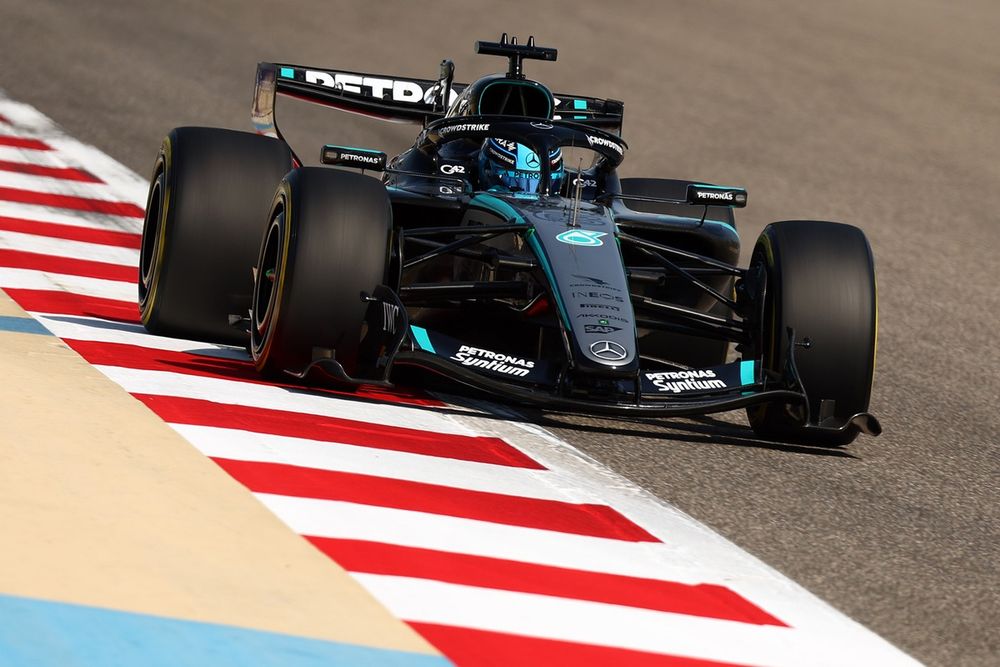
George Russell, Mercedes
Photo by: Joe Portlock / LAT Images via Getty Images
He elaborated, “The primary difficulty we encounter is employing exceptionally low gears through turns. Typically, the first corner here in Bahrain is taken in third gear. Currently, we are compelled to use first gear to maintain elevated engine revolutions, ensuring the turbocharger remains active. Occasionally, descending through the gears gives the sensation of engaging a handbrake.”
He added, “This aspect is likely the most frustrating and lacks intuitiveness. However, aside from that, the sheer power available when utilizing the complete 350kW is undeniable. Nevertheless, I anticipate significant improvements over the next few months, so patience is key.”
In contrast to Russell’s counterpart, current world champion Lando Norris, who suggested drivers are overcompensated to voice grievances about their vehicles, Russell adopts a realistic perspective, weighing the broader rationale behind the 2026 regulations’ inception: to attract manufacturers such as Audi and Honda into power unit development.
He further commented, “Like most things in existence, it’s impossible to satisfy every requirement. Furthermore, the stakes are higher. Upon the introduction of these rules, there was a significant emphasis on electric vehicles from the EU, which played a crucial role in enticing entities like Audi to participate. This factor must be taken into account.”
He continued, “And in my opinion, it’s undeniable that Formula 1 currently enjoys a fantastic standing. Naturally, our desire is for the finest, swiftest vehicles, and the most thrilling competitions. Yet, I’m unsure how one manages to satisfy everyone.”
He concluded by saying, “As Lando pointed out, we are fortunate to hold this position. And truthfully, my sole aim is victory. I suppose for a driver who has achieved considerable success lately, the desire is simply for the superior vehicle and the most enjoyable driving experience. Therefore, I suppose [Verstappen] is free to visit the Nordschleife.”