The initial Formula 1 testing in Bahrain has brought a crucial subject to light for the upcoming F1 Commission discussion: the procedures for initiating races. The current generation of power units introduces complexity to these starts, demanding that engines operate at exceptionally high revolutions per minute for prolonged durations to adequately prepare the turbocharger.
This challenge has escalated to where racing teams are pushing for changes to the rules before the inaugural Australian Grand Prix of the season.
Previously, when drivers got ready for the commencement of a race, the MGU-H component facilitated the turbocharger’s rapid attainment of the optimal pressure for effective acceleration. Its function was multifaceted: it aided the turbo in reaching its operational state, minimized the time required for this, and crucially, achieved these without imposing stress on the internal combustion engine.
The absence of the MGU-H means that an external power source is no longer available to energize the turbo, leaving this task to the internal combustion engine. Consequently, the engine must now operate at significantly elevated RPMs, for longer periods, to meet the specifications needed for a satisfactory launch.
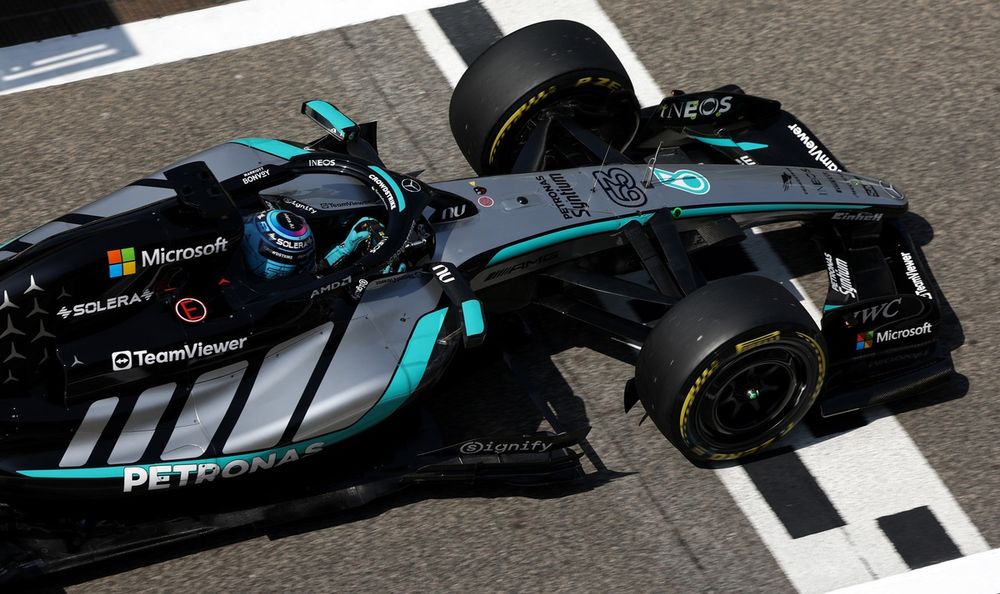
Foto di: Mark Sutton / Formula 1 via Getty Images
Observations during simulated race starts in Bahrain revealed drivers engaging in engine revving for as long as 10 seconds, and occasionally longer, prior to executing the actual launch. This behavior is becoming prevalent, albeit its exact duration is subject to ongoing team experiments aimed at refining the optimal launch sequences. Notably, considerable differences were identified in practice starts even from the same drivers, as engineers strived to ascertain the precise amount of revving that best aids the turbo, despite its evident negative implications for the internal combustion engine.
An analysis of the information gathered at Sakhir indicated engine speeds surpassing 13,000 revolutions per minute at their highest points, exemplified by Andrea Kimi Antonelli’s concluding practice start on the third day. While this represents an extreme instance, vehicles typically settle around an average just exceeding 12,000 RPM. To put this in perspective, prior power units only achieved such figures during periods of peak performance, never during the initial race launch.
Over previous seasons, the presence of the MGU-H led to considerably reduced figures, with the average rotational speeds ranging from 9,000rpm to 10,000rpm, varying by engine constructor. Consequently, a fixed operational window is among the suggestions currently under consideration.
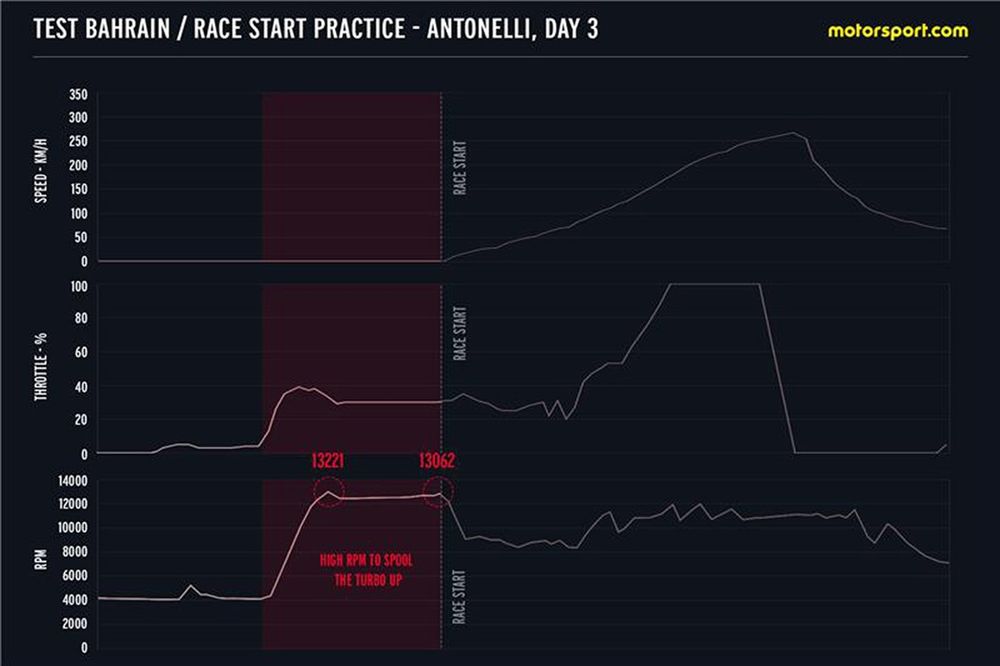
Andrea Kimi Antonelli, Mercedes telemetry
Photo by: Gianluca D’Alessandro
This issue seldom emerged previously, specifically because of the assistance provided by the hybrid components. Present technical rules forbid the MGU-K from discharging energy while the vehicle is stationary on the starting grid, barring particular circumstances related to system dependability. The electric motor’s operation is restricted below speeds of 50km/h, complicating both the initial setup and the actual start of the race.
A potential solution involves permitting the MGU-K’s utilization during the launch, yet this valuable energy would subsequently be expended on assisting the turbo, resulting in performance drawbacks during the initial straight sections of the track.
McLaren’s Oscar Piastri elaborated, stating, “Last year, the distinction between a successful and unsuccessful start typically involved either minor wheelspin or a delayed reaction; however, this season, it might feel akin to an F2 event where you practically engage anti-stall or a similar situation. The consequence isn’t merely a loss of five meters; a botched start could cost you six or seven positions.”
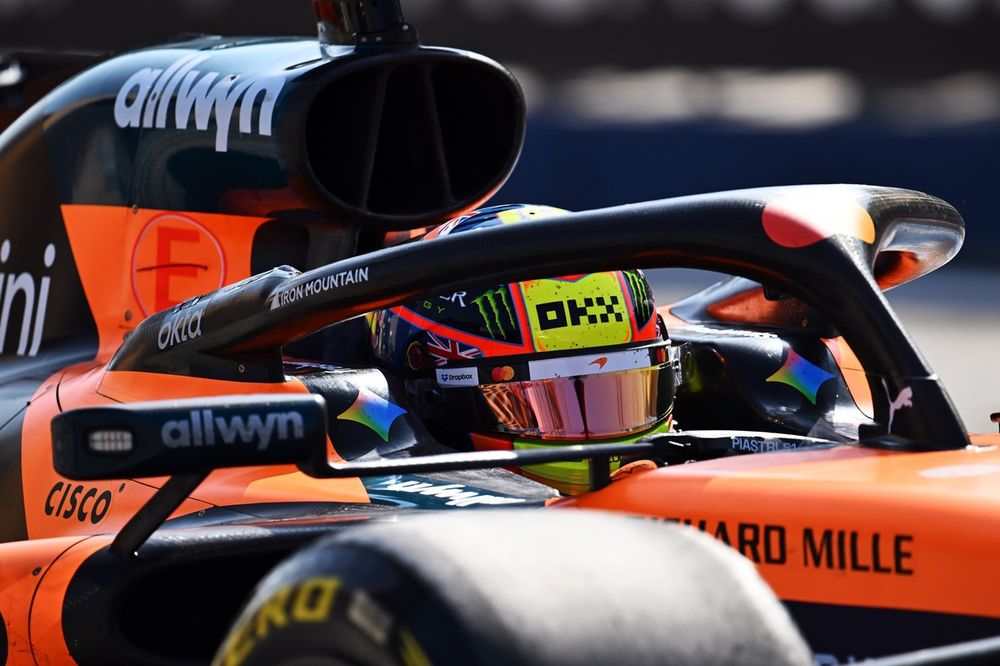
Oscar Piastri, McLaren
Foto di: Guido De Bortoli / LAT Images via Getty Images
Currently, teams are operating within predefined parameters, however, the system must be fully prepared for when the race officially commences.
Mercedes’ George Russell commented, “Presently, we’re simply following our established process, and I execute my launch exclusively when I am within a predetermined operational range. However, we are keenly aware that in an actual race, you depart when the starting lights extinguish, not when your particular turbocharger happens to be in its optimal state.”
Additionally, gear ratios are set to be altered this year, obliging drivers to select lower gears when cornering to replenish battery power and mitigate turbo lag, despite the potential for increased fuel usage. During testing in Bahrain, distinct methodologies were observed across various engine suppliers.
Russell has put forth the idea that Ferrari might be employing a smaller turbocharger compared to its competitors, which would necessitate less time for it to achieve its optimal operational state at lower engine speeds, potentially providing a beneficial edge during race starts.
Red Bull has implemented a notably assertive strategy concerning gear ratios, downshifting to lower gears to both replenish the battery and optimize energy output at the conclusion of straight sections. In contrast, Ferrari appears to have taken a more moderate stance, utilizing first gear less often during the Bahrain testing sessions.
Russell further remarked, “I am unaware of the practices among other manufacturers. My impression is that Ferrari appears capable of employing higher gears than their counterparts, likely indicating they utilize a smaller turbocharger. This could place them in a somewhat more advantageous situation for their race starts. However, provided there are no safety concerns – which likely existed in Barcelona – we have, as I mentioned, achieved substantial advancements in that particular area since Barcelona.”