The Canadian team’s leader, Sidney Crosby, might be back on the ice for the men’s Olympic ice hockey final on Sunday, a highly anticipated clash between Canada and the United States for the gold medal.
Crosby participated in a private ice practice session earlier on Saturday. Following this, the team’s head coach, Jon Cooper, informed journalists of a “possibility” that Crosby could participate in Sunday’s game.
The team’s captain was absent from their 3-2 semifinal victory against Finland, having suffered an injury during the quarterfinal match with Czechia. He exited the playing surface, got medical attention on the sidelines, and subsequently headed to the locker room, moving with caution.
Cooper stated that Crosby’s participation would be determined right before the game. The Olympic men’s ice hockey championship game broadcast starts on CBC and CBC Gem at 7 a.m. Eastern Time, with the opening face-off scheduled for 8:10 a.m.
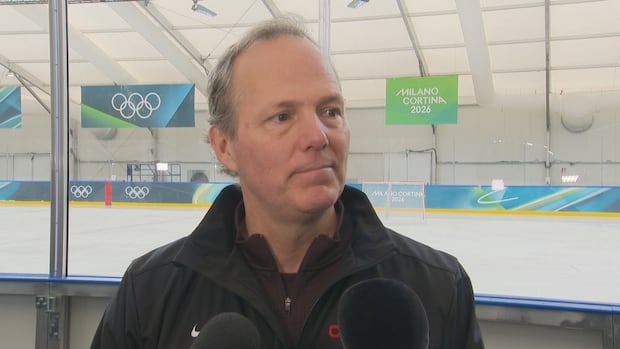
Jon Cooper, the head coach for Canada’s men’s hockey team, confirmed Sidney Crosby participated in a Saturday skate and his availability for Sunday’s championship match remains undecided until game time.
“We plan to convene this evening to decide whether he will participate in tomorrow’s contest,” Cooper stated.
Josh Morrissey, a defenceman who sustained an injury during the inaugural game of the tournament, will not be competing in the championship match, the coach further noted.
He highlighted the commendable self-sacrifice shown by Morrissey, Crosby, along with Anthony Cirelli and Brayden Point, for choosing to withdraw when injured, believing that a fully fit athlete would better benefit the team. Cirelli and Point were initially selected for the Olympic squad but required substitutions prior to the tournament’s commencement.
“These athletes are eager to compete,” Cooper remarked. “We are participating in the Olympics for a specific reason — it is due to the players’ strong desire. The dedication and personal commitment these players have demonstrated to reach this point and compete is truly unprecedented in my experience. Therefore, when such a circumstance occurs, the players’ altruism is truly remarkable.”
Crosby and fellow defenceman Drew Doughty are both aiming to secure their third Olympic gold medal, having previously clinched the ultimate victory in both the 2010 and 2014 Games.
Crosby netted the decisive goal during overtime against the United States squad back in 2010.
The Contest Desired Across North America
The journey for the Canadian squad to reach the gold-medal championship has not followed a straightforward trajectory.
Having easily navigated the preliminary stages as the premier seed, they required an extra period to overcome Czechia in a 4-3 quarterfinal triumph.
Subsequently, the Canadian team was compelled to net three consecutive goals to recover from a two-goal deficit against Finland on Friday. Nathan MacKinnon found the back of the net in the game’s concluding minute, securing a 3-2 victory.
“The instruction for the players is that challenges will inevitably arise once more,” Cooper communicated. “Will you confront these difficulties directly and retaliate? This principle has been central throughout this entire tournament, and it will remain consistent moving forward.”
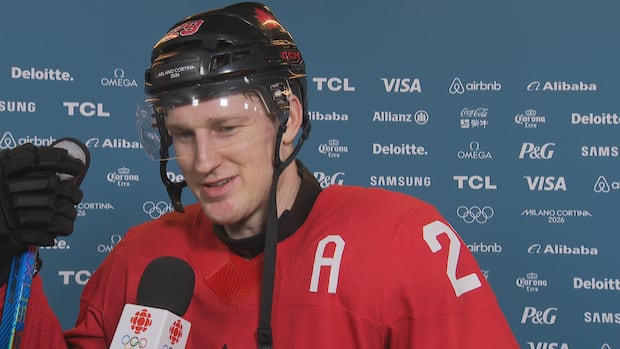
Nathan MacKinnon’s decisive goal, scored with merely 36 seconds remaining in the contest, propelled Canada to a 3-2 triumph over Finland, thereby qualifying them for the Olympic men’s hockey championship game.
Concurrently, the American squad similarly faced a near-elimination scenario in the quarterfinals, narrowly defeating Sweden in an extra period.
The United States team secured their place in the Olympic championship by achieving a convincing 6-2 victory against Slovakia on Friday.
The final match, pitting Canada against the U.S., represents the gold-medal encounter that was widely anticipated across North America. However, its occurrence was by no means guaranteed.
“While this particular contest wasn’t a foregone conclusion, its arrival now certainly generates excitement,” Connor McDavid commented.
McDavid assumed the role of captain, signified by the “C” on his jersey, in Crosby’s absence during Friday’s game.
Confronting the Tkachuk Brothers
Beginning with the initial face-off at the 4 Nations Face-Off event, the competition between Canada and the United States was characterized by intense physical play. Given the international regulations in place, a widespread physical altercation is improbable in the Olympic championship.
Nevertheless, the rivalry is expected to remain fierce.
“This game will be challenging, intensely physical, high-paced, and filled with skill – encompassing all aspects that fans adore about hockey,” stated Canadian forward Tom Wilson. “There’s considerable anticipation, and we must step onto the ice and accomplish our objective.”
Wilson holds the distinction of being the most physically imposing athlete on the Canadian team’s roster. He was not part of the previous year’s 4 Nations squad, and his inclusion for the Olympics was sought not only for his athletic ability and stature but also for his capacity to intimidate opponents.
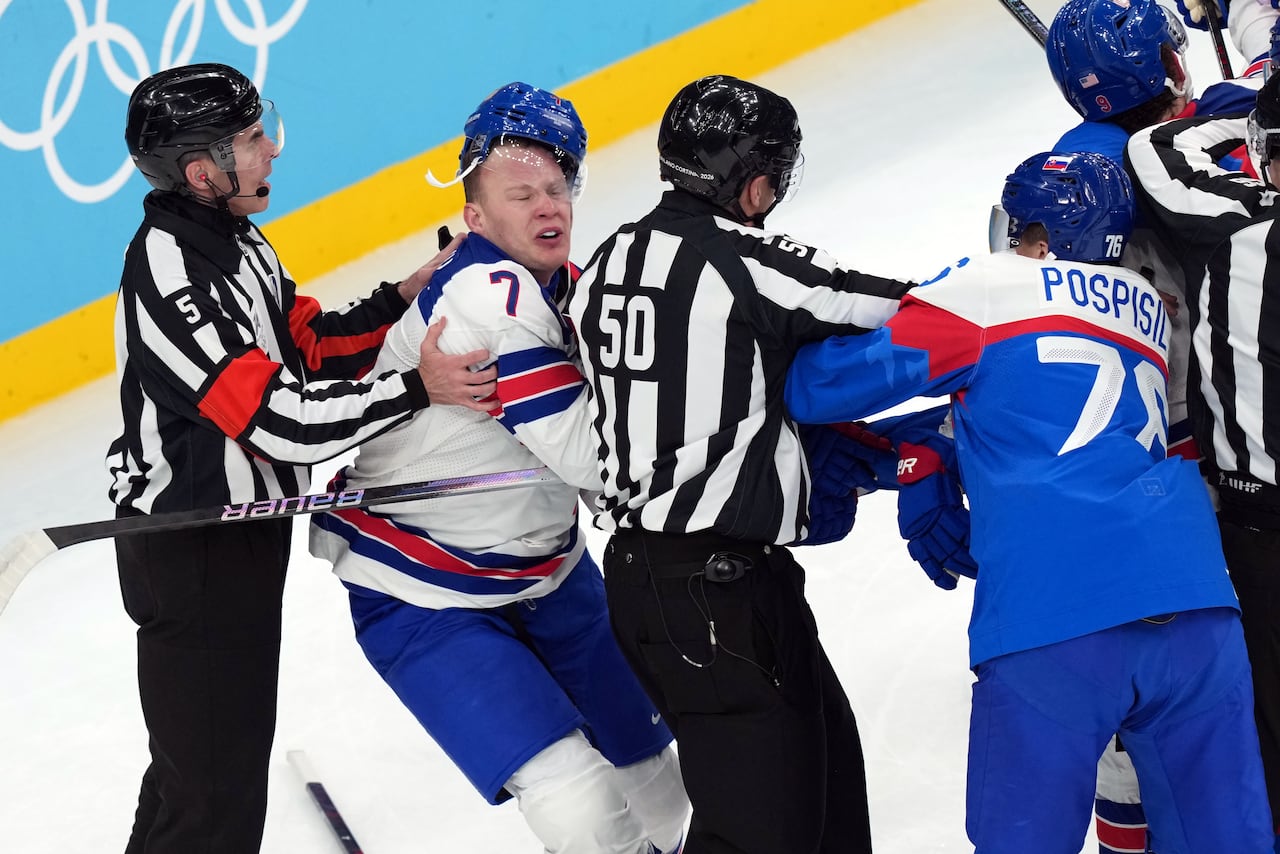
He will prove valuable when contending with the American lineup, which features Brady and Matthew Tkachuk, a pair consistently seeking to agitate opposing players.
Both Tkachuk siblings are jointly ranked fourth in penalty minutes throughout the tournament, having each accumulated 12 minutes.
“We are aware of their presence,” Wilson stated. “My primary focus isn’t directed towards them. Instead, I’m concentrating on executing the Team Canada strategy; if I perform my own style of play, maintaining speed and physicality, their actions will largely be inconsequential.”
Following his team’s morning practice on Saturday, Brady Tkachuk conveyed to CBC Olympics journalist Kyle Bukauskas his expectation that the championship game would be emotionally charged.
“The key is to maintain control and direct that energy effectively,” he explained. “From our perspective, we intend to go out there and execute our required style of play. I am confident that each player will perform at their peak, thereby offering our team an opportunity to secure a victory.”
The 4 Nations Face-Off event, held in the previous year across both Canada and the U.S., represented significance far beyond a mere hockey competition. For Canadians, it embodied a display of national identity, set against a backdrop of political unrest and pronouncements from then-U.S. President Donald Trump suggesting Canada’s assimilation into the United States.
This particular tournament will also conclude with a contest involving teams from across the border, yet it feels “fundamentally distinct,” as Cooper expressed.
“That specific competition transcended a typical hockey event, partly due to its venues in both Canada and the U.S., alongside the prevailing political climate,” the coach elaborated.
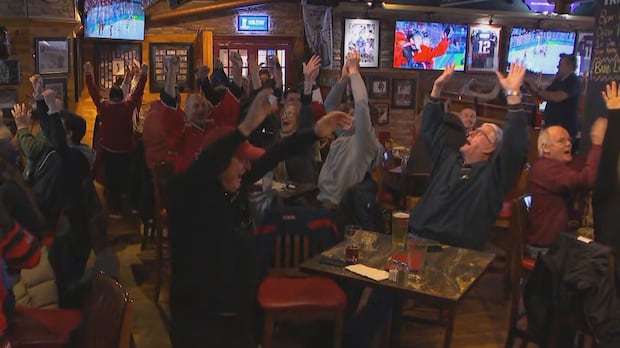
Admirers of the Colorado Avalanche’s prominent player converged at Big League’s Brew Pub to witness Canada’s 3-2 victory over Finland in the Olympic men’s hockey semifinal. MacKinnon, who hails from Cole Harbour, netted the decisive goal with 35.2 seconds remaining in the contest. Haley Ryan of the CBC was present at the venue.
“This occasion encompasses the global community. We are performing on an international platform. There are competitors and journalists from every corner of the planet who, to be honest, likely don’t possess the same level of concern for our nations as we do, given their own national interests. That inherent aspect is the magnificence of this event, as it allows one to present themselves to the world at large.”
A Contentious Past
Canada and the United States have faced each other in the championship match of men’s Olympic hockey on two occasions during tournaments that included NHL athletes. Canada emerged victorious in both of these encounters, specifically in the years 2002 and 2010.
In total, factoring in every men’s hockey competition at the Olympic Games, Canada has secured nine gold medals, while the U.S. has claimed two.
Naturally, one of those American gold medals was earned at Lake Placid in 1980, when the unexpected “Miracle on Ice” team triumphed over the formidable Soviet Union.
This Sunday commemorates the 46th year since that momentous victory, a detail keenly remembered by current U.S. forward Brock Nelson. His uncle, Dave Christian, was a member of the 1980 squad.
“Those individuals essentially forged the path and inspired a subsequent generation to aspire to their achievements,” Nelson communicated to Bukauskas.
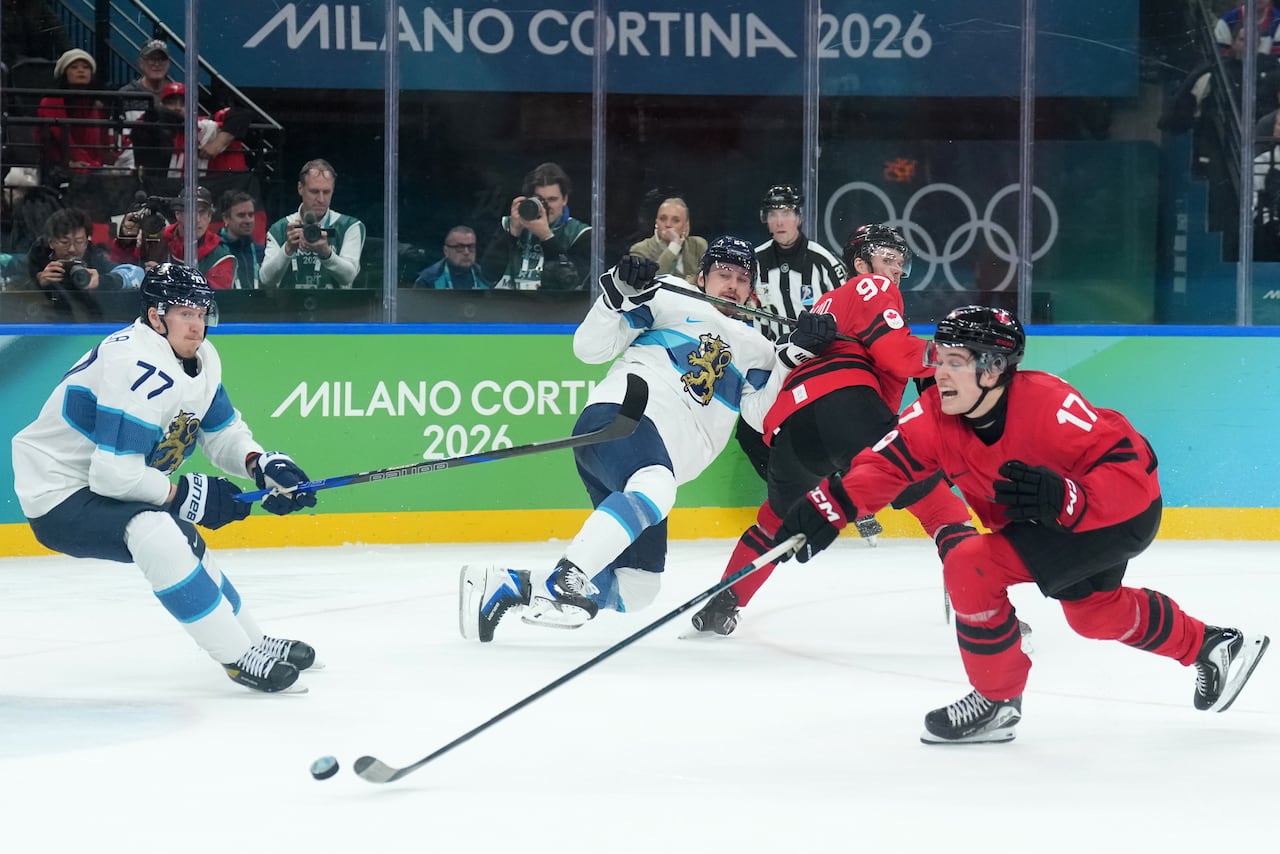
Macklin Celebrini, at nineteen years of age, had not yet been born when Canada secured its victory over the Americans in 2002. He was merely a young child when the men’s team once more overcame the U.S. in 2010, an event that occurred in his native city of Vancouver.
However, this fact has not deterred Cooper from entrusting the young player during high-pressure moments in the tournament, particularly following Crosby’s injury.
Celebrini assumed Crosby’s position on the primary power play formation, and Cooper frequently deployed a formidable top offensive line comprising Celebrini, McDavid, and MacKinnon for the majority of offensive-zone face-offs against Finland.
In the match against Finland, Celebrini was on the ice for 25 minutes and 53 seconds, surpassing the ice time of every other player on the squad. He currently follows McDavid in the tournament’s scoring race, having accumulated 10 points over five contests.
“He is an exceptionally remarkable young man,” McDavid commented. “He has managed every situation with such proficiency. At merely nineteen years of age, he performs incredibly well; I am unable to adequately praise him. His performance has been outstanding.”