Honda is striving to resolve severe vibration problems before the inaugural Formula 1 race of the 2026 season in Australia, following highly problematic trial runs with Aston Martin.
The collaboration between Aston Martin and Honda began unfavorably during pre-season trials, achieving very little track time during the Barcelona shakedown due to the delayed arrival of the AMR26. Subsequent challenges, affecting both the vehicle chassis and the engine, further restricted their participation over the pair of testing periods in Bahrain. Aston Martin’s cumulative distance of 2115km amounted to barely more than one-third of the kilometers logged by teams such as Mercedes, Haas, and Ferrari, and only slightly over half the distance recorded by Cadillac, the team with the second-lowest lap count.
Given that Aston Martin is Honda’s sole Formula 1 collaborator, the utilization of the novel Sakura power unit has similarly lagged significantly behind competing manufacturers. On the concluding day of the subsequent Bahrain test session, Aston Martin was compelled to prematurely conclude its schedule due to a depletion of reserve batteries, allowing the team to complete merely six installation laps.
| Engine manufacturer | Barcelona (km) |
Bahrain1 (km) |
Bahrain 2 (km) | Total km | Average KM s per team |
|---|---|---|---|---|---|
| Mercedes | 5318 | 7815 | 8,410 | 21,544 | 5386 |
| Ferrari | 4615 | 6121 | 5380 | 16,116 | 5372 |
| Red Bull Ford | 2897 | 3626 | 3983 | 10,506 | 5253 |
| Audi | 1094 | 1916 | 1932 | 4942 | 4942 |
| Honda | 307 | 1115 | 693 | 2115 | 2115 |
During an interview with Japanese journalists, including those from Autosport’s related Japanese publication, Honda elaborated on its difficulties, clarifying that extreme oscillations originating from the V6 internal combustion engines consistently damaged the battery.
"The unusual tremors noted during our trials inflicted harm upon the battery setup, serving as the main justification for the halt," stated Ikuo Takeishi, who leads the HRC four-wheel motorsport division, regarding Fernando Alonso’s shortened fifth testing day in Bahrain.
"We ceased the vehicle’s operation as we determined it was inappropriate for it to persist in that condition. It wasn’t that a mishap was on the verge of occurring or anything similar, but we halted the car due to safety concerns.
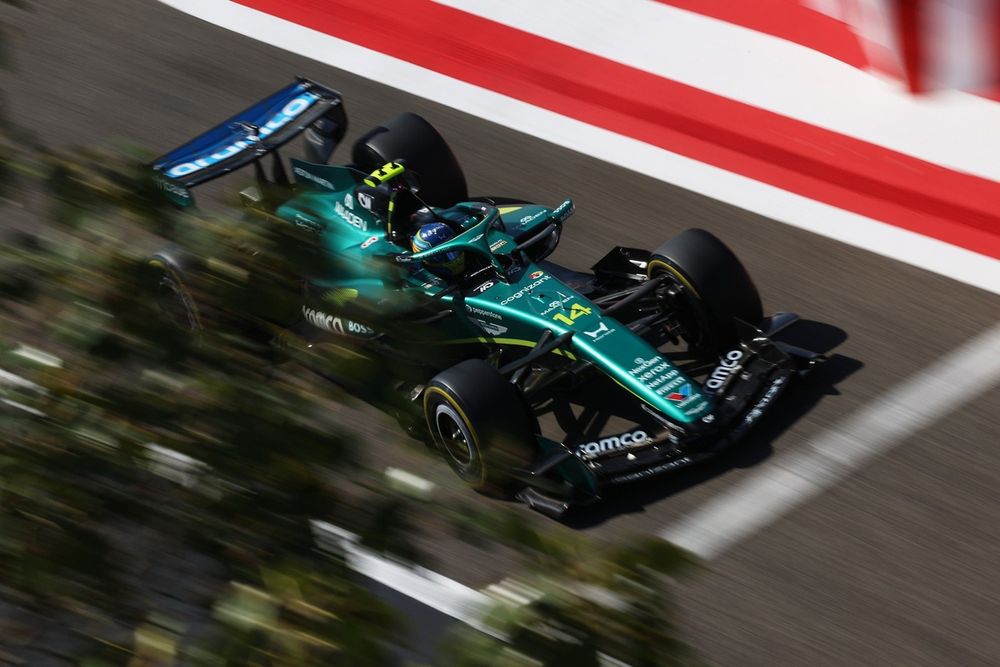
Fernando Alonso, Aston Martin Racing
Photo by: Alastair Staley / LAT Images via Getty Images
"The power unit team is, as expected, examining the root of the issue and developing corrective actions, concurrently introducing modifications to the chassis. To be precise, we are presently utilizing the Sakura battery in a test rig with the monocoque installed, actively deploying various mitigation strategies while performing vibration assessments and analysis."
Takeishi commented that the discoveries indicate it’s premature to ascertain if the battery’s fundamental design harbors an inherent flaw. However, given his conviction that the severe shaking stems from more than a solitary component, Honda harbors apprehension that a straightforward remedy is not assured.
"The tremors inflicted harm upon the power cell, hence we cannot definitively state if the power cell itself is the defect," he further explained. "One might conceptualize it as the battery assembly experiencing agitation inside the car’s framework. Fundamentally, the region where the battery module is secured is oscillating. If this had been within anticipated parameters, I presume we would have implemented additional refinements. As circumstances are, I suspect we have come across a considerably difficult predicament.
"For example, if the origin could be precisely identified as a specific item such as the gearbox or the motor, it would be considerably simpler to address. Nevertheless, I presume several elements are jointly contributing to produce the oscillation. Consequently, it is uncertain if mending a single part will suffice to rectify it, thus we cannot dismiss the prospect of this persisting. Notwithstanding, solely regarding my resolve, I am entirely committed to rectifying it swiftly."
This implies that Aston Martin and Honda will probably remain considerably hindered during the initial phases of the 2026 season, as Honda aspires to bring the vehicle to a "competitive condition" by the Japanese Grand Prix at the conclusion of the upcoming month, marking the third event of the championship.
"My objective is to diminish the oscillations prior to the season’s inaugural race, but my goal is to have the vehicle in a "competitive form" before the Suzuka event," Takeishi declared.
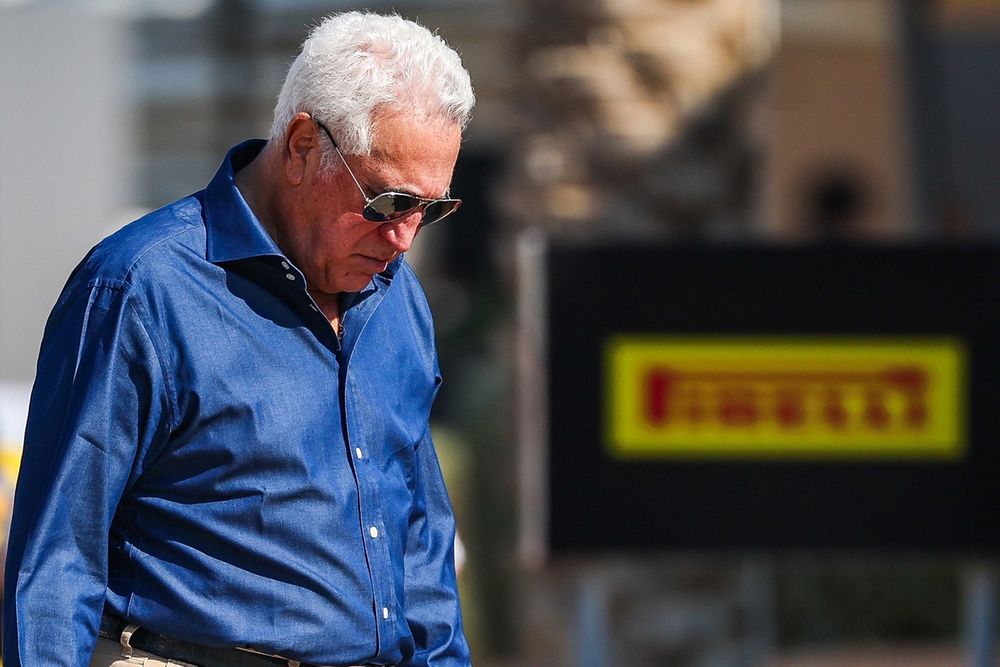
Lawrence Stroll, Aston Martin
Photo by: Kym Illman / Getty Images
Honda expresses certainty that its power unit will achieve a significantly improved condition once the oscillation issue is managed, though Takeishi admitted the Japanese maker is currently unable to "discuss performance proactively."
However, HRC chief Koji Watanabe indicated that Honda and Aston Martin plan to collaborate calmly to overcome the challenging beginning of their alliance.
"The recent preliminary season trials in Barcelona and Bahrain were, to be honest, exceedingly demanding for us," Watanabe commented. "We could not attain the expected performance metrics, and a complicated array of problems emerged. Nevertheless, these trials also served as a vital stage, enabling us to clearly perceive these difficulties.
"While numerous problems might exist for both parties, our aspiration is a sustained collaboration, and at this juncture, I believe we share a unified commitment to address these issues cohesively as a single entity.
"I have engaged in highly constructive telephone conversations with chairman [Lawrence] Stroll and [Adrian] Newey concerning how to rectify the predicament. As the inaugural race of the season draws near, it is self-evident that we will exert our maximum effort to guarantee our readiness to compete in Australia.
"Understandably, the testing drivers are feeling disappointed, yet we can only remedy that through demonstrated capability."