In 1954, the world championship introduced a 2.5-litre engine rule, which, due to its clumsy rollout, meant that for the previous two seasons, only Formula 2 cars could compete in grands prix. The aim of announcing these new regulations in late 1951 was to give manufacturers ample preparation time; however, many existing participants withdrew, unwilling to invest in developing new vehicles that would quickly become obsolete after just two competitive seasons.
Although the 2.5-litre rules attracted fresh competitors, a number of them were not prepared in time for the beginning of the 1954 season, despite the significant advance warning.
Also in 1954, Ernest Hemingway received the Nobel Prize in Literature for his novella The Old Man and the Sea, where – spoiler alert – a fisherman, perpetually unlucky, unexpectedly catches an enormous marlin. Yet, his hard work yields no reward as other creatures of the ocean consume his prize catch while he is towing it back to shore, fastened to the side of his small boat.
Following a similar line of thought, one might contemplate the current reflections of F1’s stakeholders, who in 2022 agreed on the principle of an engine formula that would nearly equally balance electric power and internal combustion. The primary objective was to attract new manufacturers and retain the existing ones.
However, while Audi, General Motors, and to a lesser extent, Ford, committed to the plan, Renault has since departed, and Honda is likely wishing its partnership with Aston Martin could fade away unnoticed.
Much like Hemingway’s aggressive mako sharks, the drivers and now the fanbase have fiercely scrutinized the outcomes of F1’s pursuit of new engine regulations.
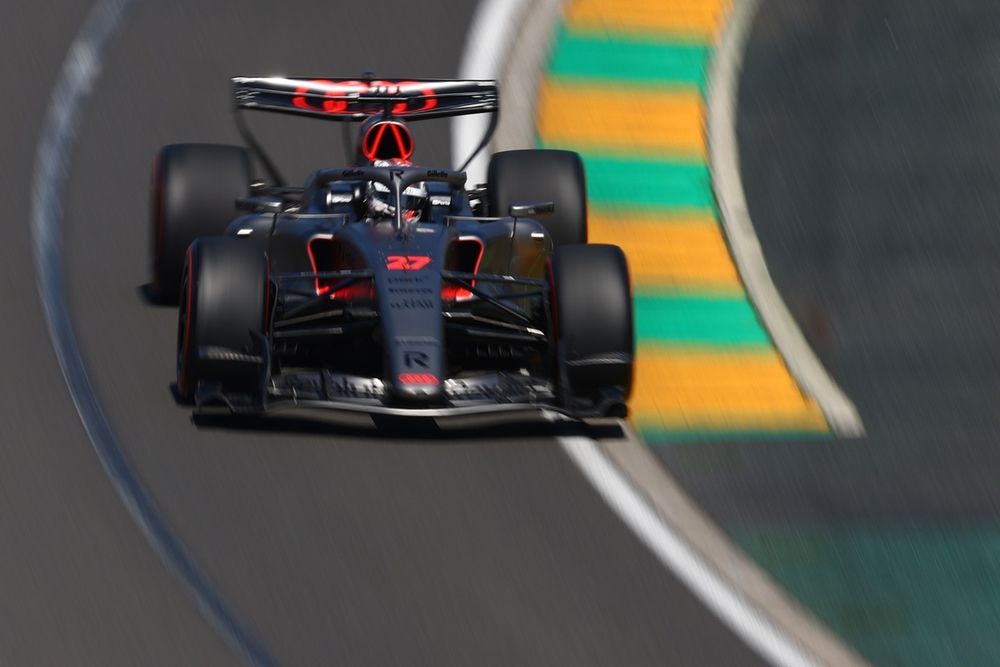
Audi not only came in as an engine manufacturer, it bought a team
Photo by: Joe Portlock / Getty Images
When the 50/50 power unit principle was officially endorsed by the World Motor Sport Council in August 2022, it occurred at a time when Renault was still struggling to produce a competitive power unit, and Honda had already declared its withdrawal, citing its carbon-neutral commitment.
Despite Red Bull considering Porsche as a potential new collaborator and Audi reportedly evaluating an engine development program, there was a shared belief that securing these agreements and ensuring continued manufacturer involvement necessitated simplifying the power units by eliminating the MGU-H component, which was both complex and costly to engineer.
If the initial aim was simplicity, then observing the subsequent increase in complexity makes one question how they arrived at the current situation from that starting point.
Directly following the WMSC meeting, the announcement came that Audi had committed to an engine program, naturally portraying the new concept as a triumph.
F1 CEO Stefano Domenicali enthusiastically stated, “This marks a significant moment for our sport, underscoring our immense strength as a growing global platform. It also strongly acknowledges that our transition to sustainably fueled hybrid engines in 2026 represents a forward-looking solution for the automotive industry.”
Subsequent events—Audi’s full commitment to acquiring a team, Honda reversing its decision to leave, Ford stepping in to partner Red Bull after Porsche’s departure, and General Motors aligning with Michael Andretti’s proposed eleventh entry—reinforced the idea that the chosen path was correct. Amidst this collective corporate self-congratulation, it seems no one paused to consider the practical implementation of the 50/50 formula.
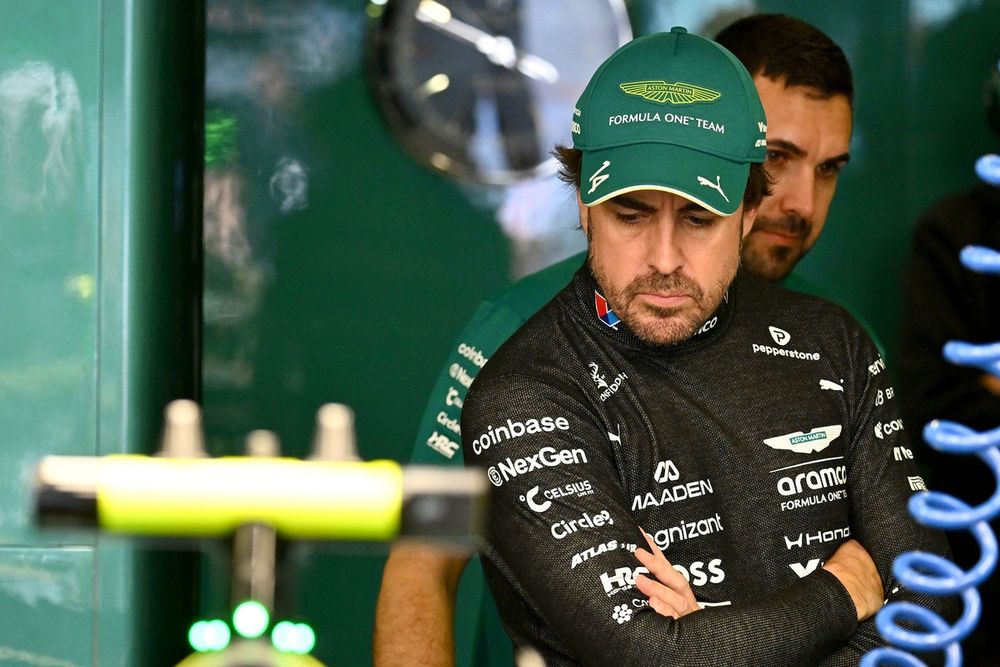
Fernando Alonso had high hopes for Honda’s partnership with Aston Martin but it’s not going well
Photo by: Mark Sutton / Formula 1 via Getty Images
Consequently, the development process over the past couple of years has been an effort to refine an imperfect system, or at least to make it appear more appealing, in the hope that technological advancements would ensure a successful outcome. As Carlos Sainz has correctly observed, active aerodynamics and various other aspects of the new regulations are not merely temporary fixes, but a whole series of them—and all current proposals to enhance the spectacle involve adding more solutions rather than removing any existing ones.
There’s a historical parallel here. For five seasons, from 1961 to 1965, grand prix racing downsized its engines from 2.5 liters to 1.5. Then, as now, the change was announced well in advance, sparked significant controversy, and—at least for the initial season—led to dominance by a single team.
The announcement, made on October 29, 1958, at the Royal Automobile Club, overshadowed the evening’s main event, which was the presentation of Mike Hawthorn’s championship trophy. Autosport founder Gregor Grant was among those present, and one of many who reacted with dismay.
In the subsequent week’s editorial, he passionately declared, “A saying circulates that a camel is an FIA-designed horse. Few would disagree that this perfectly summarizes the situation. It is hard to imagine anyone other than truck manufacturers attempting to build a machine type that bears no resemblance to a Grand Prix car.”
“The crowds that flock to the major races will never come to witness the pitiful sight of small-capacity machines carrying entirely unnecessary weight [the limit was initially set at 500kg, later reduced to 450kg] at speeds likely to be surpassed by GT cars of even smaller engine capacity. Moreover, these vehicles must be equipped with starter motors and roll bars.”
“It is clear that the delegates who endorsed this decision fail to view Grand Prix racing in its true context. It represents the pinnacle of automotive engineering, and with powerful, fast cars, it delivers the greatest spectacle in modern sport. It challenges the skill and ingenuity of designers and constructors, who might potentially overcome the restrictions imposed by the 1961 formula, but would be severely disadvantaged by creating machines no one would want to watch race.”
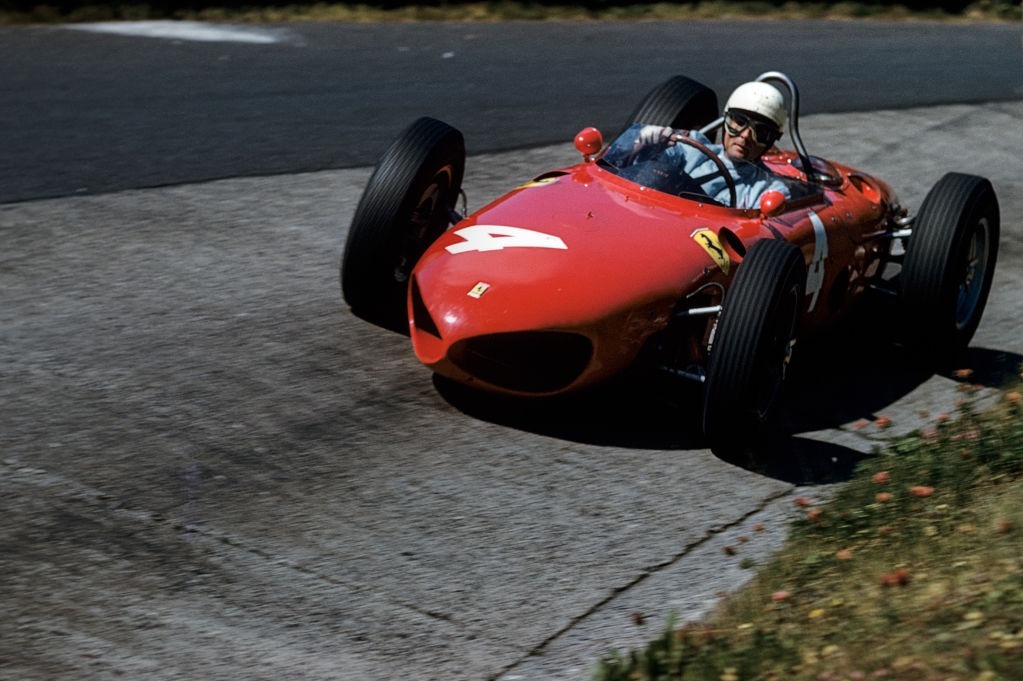
Pretty ‘Sharknose’ Ferrari 156, driven here by eventual 1961 world champion Phil Hill, wasn’t quite the ‘lorry’ envisaged by Autosport founder Gregor Grant
Photo by: Bernard Cahier/Getty Images
In the green-bordered monthly *Motor Sport*, Denis Jenkinson offered a more moderate perspective, noting that by 1961, the 2.5-litre formula would be seven years old and due for replacement – and that the prevailing technological advancements might enable even 1.5-litre engines to provide sufficient power.
As it turned out, neither writer was entirely accurate, but ‘Jenks’ was closer to the truth: grand prix racing continued to flourish, and the constraints of the engine formula spurred innovations in chassis design, aerodynamics, and tire technology. And despite how much the drivers disliked it, none refused to compete in grands prix (though in that era, world championship events constituted a relatively minor portion of their schedule and earnings).
Today, however, the financial landscape is different. F1’s profitability relies on the assumption that its audience will continue to expand “exponentially” (a term often used by those who haven’t fully grasped its definition). This expectation is what attracts US-based sponsors and underpins the involvement of Ford and Cadillac.
Consequently, there’s growing apprehension about the reception to the new racing style, where energy management is dominating discussions perhaps too much. It’s been interesting to observe some of the narrative shaping: Channel 4, for example, which broadcasts F1 highlights in the UK, attempted to humorously address the issue, featuring comedian Greg Davies in a segment that framed opposition to the 2026 regulations as simply a fear of novelty.
He remarked, “If nothing ever evolved, cars would still be equipped with carburettors and lack seat belts, and I’d still be permitted to smoke in the pitlane.”
As far as simplistic arguments go, this was notably weak; Davies’ character from *The Inbetweeners*, the misanthropic teacher Mr. Gilbert, would no doubt have retorted to the scriptwriter, “There’s nothing amusing about testicles – you’ll discover why in my office tomorrow.”
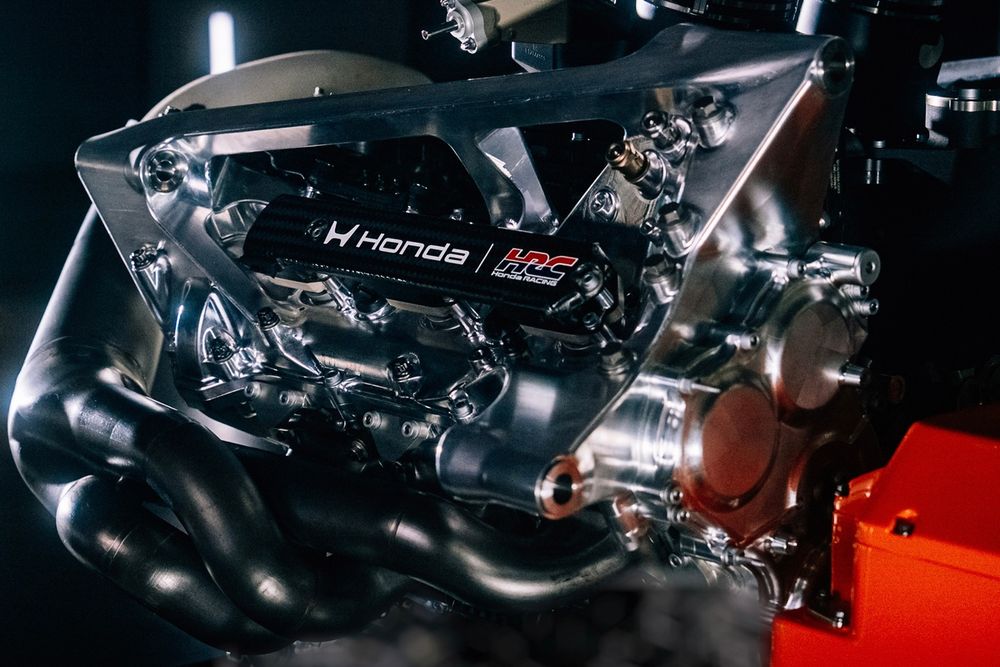
Honda’s RA626H power unit has had a difficult birth
Photo by: Honda
Drivers and long-standing fans will need to adapt to what Charles Leclerc termed “Mario Kart racing.” The impact on casual viewers and the interest of corporate partners remains to be seen.
Perception is paramount in Formula 1, and currently, Honda’s situation is more unpleasant than a street brawl. If the goal of the new regulations was to make the field appear more accessible to new participants, this has not been demonstrated by the current state of affairs, where the most competitive power units are being developed by established manufacturers (or, in the case of Red Bull-Ford, by a newcomer that has acquired existing expertise).
While Honda has theoretically been involved in F1 for more than ten years, Aston Martin has heavily emphasized that many of the engineers responsible for recent successes with Red Bull have been distributed within the company and are no longer actively participating.
Meanwhile, Renault has already dismissed its own power unit division and, despite its senior management’s assertions to the contrary, would undoubtedly be willing to sell its team if the price were right. The minority stakes held by various sports personalities and celebrities are already being circulated for potential buyers.
F1’s recent expansion has been driven by the expectation of extraordinary future revenues. The realism of these forecasts is debatable – yet, in a market economy, sentiment often dictates direction.
As Mercedes boss Toto Wolff highlighted last weekend, what truly matters to F1 and its CEO Domenicali is how fans perceive the racing in 2026, not the drivers’ opinions. With the understanding that those with the strongest negative views tend to be the most vocal, the overall feedback has not been positive. F1 itself has resorted to ‘concealing’ critical comments on its social media posts, an endeavor akin to an impossible task.
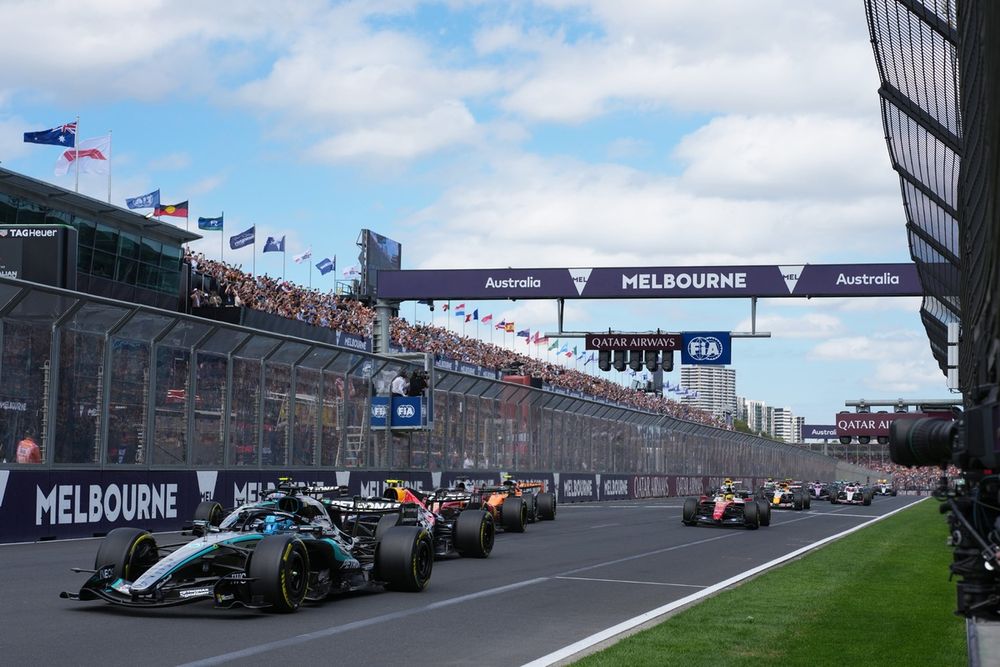
Fan feedback to F1’s new era was mixed at best…
Photo by: Jayce Illman / Getty Images
Given that merely adjusting the amount of energy that can be recovered and deployed is unlikely to resolve the fundamental cause of fan discontent, it is probable that a consensus for change will soon emerge – much like the fervent demands early last year for a quicker return to naturally aspirated engines.
Unlike *The Old Man and the Sea*, this narrative will not conclude with the main characters retreating to their humble dwelling, envisioning lions on a beach.
We want to hear from you!
Let us know what you would like to see from us in the future.
Take our survey
– The Autosport.com Team