Following George Russell’s commanding pole position for the Chinese sprint event, outpacing his Mercedes colleague Kimi Antonelli by 0.289 seconds and Lewis Hamilton’s Ferrari by a significant 0.621 seconds for third, Toto Wolff, the Mercedes team principal, acted to calm discussions regarding potential discord with their client organizations.
Subsequent to the previous weekend’s Australian Grand Prix qualifying session, where Mercedes revealed its full potential and secured a similar dominant lead, it became evident that the factory team possessed an edge over its customer counterparts, particularly in optimizing its power unit for quicker lap times. Predictably, complaints arose, with McLaren and, to a lesser degree, Williams being the primary public critics among the client teams.
The core of these grievances centered on the fact that only the main team received the updated power unit specification during the pre-season testing in Bahrain, which inevitably resulted in a ‘information deficit’ for customer teams, compromising the accuracy of their simulation results. During the Australian race, James Vowles, Williams’ team boss, hinted that his team was “taken by surprise” by the extent of Mercedes’ dominance.
“They’ve simply shown greater ingenuity than us, and it’s our responsibility to catch up,” he remarked. “I am genuinely surprised by the magnitude of their cleverness.”
“Conversations with HPP [Mercedes Benz High Performance Powertrains] regarding increased data access have been continuous for several weeks,” stated Andrea Stella, McLaren’s team principal.
“This is because, even during testing, we were essentially putting the car on track, observing the data, realizing ‘this is what we’ve got,’ and then responding to that. That approach is not characteristic of Formula 1 operations.”
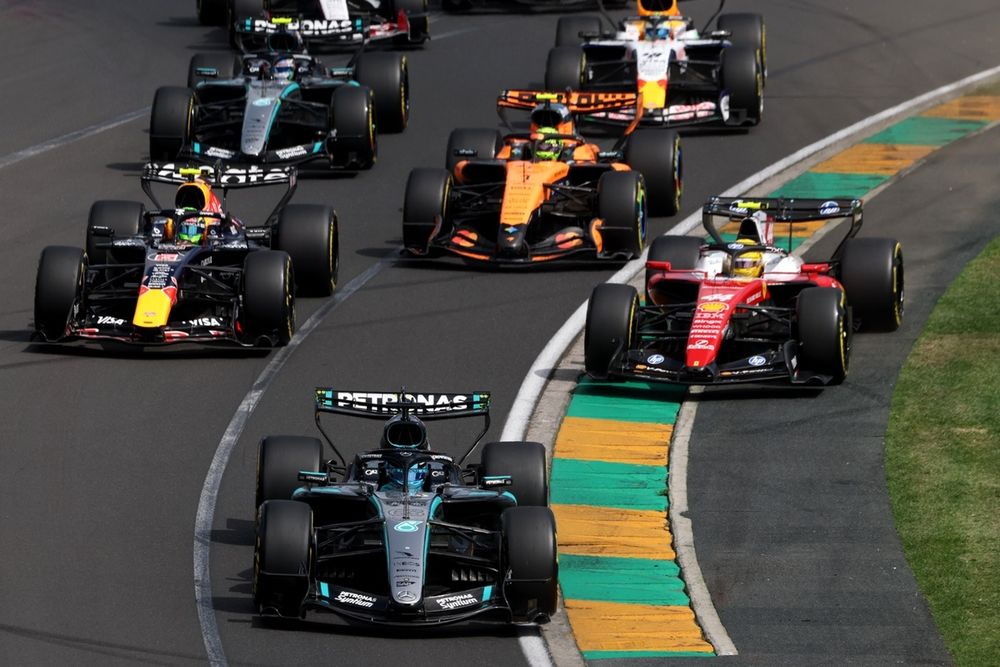
Mercedes outqualified its customer teams in Australia and finished well ahead in the race
Photo by: Sam Bloxham / LAT Images via Getty Images
Mercedes maintained that it had not only met its commitments to its clients concerning information and data exchange, but also that its competitive edge on the track stemmed from comprehensive superior vehicle performance, not merely from power unit optimization.
Despite these assurances, dissatisfaction persisted, leading Wolff to convene a conciliatory meeting in Shanghai this week. It is believed that Wolff aimed not only to ease his customers’ worries but also to secure a mutual understanding to temper the public discourse surrounding the matter.
“Ultimately, everyone inherently endeavors to gain some form of competitive edge for themselves,” Wolff commented after the sprint qualifying.
“Some pursue this more discreetly, while others do so via the media. However, we have re-engaged in discussions about this with our customer teams.”
“It is unequivocally clear that no one intended to level any accusations. Our aim is to navigate this situation within the established rules.”
“And you can observe that today they are considerably more competitive again – with [Pierre] Gasly likely showcasing the most potent straight-line speed.”
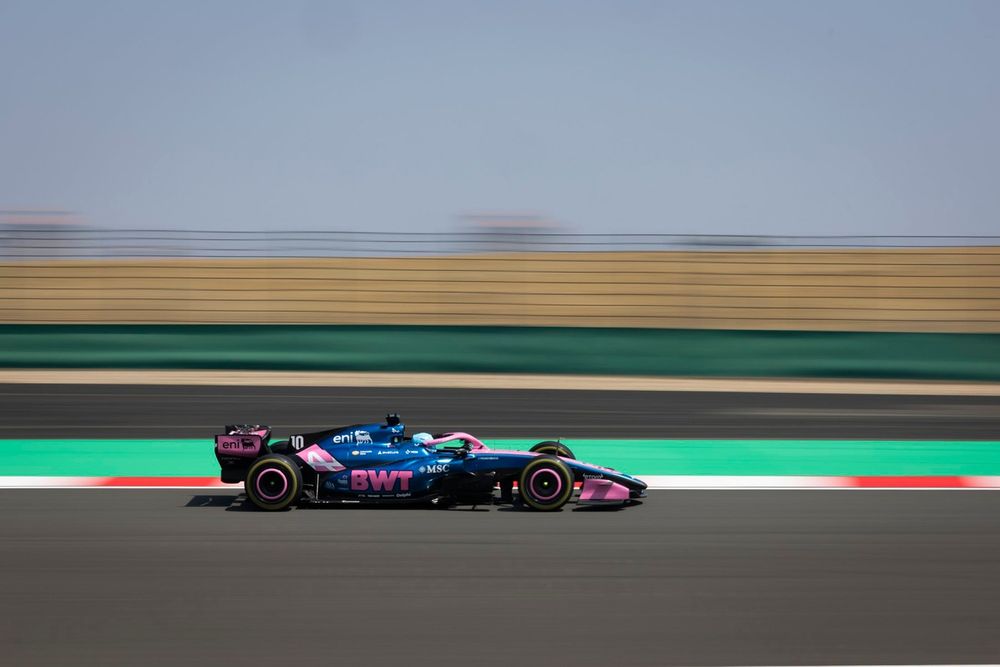
Alpine has joined the ranks of Mercedes customers this season
Photo by: Sam Bloxham / LAT Images via Getty Images
The effectiveness of the meeting was evident in the change in communication from those who had previously expressed the strongest criticisms. McLaren’s drivers, for example, appeared to have received instructions to deflect any inquiries concerning their alliance with Mercedes.
“It’s simply the beginning of the season, and there are numerous aspects we’re endeavoring to discern and comprehend,” Lando Norris stated during his pre-race press conference.
“Some information doesn’t require disclosure. This is because one always strives to establish unique competitive advantages.”
“Nonetheless, concurrently, there are specific elements we must independently unravel. The remaining matters are more akin to… I am unsure of the regulations concerning what must or must not be communicated.”
“Such details, those are the responsibility of Andrea and the broader team.”
“However, our collaboration [with Mercedes] has always been close. We intend to maintain this. And despite his [Stella’s] comments on certain aspects, many elements remained that we had not fully investigated or optimized on our own.”
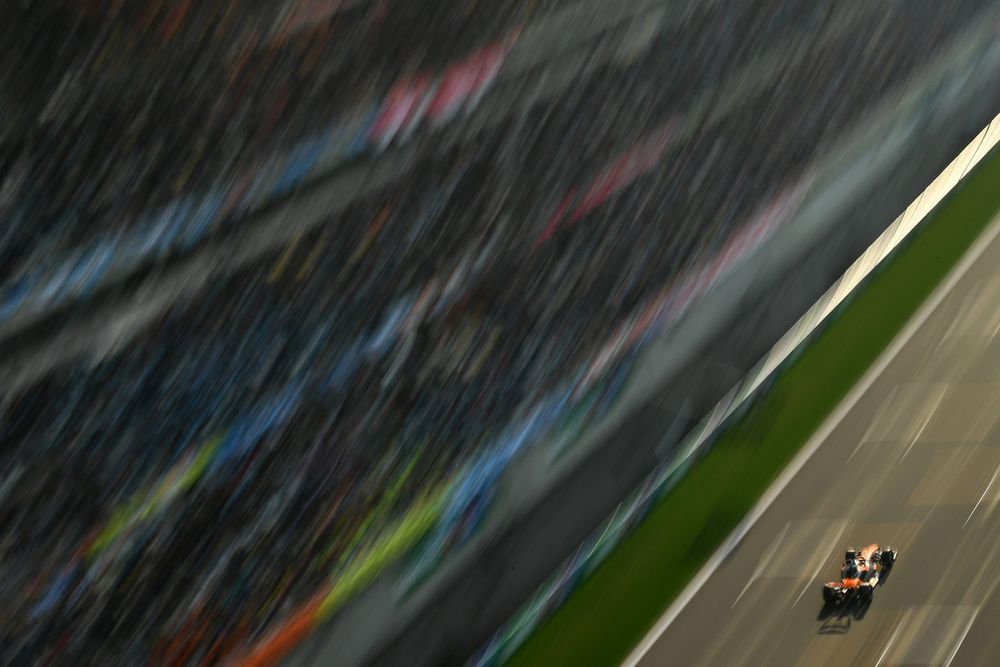
Oscar Piastri, McLaren
Photo by: James Sutton / LAT Images via Getty Images
This perspective isn’t merely a strategic maneuver, as available metrics suggest that Mercedes designed its vehicle philosophy with an alternative approach to energy recovery. At Albert Park, Russell and Antonelli not only recorded superior apex velocities compared to competitors (including other Mercedes-powered teams) but also exhibited exceptional straight-line acceleration on the rear straight. This capability was afforded by the W17’s enhanced aerodynamic efficiency and stable chassis, allowing it to counteract the understeer typically encountered when entering corners at elevated speeds.
Consequently, McLaren’s updated stance signifies an acknowledgement of what has become apparent: beyond further understanding how to optimize the Mercedes engine, they must also enhance their car’s aerodynamic downforce.