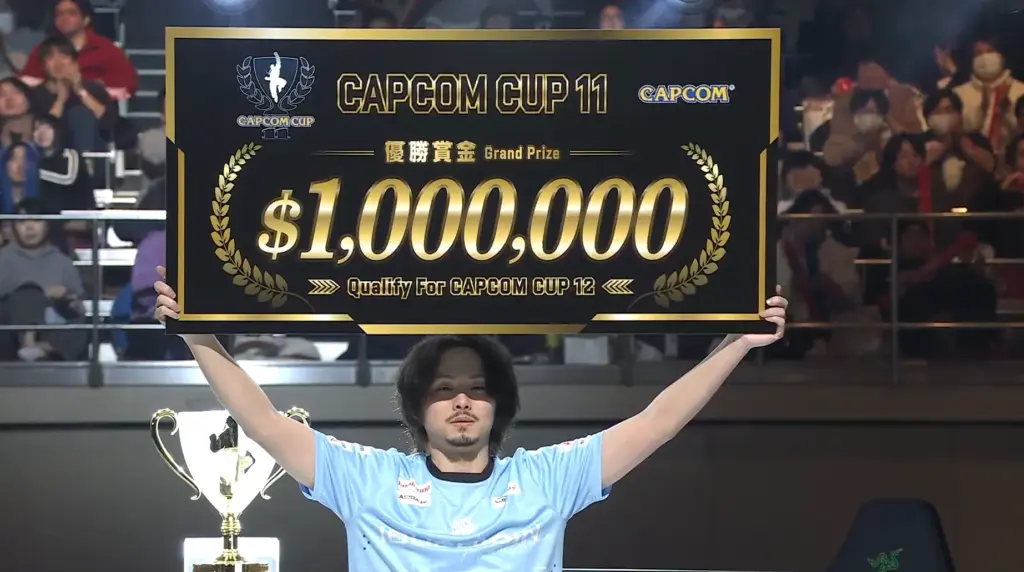
Street Fighter 6 frequently appeared to be a fighting game series that had transcended the typical image of a “struggling FGC.” The Capcom Cup 12 boasts an enormous tournament with a substantial prize fund. Nevertheless, this significant prize money incurs a considerable detriment to the broader Street Fighter community.
The Fighting Game Community (FGC) recently scrutinized Capcom’s regulations for its Capcom Pro Tour, the competitive circuit culminating in the Capcom Cup. Numerous regional and global competitions exist for participants to vie for ranking and qualification. Yet, these tournaments offer significantly less financial reward compared to the Capcom Cup 12. Players, in fact, suspect these smaller prize pools are intentionally minimal, allowing Capcom to reserve ample funds for the Capcom Cup, thereby exaggerating the scene’s overall prosperity and scale.
According to journalist Carver Fisher: “Capcom is willing to go to extreme lengths to maintain its $1 million Capcom Cup top award, even if it involves stifling the livelihood of committed community participants who attend competitions.
“This could be the most perplexing prize allocation system I’ve encountered within esports.”
Street Fighter 6 Features an Inconsequential Prize Fund Across the Annual Calendar
Annually, the FGC organizes numerous significant events showcasing diverse titles, uniting the fighting game enthusiasts. A subset of these gatherings belongs to the CPT, recognized as a premier competition for Street Fighter competitors. Examples include COMBO BREAKER and CEO 2026, both receiving prize contributions from Capcom.
The victor receives merely $2,000.
Even more astonishingly, Capcom has offered no prize money for Evo 2026 or similar competitions, notwithstanding their inclusion in the CPT circuit. The respective tournament organizers are solely responsible for funding these prize pools.
This remuneration arrangement was deemed “insulting” and “perplexing” by members of the FGC. Although the Capcom Cup offers substantial earnings, only a select group of participants manages to qualify. Consequently, competitors earn minimal income across the year, even when performing at their peak.
This situation led some fighting game enthusiasts to label Capcom as “avaricious,” a charge that has circulated for some time. The choice to designate the Top 16 of the Capcom Cup 12 as a pay-per-view event had previously alienated the FGC. The public outcry from non-Japanese fans was so significant that Capcom was compelled to lower ticket costs.
However, the harm had already occurred. A widespread sentiment emerged that Capcom prioritized financial gain over fostering the Street Fighter 6 community. The prohibition of FGC content creators from co-streaming the competition displeased many supporters, who believed Capcom was impeding the community’s expansion simply to generate revenue.
This prize distribution scheme appears to be yet another blow to the community. Cultivating the FGC becomes challenging when participants receive only $2,000 for traveling globally and securing first place. This is quite discouraging and lacks financial sustainability for numerous professional players, not to mention casual participants unlikely to rank.

Considering the circumstances, is it truly fair to mock the Smash community? It has frequently faced derision for its exceptionally meager prize funds, largely because Nintendo has not merely overlooked the scene but actively undermined it over time, withdrawing Smash from Evo and canceling tournaments. In contrast, Street Fighter enjoys Capcom’s endorsement. Capcom manages its complete competitive tour. Nevertheless, the reward money remains largely consistent throughout the year.
I would argue this is considerably less justifiable. Smash’s rationale is its fan-funded nature. Capcom, however, is overtly declining to establish a sustainable tournament prize framework for any event apart from the Capcom Cup. As Fisher noted, this presumably cultivates an impression of triumph, enabling Capcom to publicize its million-dollar competition. Professional players, conversely, endure difficulties during the remainder of the year.
Given the limited finances within the fighting game sector, it’s understandable why Capcom might hesitate to invest heavily. Yet, witnessing this reality so directly remains rather surprising. Moreover, the situation wasn’t always like this. In previous years, the prize funds were substantially more generous. This merely reinforces the “avarice” claims circulating lately.
Despite the FGC being characterized by intense passion and resolve, it does not imply an acceptance of seeing professional players unfairly disadvantaged simply because it’s possible.
The article FGC expresses dismay over Capcom’s meager prize funds for Street Fighter 6 CPT competitions