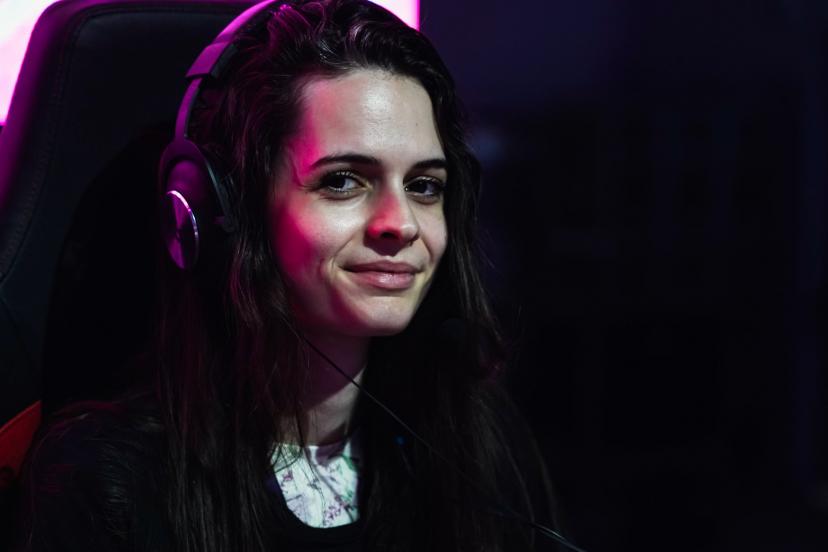
Bias rooted in gender within competitive gaming is frequently portrayed as an issue that the sector is gradually overcoming, and this perspective holds some validity. The competitive landscape has indeed become more varied, with a greater number of individuals prepared to voice concerns when encountering prejudice.
Nevertheless, recent incidents, such as those recounted by Ève “Colomblbl” Monvoisin and Maya “Caltys” concerning the League of Legends community, demonstrate that the field remains far from fully embracing all participants.
During March, Colomblbl disclosed her exclusion from a squad due to her gender. Soon after, Caltys recounted a parallel experience from an earlier period in her professional life, where despite being deemed the most suitable candidate for a position, she was dismissed for identical reasons. These accounts rapidly gained traction within the community, prompting numerous others to share their personal testimonies.
The long-standing recurring issue is once more brought into clear public view.
The public response to these narratives also carries significant weight. A greater degree of resistance is now apparent, with an increased number of individuals challenging these rulings instead of passively integrating them into the existing framework. This evolution holds considerable significance.
Nonetheless, it also underscores the frequent burden placed upon those already subjected to public harassment and prejudice to voice their concerns, alongside the potentially innumerable uninformed opinions circulating in private discussions.
When the Conduct of Others Outweighs Individual Competence
For both Colomblbl and Caltys, the justification for their removal was not their capability, but the notion that a female presence might “disrupt” team focus. Such rationale, however, reflects more on the prevailing atmosphere than on the individual player, implying a deficit of professionalism across the whole team, including support personnel.
Still, the repercussions are borne by the individual who is cast aside.
Proficiency takes a backseat to presumptions about another’s conduct, and the phrase “not a good fit” serves as a convenient explanation to conceal the true motives behind such choices, which would, predictably, be challenging to articulate publicly.
This particular line of reasoning has significantly influenced competitive gaming for an extended period. Its manifestation isn’t consistently overt discrimination; rather, it frequently emerges subtly through unofficial approval mechanisms, unarticulated unease, or the conviction that certain individuals just “wouldn’t mesh” within a group.
Nonetheless, the result remains constant: chances are not granted solely on the basis of individual worth.
Despite this, indications of transformation are visible. Responses to these accounts reveal that numerous individuals within the community no longer uncritically accept such justifications, and what was once silently overlooked now ignites debate.
While this alone won’t resolve the problem, it demonstrates that established cultural norms are facing scrutiny.
Male Players Predominance: The Burden of Societal Norms
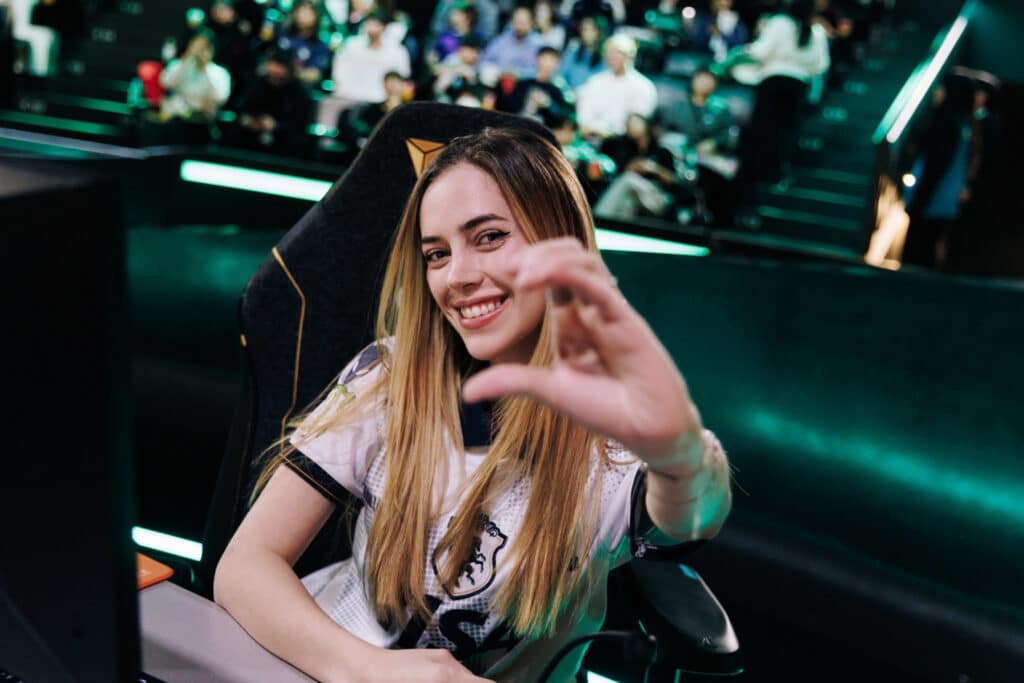
The 2025 Global Power of Play report by the Entertainment Software Association indicates that females currently comprise 48% of the worldwide gaming population — a development that isn’t particularly new.
Studies conducted by the Pew Research Center over ten years prior had already revealed that 48% of women engaged in video gaming, yet the distinguishing factor has been acknowledgement. The identical study showed 15% of male players identified themselves as “gamers,” contrasted with merely 6% of women. These figures underscore the extent and duration of women’s feelings of illegitimacy within this domain, or even their sense of culpability for participating.
These behavioral patterns frequently commence far sooner, well before competitive electronic gaming enters the realm of possibility. Historically, for many young females, entry into gaming has been influenced by distinct societal expectations compared to their male counterparts. Although not universally true, it remains commonplace for boys to be granted greater duration, area, and even provisions for playing video games, encompassing console ownership, extensive online engagement, or simply fostering the idea of gaming as a credible pastime.
Conversely, girls are frequently anticipated to manage their schedules distinctly, dedicating more effort to domestic chores, concentrating on academic pursuits with greater “earnestness,” or being steered towards conventional trajectories like secure professions or establishing a household. These are not uniformly overt constraints, yet they impact the degree of time and assurance an individual can devote to gaming from childhood.
This disparity persists rather than diminishing with age, evolving into a more substantial challenge. By the point when pursuing competitive gaming or the broader interactive entertainment sector becomes an available choice, numerous women already find themselves at a disadvantageous starting point, frequently possessing less background, fewer professional contacts, and diminished impetus to seriously commit to it.
Concurrently, environments primarily occupied by men tend to perpetuate their own dominance, given that representation significantly influences an individual’s sense of belonging. Should the majority of professional competitors, trainers, or strategists be male, it grows more difficult for women to envision themselves in such capacities, and even more challenging to gain acceptance upon attempting to join. While women and other underrepresented genders participate in video games, they frequently avoid shared venues for multiple considerations.
Nonetheless, this is also an arena where gradual shifts are occurring, as an increasing number of women penetrate these realms and contest established preconceptions. Still, the impact of those formative social and cultural conventions remains evident, persistently influencing not only participation rates but also who receives chances for achievement.
Competitive Gaming: A Standstill Amidst Obstacles and Evolution
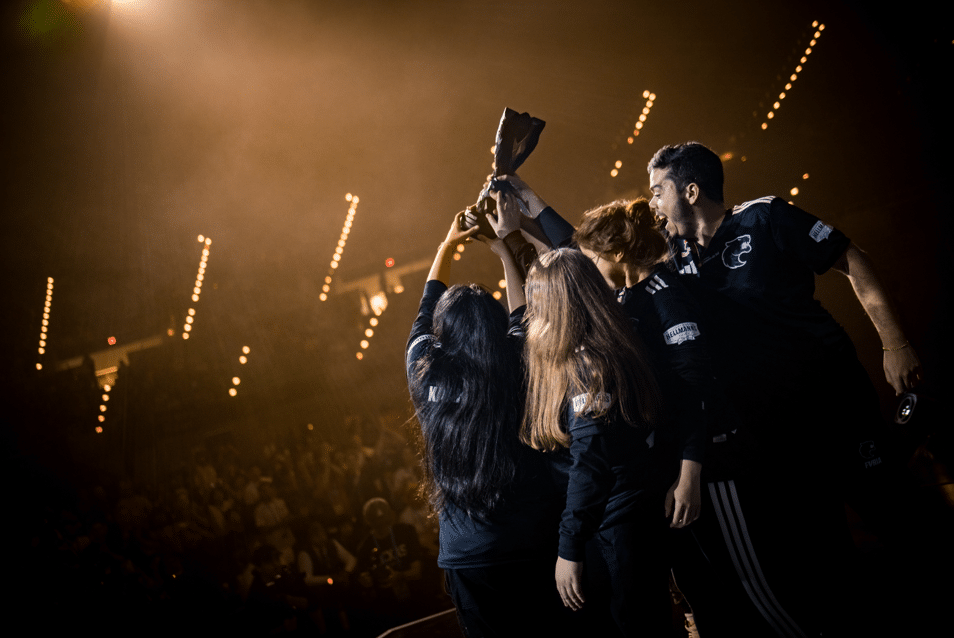
Experiencing prejudice has been a constant since my entry into the competitive sphere in 2019, manifesting both within and beyond gameplay. Nevertheless, I perceive my encounters as less severe than those endured by numerous others during the identical period. Yet, considering these “routine” slights, disparaging remarks, and prejudiced circumstances as “mild” highlights the entrenched normalcy of such occurrences for women in professional gaming.
Upon initially becoming part of a media entity, I stood as the sole female member of the cohort. My tenure as an adjudicator for a prominent global tournament organizer also saw me as the singular woman in my division for a biennial span. Throughout that period, I was frequently characterized by contradictory terms: amiable, yet overly assertive; excessively vocal, yet insufficiently conversational. I often undertook the role of pointing out gender bias, which subsequently influenced my colleagues’ perceptions of me. While these categorizations weren’t consistently intended to marginalize, they nonetheless impacted how I was seen by everyone within that shared setting. My professional contributions weren’t invariably the primary factor in how others depicted me.
With the advancement of my professional journey, I’ve collaborated with peers who prioritize my contributions over my sex, though this isn’t the typical outcome. A substantial number of women and individuals of marginalized genders within competitive gaming continue to confront heightened obstacles, reduced prospects, and increased demands to perpetually validate their capabilities.
Genuine attempts are being made to ameliorate the circumstances. Certain entities commit resources to initiatives, diverse team compositions, and tournaments aimed at empowering marginalized genders. Such endeavors carve out areas, enhance prominence, and provide an initial platform often absent in the predominant competitive framework.
Nonetheless, the very existence of a demand for such segregated environments also reveals the boundaries of contemporary advancement. So long as competitors of marginalized genders can face dismissal for motives unconnected to their skill, the inherent system persists in its inadequacy. While young girls assist with household tasks instead of engaging in video games like their male siblings, the competitive landscape forfeits prospective global titleholders.
The contemporary professional gaming sector operates amidst this inherent conflict. Accounts draw notice, subsequent dialogues ensue, and for a fleeting period, it appears as though transformation is imminent — yet, the pattern is well-known.
Public interest wanes, the dialogue shifts, and the identical concerns are relegated to accommodate new ones. Progress is underway, but its velocity is inconsistent across different areas, and its impact isn’t always enduring. Until these instances catalyze sustained measures instead of fleeting responses, the landscape will continue its advancement, though never reaching its full potential.
This article elaborates on how competitive gaming has evolved, yet discriminatory circumstances persist.