In what ways do global political dynamics influence esports? The straightforward response is: precisely as they impact every other facet of existence, given that all things are intertwined with politics.
These dynamics dictate your fundamental entitlements, the costs you incur, the resilience of surrounding frameworks, and even the minor, routine matters you rarely ponder – such as your daily gaming allowance. Consequently, the esports community ought to give this greater consideration, ensuring it moves beyond a mere peripheral topic in esports discourse.
When declarations concerning tournaments, sites, or collaborations are issued, they should not be accepted superficially as simply “positive developments for the industry,” but rather scrutinized for their deeper implications extending beyond the actual contests. When event planners disclose a host location, they position a worldwide audience within a distinct political and societal framework, and this selection carries weight.
Furthermore, overlooking such circumstances does not cause them to vanish; it merely defer confronting the repercussions until they are already affecting the very foundation of this sector: its community. Rather than feigning that esports exists apart from political influences, it is likely opportune to examine its deep-seated involvement — at times, more explicitly than others.
Moreover, this impact is not invariably linked to extensive conflicts or financial strain.
In the Republic of Korea, compulsory military enlistment can halt professional gaming careers at their zenith, whereas in other areas, inadequate infrastructure—ranging from unreliable internet connectivity to insufficient equipment—hinders aspiring players from even joining the industry. For those already professional, residing internationally frequently entails visa prerequisites and legal limitations that can directly impede their participation in competitions.
The Esports Industry Finds Itself Unable to Decline, Yet Perhaps It Ought To
Extensive turmoil across Southwest Asia and North Africa, encompassing Israel’s persistent territorial ambitions in adjacent nations like Palestine, has exacerbated regional discord. These clashes primarily impact humanitarian circumstances locally, and subsequently influence global gatherings frequently held in nearby states, such as Saudi Arabia.
During 2026, intensifying conflicts in the area directly impacted significant athletic competitions. Due to apprehensions regarding regional volatility, Formula 1 formally withdrew both the Bahrain Grand Prix and the Saudi Arabian Grand Prix, originally set for April 2026. The removal of events of such magnitude from a schedule conveys a level of hazard that markets and event planners cannot disregard.
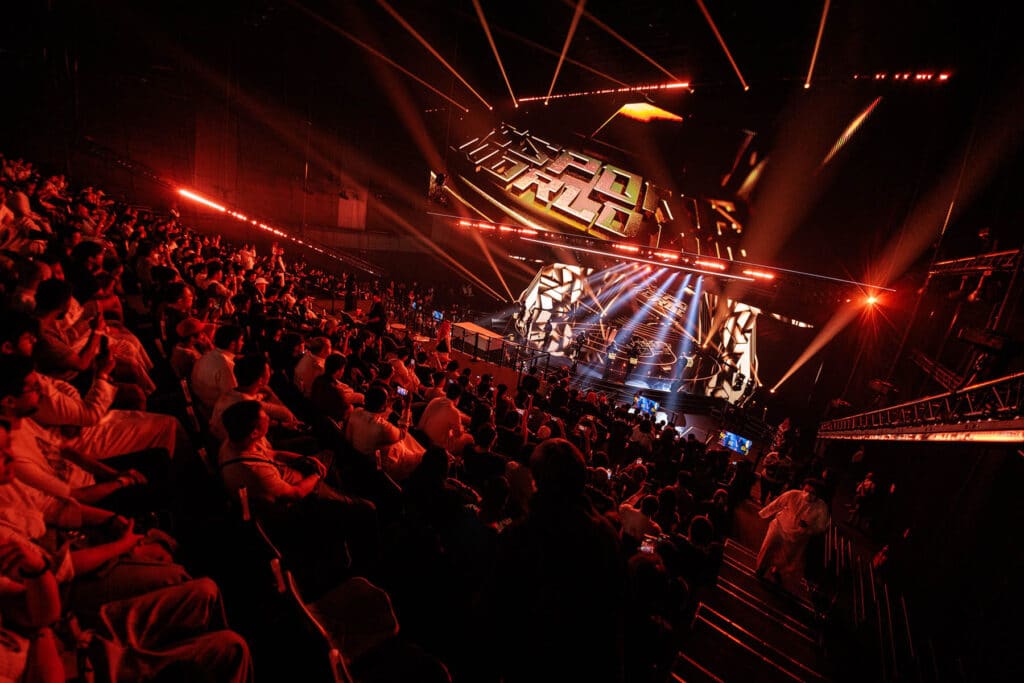
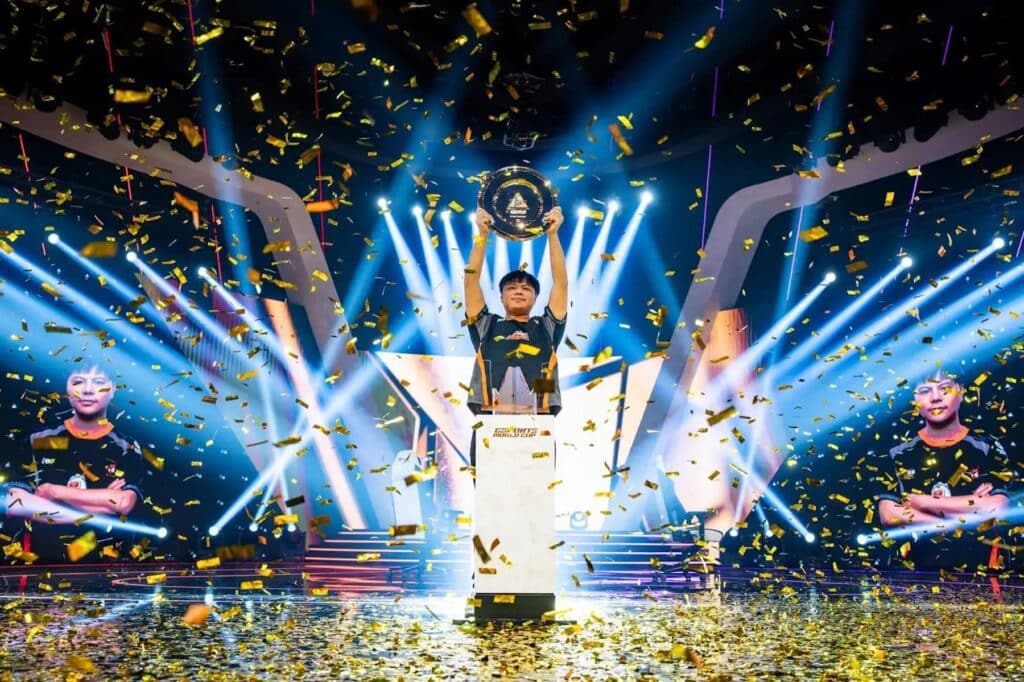
Likewise, the Esports World Cup, planned for Riyadh later in the year, rapidly became a focal point of conjecture.
Within mere days, whispers of its delay—or outright annulment—started to spread. Nevertheless, dispatches from April 15th conveyed that, per Gabe News, “the EWC 2026 is presently not slated for postponement.”
Prior to discussing why discontinuing or even delaying the EWC would severely impact the competitive gaming sector, it is crucial to momentarily reflect upon Saudi Arabia’s approach to esports. Over recent years, the nation has substantially funded gaming and esports endeavors as components of a larger plan to diversify its economy. These undertakings are extensively perceived as elements of a ‘sportswashing’ tactic—involving the utilization of prominent global spectacles to alter international opinions while persisting with contentious internal governance.
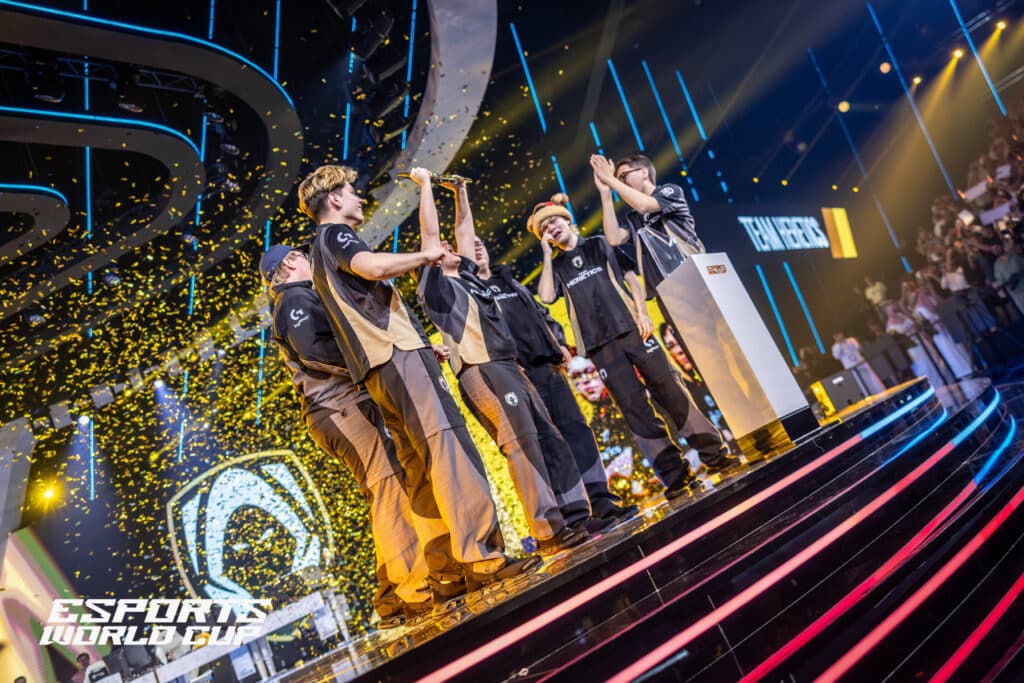
Thus, the EWC occupies a central position in this initiative: presenting enormous prize funds that esports entities find hard to disregard, even as issues pertaining to human rights and prejudice persist in discussions surrounding the occasion.
This constitutes the uneasy truth, as the esports domain requires such financial backing.
Despite existing for decades, the competitive gaming industry continues to contend with establishing viable income streams, and numerous enterprises within this sphere find profitability elusive. Consequently, events such as the EWC are effectively becoming nearly indispensable for continuity, provoking inquiry into their overall benefit or detriment to the wider ecosystem.
From one perspective, it finances unprecedented expansion, constancy, and prospects. Conversely, it links the trajectory of esports to a geographical area characterized by political instability and moral scrutiny, which—as evidenced by Formula 1—entails inherent dangers.
“It feels absurd to be discussing such matters on a channel dedicated to esports reporting, but it seems this is our current reality,” remarked digital content creator Travis Gafford, referencing the assassination of journalist Jamal Khashoggi, in a clip where he articulated his decision to refrain from covering the EWC.
“All individuals are welcome to compete, and no participant will face prejudice. This is a commitment we can offer,” stated Ralf Reichert, CEO of the EWC Foundation, to the BBC, subsequently remarking, “Every nation globally possesses distinct indigenous customs and societal conventions that must be observed. Therefore, our advice to everyone is to exercise discretion. Behave in a manner that honors the local ethos.”
Consequently, the inquiry of whether “these competitions should take place elsewhere” shifts from one of practicality to one of precedence. Are we to anticipate that esports will impose self-governance according to political leanings, or do we concede that funding will originate from any accessible source? Critically, does the typical spectator even consider these elements while observing?
To the majority of viewers, esports remains purely recreational, a specialized segment of a casual pastime. However, this detachment throughout the entire sector holds significant consequence, as it illustrates how vital high-level strategic determinations fail to permeate to the very audience that event planners strive so intensely to engage.
Although the present EWC appears unlikely to be called off, the geopolitical strain within the area cannot be disregarded—particularly as major entities, such as the United States, continue to exert influence and back regional disputes for their distinct strategic aims.
You Secured a Spot in the Competition, Yet Is Your Arrival Possible? (And Do You Desire It?)
Regarding the United States, recent internal directives frequently yield global repercussions, and as these directives evolve, they directly impact worldwide sectors such as esports. Immigration rules, foreign affairs, and commercial strategies collectively determine who gains entry, who is eligible to contend, and the manner in which events are structured—but most significantly, who is inclined to participate.
Within esports, a domain characterized by frequent global journeys often organized with strict deadlines, such impediments become an integral aspect of operations. Admittance into a nation may rely on authorization periods that conflict with competition schedules, and even minor postponements can have cascading effects, influencing training, readiness, and ultimately performance—resulting in a framework where involvement is consistently provisional.
Feasible, yet perpetually lacking complete certainty.
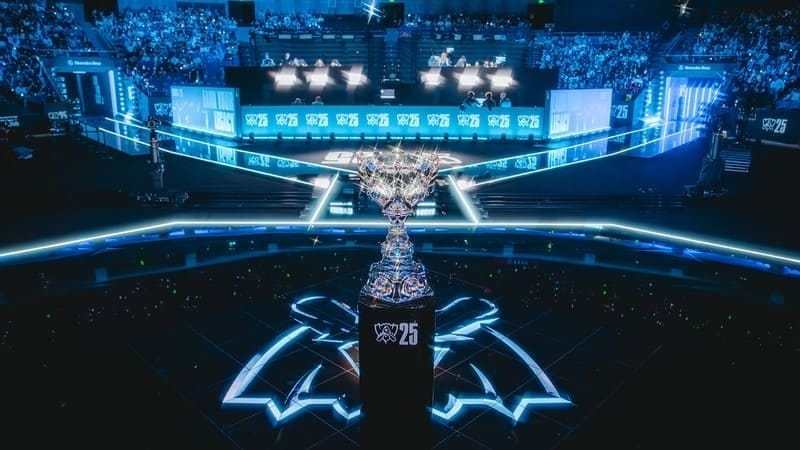
Similar situations have already emerged in conventional athletics, with the forthcoming FIFA World Cup 2026 generating anxieties regarding ticket sales, ease of access, and particularly, immigration procedures for global attendees, as reported by The New Yorker. As these worries escalate, it is apparent how comparable challenges might affect esports gatherings, where competitors frequently must undertake swift international travel across numerous nations within a single season—such as for the 2026 League of Legends World Championship, hosted in the US.
Riot Games, the event’s orchestrator, acknowledges this fact and has previously adjusted to it on multiple occasions. During First Stand 2026, Chris Greeley, the Head of League of Legends Esports, articulated that visa challenges have become a consistent feature of global competitions, necessitating emergency strategies to handle unforeseen difficulties. Nevertheless, these fixes inherently remain responsive, tackling issues solely post-occurrence instead of averting them entirely.
Even though these difficulties might appear less urgent than ongoing conflicts, they nonetheless exert considerable influence over the modalities and venues for esports operations.
“Six of the eight competing teams are encountering difficulties with visa processing,” stated Tanner “Damonte” Damonte, head coach for Shopify Rebels, during a discussion with Sheep Esports early in 2026.
“Given the multitude of complications foreigners currently face when traveling to the US, even with complete documentation… it’s simply not worth the gamble,” a Reddit user advised supporters keen on attending the LoL Esports World Championship later this year in Allan, Texas—and this sentiment is shared by others voicing apprehension regarding the nation’s present atmosphere.

Beyond the practicalities, there also exists the consideration of who genuinely perceives themselves as invited to participate. Recent governmental decrees within the US, aimed at LGBTQAI+ communities, have sparked anxieties concerning acceptance and security. Furthermore, for international guests unfamiliar with local conditions, nearly 20% of American video game players identify as queer, based on GLAAD’s 2024 findings.
Herein lies the imperative for publishers and event planners to act with significantly more intention than is presently the case. The selection of a venue can serve as a declaration regarding the hazards one is prepared to impose upon competitors, personnel, and enthusiasts. When political circumstances directly influence security, ease of access, or fundamental involvement, characterizing site choice as unbiased appears insincere.
Although certain locales ought to trigger warnings instead of being chosen as future sites, it is occasionally impossible to foresee events a year or two in advance. Yet presently, it seems that concerns for safety and ethical conduct are merely addressed reactively, once issues emerge, and are not met with definitive resolutions.
Furthermore, at times, it appears as though we are proceeding as if no significant developments are occurring whatsoever.
Engagement in Esports Necessarily Implies Your Involvement
As competitive gaming strives to align more closely with conventional athletic or entertainment frameworks, it absorbs the identical political tensions that established sports have contended with for generations. The distinction lies in esports accelerating into this reality more swiftly, possessing less organizational safeguard and a reduced number of historical examples to draw upon.
The esports sector is still attempting to delineate its scope of accountability and what aspects it can overlook, yet these pressures persistently impact millions of individuals directly—through hostilities, financial unpredictability, and human rights issues. The least the esports community can accomplish is to remain informed and respond candidly to spectator apprehensions. Conversely, engaged viewers must recall that even observing their preferred co-streamer cheering as their top team secures a victory carries political undertones.
A note from the writer: This piece addresses merely a fraction of the contemporary conflicts and political forces influencing our global landscape. It concentrates on certain more apparent and extensively debated scenarios—specifically from a Western viewpoint—and does not comprehensively cover the numerous territories, groups, and marginalized populations experiencing comparable conditions. Remain knowledgeable.
The feature piece, ‘Competitive Gaming was never neutral politically, we merely feigned it was (and that pretense can no longer be maintained),’ was initially published by Esports Insider.