Confirmation has arrived that South Korea will not be participating in the Esports Nations Cup (ENC), specifically not through a squad endorsed by the Korean e-Sports Association (KeSPA). The withdrawal is said to be due to a disagreement between KeSPA and the Esports Foundation over team member choices.
Irrespective of the underlying cause, given the absence of the nation widely credited with originating modern esports, and further compounded by Darragh Barbinson of Insider Gaming’s report indicating China’s involvement remains unverified, the ENC is now unable to fulfill its core purpose of identifying the genuinely top nation in any specific esport discipline.
The Esports Nations Cup lacks any meaningful purpose without competitors and squads from South Korea.
The Esports Nations Cup Faces Significant Turmoil
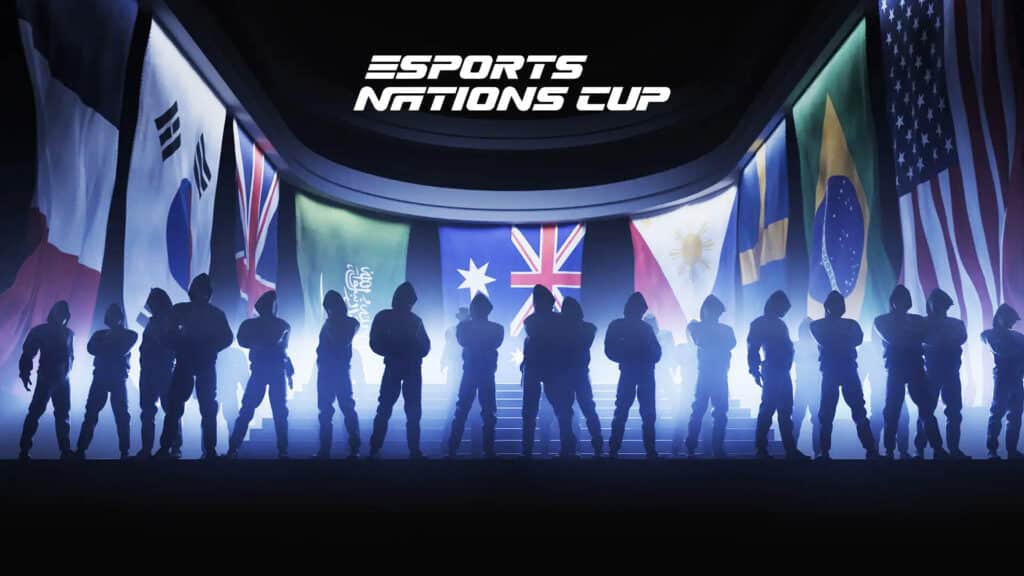
The Esports Nations Cup, conceived by the Esports Foundation as a companion competition to the Esports World Cup, is an international team tournament. This event is scheduled for Riyadh between November 2nd and 29th, 2026, marking a further stride in Saudi Arabia’s strategy to position itself as a leading hub for esports globally.
Participants will compete across a roster of 16 different esports titles, with every competing squad composed solely of athletes from one country.
The event’s official web page proclaims: “Having received more than 630 applications from over 152 countries and regions worldwide, the indication is unmistakable: the international community is eager to contend. This goes beyond merely a competition; it represents a worldwide initiative driven by the aspiration to represent one’s homeland on the grandest platform.”
Regrettably, the aspiration for the “supreme showdown” is currently uncertain due to the absence of the esports juggernaut, South Korea (with China’s potential absence also a factor). In fact, merely South Korea’s withdrawal is sufficient to disrupt numerous scheduled competitions, considering the country’s overwhelming superiority in many top-tier esports.
Consider League of Legends as an illustration. Korea and China collectively possess 13 out of 15 League of Legends Worlds championship titles, maintaining an unbroken winning streak since 2012. If these nations are not participating, how can the eventual champion country at this tournament credibly claim to be the global leader in League of Legends? Realistically, such a claim would be unfounded.
Even setting aside the extensive past of the sport, T1 has clinched the last three Worlds championships, achieving an unprecedented hat-trick spearheaded by the greatest player in the sport, Lee “Faker” Sang-hyeok. The idea of hosting a national tournament that excludes the indisputably reigning powerhouse champions is frankly preposterous.

Furthermore, the impact extends beyond just League of Legends. Prominent teams and individual talents from South Korea and China are deeply competitive across titles such as Overwatch, Dota 2, PUBG: Battlegrounds, VALORANT, and various others.
In short, their non-attendance represents far more than a slight inconvenience for the ENC; it signifies a catastrophic blow to the tournament’s competitive integrity.
Should the globe’s top contenders be absent from your world championship, the ENC faces an absolute credibility crisis, considering its fundamental objective is to identify which country can assemble the premier singular lineup in any specific esport.
Consequently, it will now be incapable of achieving this aim.
The Esports Nation Cup Confronts Its Difficult Situation
The Esports Foundation has not ceased its efforts and intends to persist in advocating for Korean players’ involvement, even without an official collaboration with KeSPA.
They declared in an official communication: “Our dedication to ensuring Korean players compete in ENC26 remains steadfast. Throughout the next week, we plan to directly engage with various parties within the Korean esports community, including coaches and players, to establish a unified approach. This is to ensure the ENC26 Korean National Esports Team can participate with the distinction that Korean supporters and competitors merit.”
Nevertheless, navigating a route to participation without KeSPA’s sanction presents a perilous challenge for both individual players and various organizations. KeSPA maintains supreme authority over all aspects pertaining to national esports teams within Korea.
The Korean Olympic Committee conveyed to Seoul Esports that “only those athletes chosen by officially affiliated bodies are acknowledged as national delegates. […] It is not permissible for a squad that has bypassed the association’s process to stand for the country.”
Therefore, any competitors choosing to participate in the ENC would either be acting in defiance of the Korean Olympic Committee or would be compelled to forgo representing South Korea. Regardless of the scenario, the competition would still be a compromised iteration of what it would genuinely be if South Korea were to participate through official channels.
With a crucial nation such as South Korea not taking part, the contest loses its fundamental justification.
When Competition Falters, Enthusiasm Dwindles
The ENC, lacking South Korea’s presence, is comparable to the Olympic Games missing either America or China. While the spectacle could technically proceed in their absence, the anticipation surrounding it would suffer a significant decline, as a considerable number of the world’s elite would not be participating.
The tournament’s authenticity is at risk, alongside its potential audience. The esports audience was already somewhat apprehensive about the Esports Nations Cup due to the increasing influence of Saudi Arabian entities within the scene. Now, who would be willing to compromise their principles to watch a competition that doesn’t even showcase the premier athletes? It carries the impression of a Tier 2 event rather than an elite gathering, and it’s widely understood that viewership decreases in Tier 2 events where teams contend for the title of the best among the second-best.
Should the objective of the ENC be to engineer an exhilarating spectacle that mesmerizes global spectators by setting the most accomplished players from every country against each other, achieving that ambition without South Korea is, at best, improbable. Furthermore, considering China’s previously mentioned reluctance to participate, which implies the two preeminent competitive regions in esports would be absent, one has to question what the purpose truly is?
Although certain competitions might remain largely untouched by Korea’s non-participation, the entire ENC loses its significance if the country credited with pioneering esports is not present. If Korea withdraws, honestly, I see no reason to engage either.