London’s Mayor, Sadiq Khan, recently asserted that his metropolis is poised to “spearhead the global esports movement.” While initially intriguing, this declaration quickly struck me as amusing. The sheer number of cities aspiring to be “esports capitals” renders the title largely meaningless nowadays.
While on an important trade delegation to Tokyo, visiting the Red Bull Gaming Sphere in the company of representatives from Fnatic and Sony, Mayor Khan unequivocally stated his goal to establish London as the planet’s premier esports hub.
This ambitious goal is supported by a recent City Hall publication outlining how competitive gaming could significantly boost the local economy and create substantial professional opportunities for younger generations. London is also allocating unprecedented funds to its youth centers, improving their internet connectivity and acquiring gaming consoles to allow aspiring players to hone their skills.
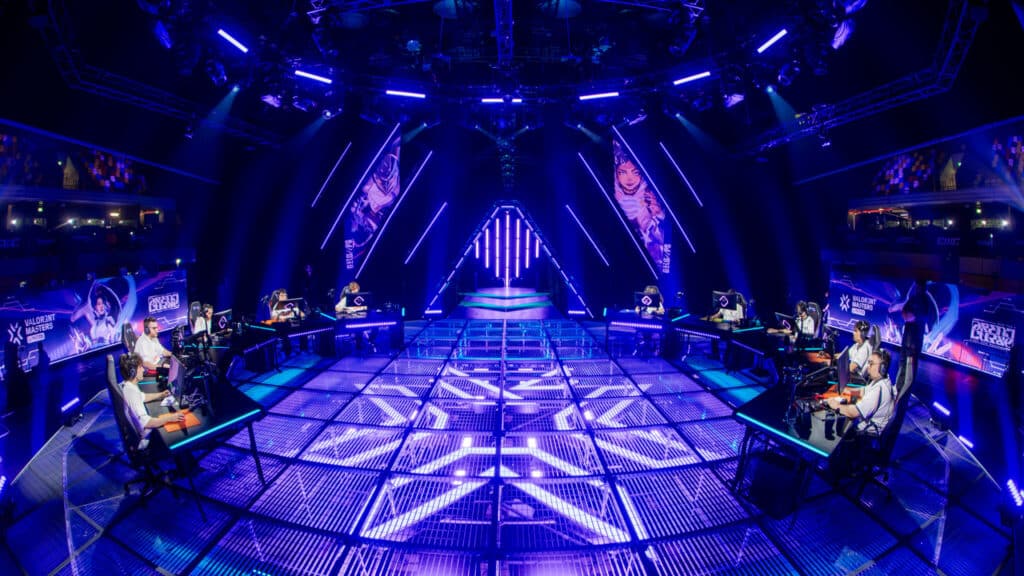
Financially, the rationale appears sound. The 2024 League of Legends Worlds Final hosted at the O2 Arena generated twelve million pounds ($15.8 million) for the city, and the 2025 BLAST Premier London Open reportedly contributed approximately thirty million ($40 million). Currently, **VALORANT Masters London** is drawing considerable interest from the esports community.
However, even as London proceeds with constructing a new twenty-five-thousand-seat venue designed for esports, this declaration prompts a critical inquiry: is there still space for another contender in this field?
Then Every Major Urban Center Claims the “Esports Capital” Title
London’s ambition for global gaming dominance faces its primary obstacle in the “esports capital” designation, which is presently the most contended title in the entertainment sector. Paris, for instance, recently captured significant attention following the Esports World Cup’s eleventh-hour relocation to France. While some might contend that the EWC holds less significance, Paris has undeniably hosted numerous reputable esports events lately, such as Evo and the RLCS.
Globally, the rivalry intensifies further. Seoul has served as both the symbolic and actual origin point for professional gaming infrastructure for many years. Riyadh, conversely, is investing immense oil wealth into the sector to construct an entire esports-focused district from its foundations.
Los Angeles is home to the operational hub for Riot Games and the VCT circuit, Katowice stands as the fabled, vibrant core of Counter-Strike, and Tokyo represents the historic center for fighting game competitions.
With every major city worldwide striving to establish its presence in precisely the same domain, proclaiming oneself the global leader evokes a sense of futility, akin to a “cranky elder complaining pointlessly.”
Can Heritage Outperform Lavish Investment? (It Ought To)
To acknowledge London’s *merits*, the city indeed holds a unique edge that cannot be acquired with mere capital: a substantial, organically developed fan base. Spectators of the 2024 League of Legends Worlds Final can attest to the distinctive character of British esports audiences.
The immense, deafening atmosphere within the O2 Arena demonstrated that the UK doesn’t merely stage events; it transforms them into grand, football-esque shows.
This genuine enthusiasm is precisely the asset that cities such as London and Paris possess. While some well-funded territories can erect immaculate, cutting-edge stadiums in desolate areas, they often find it difficult to reproduce the inherent spirit, legacy, and genuine crowd excitement that organically arises in European venues. However, this alone is insufficient.
The Current State of London’s Esports Environment (Or Its Deficiencies)
Sadiq Khan’s proposal undeniably represents a significant victory for the UK’s gaming community, superficially speaking. Witnessing a prominent political leader afford competitive gaming the same economic consideration as conventional sports marks a welcome departure from previous “video games are detrimental” narratives.
Nevertheless, the UK is enforcing a social media prohibition for individuals under 16, thereby preventing young enthusiasts from accessing Twitch, TikTok, and other broadcasting platforms for these events. This situation strikes fans as deeply ironic. As one esports admirer commented on Reddit concerning Khan’s ambitious assertion: “The authorities are essentially prohibiting the target viewership from engaging with this.”
Additional doubters joined the chorus of dissent. After all, what is competitive gaming without a degree of negativity and scrutiny? Several esports enthusiasts pointed out that the UK, as a nation, holds minimal actual sway in the esports realm. This is often attributed to the UK’s esports landscape having been “dormant” for a considerable period, possibly owing to a scarcity of homegrown talent. Furthermore, gamers suggest this is because London and other urban centers lack the necessary infrastructure to foster esports as a viable career path.
Merely declaring the intention to host a few tournaments is insufficient. For London to genuinely aspire to global leadership, it cannot solely depend on organizing conventional arena events. It must transform into a metropolis where emerging talent can truly thrive, develop, and establish enduring careers without being compelled to relocate to North America or Asia.
Yet, securing the worldwide pre-eminence will demand considerably more than a productive trade delegation and some improved internet equipment in neighborhood youth facilities. London certainly possesses the necessary venues, transportation hubs, and an fervent supporter base to remain a consistent presence on the international circuit.
The question of whether it can truly surpass Paris, Seoul, and Riyadh to claim the genuine capital title is yet unanswered. This is an ambitious objective that I doubt the city can adequately achieve. I suspect Khan underestimates the profound structural and administrative transformations essential for genuinely fostering esports in London.
Presently, local enthusiasts can simply relish the regular arrival of top-tier tournaments directly in their vicinity. However, an esports capital? I find that improbable.