It is hard to believe I am writing this, but the fighting game community’s whining has gotten *out of hand*. Even by my standards.
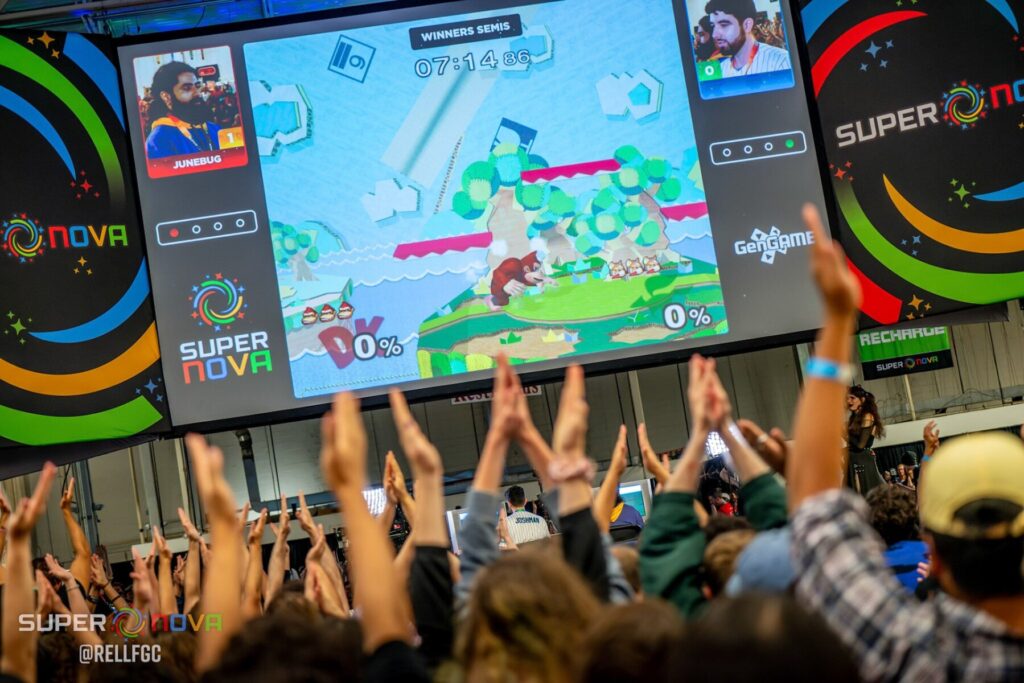
A massive lineup of fighting game tournaments is on the horizon. The Esports World Cup (should that interest you) is featuring Tekken 8, following the conclusion of Street Fighter 6 last week. Smash enthusiasts can look forward to Supernova running concurrently. Additionally, CEO 2026 is right around the corner, while Get On My Level has recently concluded.
The fighting game scene is currently enjoying an *absolute feast*. One would assume there would be immense anticipation growing—filled with legendary grudges and compelling narratives. Instead, my X feed is flooded with the most *TRIVIAL* arguments and grievances imaginable. It has reached a level where even I, an esports reporter famous for my bitter takes, find myself completely uninterested in reporting on these matters.
Is it really impossible for everyone to just appreciate *something*?
A legacy of bitterness
To be fair, fighting game players have valid grounds for their frustrations. Some of their grievances are perfectly reasonable. Major issues persist, such as developers disrupting character balance in top games, tournaments offering meager payouts, and major tournaments suffering from awful infrastructure and match-disrupting latency. These problems represent just the surface level—the issues that outsiders looking in can easily recognize and support.
Delve a little deeper, though, and the focus shifts to grievances regarding Evo’s declining reputation, creators being labeled as embarrassing and damaging to local culture, and community members taking offense at player celebrations on stage. While these discussions are considered standard fare inside the FGC, they often strike outsiders as needlessly theatrical.
This constant grumbling has woven itself into the community’s DNA, and I usually love it. There is an undeniable entertainment value to it all, and seeing community members passionately defend their values can be quite inspiring.
But if you sink to the very *bottom* of this rabbit hole, the pettiness escalates to where seasoned veterans are wishing for the entire scene’s downfall just to escape the ridiculous chatter. This is where I draw the line, as it has become truly tiresome.
The breaking point of internet discourse
Back on July 31st, I came across a particular social media post. Naturally, the platform’s feed algorithm is perfectly tuned to deliver the most toxic discussions directly to my screen, knowing I am the primary person who would write about it.
This time, though, I was completely baffled. And it turned out I was not the only one left confused.
The individual in question apparently hesitated to sign up for CEO—a premier summer tournament—because they were kept in the dark about the player count and the specific attendees registered for their bracket. They demanded an explanation from tournament organizers, asserting that a significant portion of the player base was boycotting registration for the exact same reason.
I forwarded the post to a coworker at Esports Insider, who replied: “What on earth are they talking about?” That exact reaction was mirrored across social media, with people commenting: “Stop obsessing over who is attending. Regular players do not base their sign-ups on that. Are you just terrified of getting beaten at the venue?”
Yet, in true FGC fashion, this bizarre take actually blossomed into a full-blown, persistent debate rather than just a solitary odd post.
A prominent Rivals of Aether competitor (yes, that is a real thing) chimed in to say they had previously brought up the same point. Several tournament directors responded, explaining that open registry numbers can backfire, as competitors often skip events if the early signup numbers look low. Another organizer pointed out that promoting historical attendance figures is much more effective than showing real-time low numbers, particularly since the community is notorious for registering at the absolute last second.
I can certainly understand that perspective; it is quite logical. The fighting game scene operates on a grassroots model, lacking a centralized, official league structured throughout the year. While this independent nature gives the community its distinct flavor and fierce loyalty, it also means that individual planners run things differently. Some will restrict visibility on registration data, some will make it public just before the doors open, and others choose to keep it completely hidden. Given these inconsistencies, it is only natural for the community to ask questions and discuss best practices.
Therefore, I am not dismissing the query itself as entirely foolish. Rather, it is the escalation of this topic into a prolonged, dramatic argument within the community that drives me crazy.
How is there actual outrage over tournament coordinators withholding signup sheets before a tournament? Seriously, does the constant outrage never get exhausting? Just reach out to your social circle. Look around on Discord or X. Does this topic really justify a multi-day online battle?
While it is a valid point of order, the community blew it entirely out of proportion. They spent the entire weekend bickering over this trivial matter, resulting in my entire social feed being cluttered with rants about whether hiding attendee lists is a crisis or a non-issue.
This was far from the only pointless controversy brewing in the community over those few days. It is simply one illustration of a broader pattern. Just take a look at these other examples:
It seems there is *always* some drama to complain about.
A little bitterness can be amusing. However, when minor grievances are magnified into multi-day social media firestorms week after week, you begin to understand why other competitive gaming communities view us with concern.
The fighting game community is often branded as exclusive, overly critical, bitter, and whiny—attributes that are highly unappealing to corporate sponsors, financial backers, and esports teams looking to recruit talent. It stands out as a particularly hostile corner of the gaming world. While some defend this behavior as a sign of authenticity—arguing that the scene is merely passionate and resistant to corporate dilution—there comes a point where we simply look exhausting.
Seriously, these are major events like Supernova and CEO. Can we not find a way to celebrate and enjoy them? Rather than reading about thrilling matches and community gatherings that highlight our unique space, my feed is dominated by debates over hidden signup lists. In this scene, we lack massive budgets and premium sponsorships; all we truly have is our connection to one another. So let us unite over the coming days and appreciate what makes this community special.