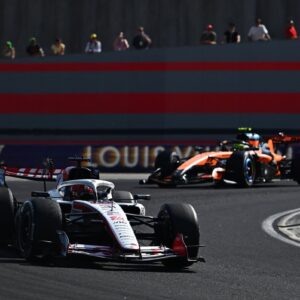
After a slow beginning to the 2026 campaign, McLaren is once again displaying the qualities that drove the legendary outfit to such great heights during the previous two seasons.
Maintaining their impressive track record of mid-season development from 2024 and 2025, the team’s newest update package introduced in Hungary—which included an overhauled floor and an updated front wing—marked another major advancement following earlier developments in Miami and Montreal. This allowed their racers to contend for the top spot, culminating in Lando Norris securing his and the squad’s maiden grand prix triumph of the year.
Whether McLaren can sustain this winning pace across diverse tracks and unpredictable weather remains to be seen. However, this resurgence probably arrived too late for a realistic title challenge, as they remain trailing championship leaders Mercedes by 159 points. Meanwhile, Norris occupies fifth place in the driver standings after dropping crucial points in the early phases of the season, while Piastri sits further down in seventh position.
According to the team, their delayed momentum at the start of the 2026 championship stemmed from defending against a fierce, late-season push by Red Bull’s Max Verstappen the previous year, alongside a strategic pivot executed while designing their 2026 vehicle concept.
“It was clear we faced an intense, and somewhat unexpected, battle with Max as the previous season drew to a close,” explained Neil Houldey, the engineering technical director at McLaren. “Naturally, we pushed our car’s development right up to the final races while simultaneously preparing for 2026. Consequently, when the 2026 season commenced, we found ourselves slightly lagging behind a few of our rivals.
“I believe we have done a commendable job delivering numerous updates that unlocked extra pace from the chassis. Our package is now stronger both aerodynamically and from a power unit standpoint. Nevertheless, a few competitors have clearly outperformed us in development. Our mission for the remaining part of the year is to outpace them in upgrades and ensure we can fight for victories across a wider variety of venues.”
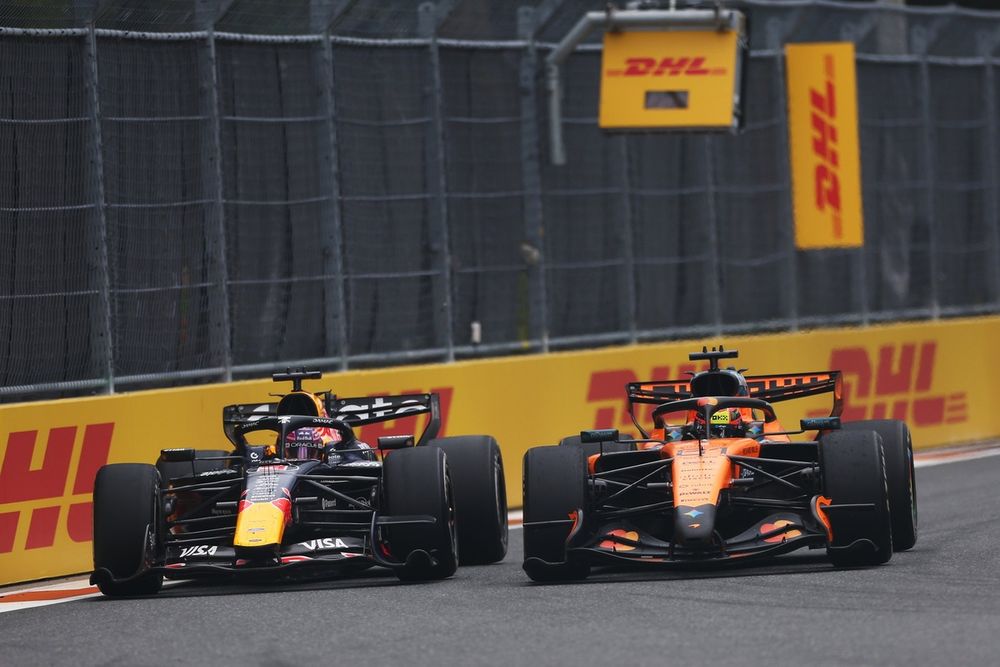
Max Verstappen, Red Bull Racing, Oscar Piastri, McLaren
Photo by: Andy Hone/ LAT Images via Getty Images
In contrast to the previous year, when outfits like Ferrari abandoned their current campaigns early to focus entirely on the next season, McLaren believes that upgrading their current car will yield valuable benefits for 2027. This approach persists even though the basic architecture of the car will shift, with the team already designing a 2027 vehicle featuring an extended wheelbase and revised suspension geometry.
Furthermore, upcoming rule adjustments for the next season include reducing the front floor bib, or ‘tea tray,’ by 300mm—a change set to influence both aerodynamic downforce levels and optimum ride heights.
“Our plan involves introducing significant components over the upcoming Grands Prix, and we intend to keep doing so deep into the campaign,” Houldey stated. “We have no intention of halting our 2026 work, as the insights we gain will directly translate to our 2027 project.
“Regardless of whether the upcoming chassis is longer or features a fundamentally different suspension concept, the data we gather now remains highly applicable to next season. That is why we are determined to push development as far as possible.”
He added: “The most effective method to validate aerodynamic gains is to run them on a live circuit, verifying that trackside data matches our simulations. Halting 2026 development now would relegate us to purely theoretical work, which does not guarantee a high-performing car for 2027.
“As a result, we see plenty of opportunities in the remaining events to extract more speed. We want to bring enhancements to these races, fully aware that this knowledge will prove invaluable for 2027.”
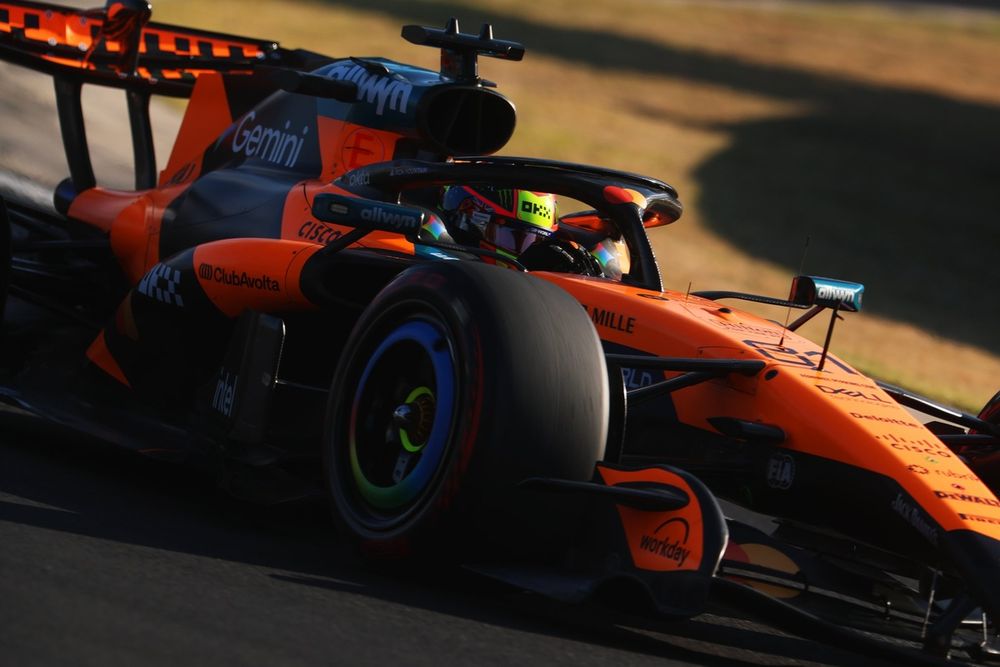
Oscar Piastri, McLaren
Photo by: Steven Tee / LAT Images via Getty Images
Just like their competitors, McLaren has kept a close eye on rival designs, becoming the third outfit to test an inverted rear wing concept that Ferrari initially showcased during 2026 pre-season tests.
While Houldey conceded there was some regret within the team for not spotting that regulatory loophole first, Ferrari’s creative solution demonstrates that the 2026 design parameters allow for more flexibility than initially anticipated.
“In terms of aerodynamics, the cars might appear identical at first glance, but they really aren’t,” Houldey noted. “Teams have uncovered unique avenues to explore, proving that the rules leave room for interpretation.
“During the initial year of a new regulatory cycle, you absorb a great deal from competitor designs. Re-analyzing the rulebook often reveals opportunities that make these guidelines more flexible than the 2022–2025 era. That first year is always an exciting phase of learning and testing diverse approaches.
“Sidepod design is an excellent illustration; while they might not yield massive performance gains on their own, the grid displays a wide variety of configurations. Since a single dominant design has yet to emerge, there are numerous concepts we can experiment with to determine the optimal path forward.”
Share your feedback with us!
Tell us what kind of content you want to see going forward.
Fill out our survey
– The Autosport.com Editorial Crew