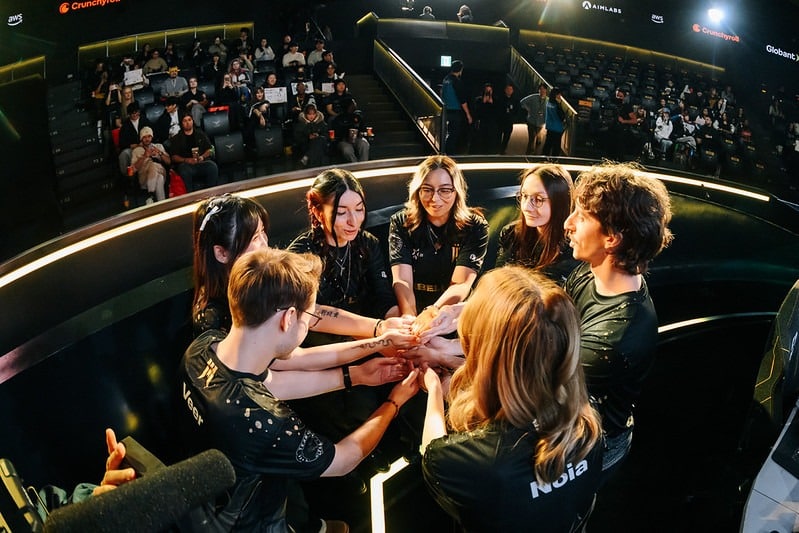
While women represent nearly half of the global gaming audience, they account for roughly 5% of professional and competitive positions in esports. This disparity is even more pronounced at the highest levels, where the top-earning female competitors fail to place within the top 600 of the all-time highest earners.
Even though women’s tournaments have seen major growth, with total prize pools exceeding $3 million, they still represent only a small fraction of the industry’s overall payouts. What drives this imbalance? Is it a fundamental difference in ability, or do factors like visibility, funding, and opportunity play a larger role?
In this article, we analyze findings from recent studies and esports statistics on performance, tournament earnings, and viewership to determine if skill alone can truly account for the massive disparity between male and female professional gamers.
A massive numerical gap persists for women in esports
Starting with financial earnings, which serve as the most straightforward benchmark: as of mid-August 2026, data from Esports Earnings shows that the top 40 male players have collectively won $168.27 million, while their female counterparts in the top 40 have earned roughly $4.11 million.
This translates to an average of approximately $4.21 million per male competitor compared to just $100,188 per female competitor—representing a difference of more than 42-fold. However, looking further down the leaderboards reveals an even more telling trend.
Sasha ‘Scarlett’ Hostyn, a Canadian StarCraft II competitor and the highest-earning female player with $472,111 in career winnings, is currently ranked 651st overall. This position does not diminish her outstanding achievements; rather, it underscores how heavily the most lucrative tournament prize pools are skewed toward male-dominated events.

Competitive pathways open to female players
This earnings disparity becomes clearer when considering that female-only tournaments make up a very small portion of the overall esports schedule.
Out of more than 6,700 tournaments tracked by Esports Charts in 2024, only 3% were dedicated exclusively to female players. Furthermore, women’s tournaments were held in just 15 esports titles, typically representing less than 5% of each game’s total competitive calendar.
In our 2025 analysis of women in the esports sector, we focused on three titles with the most established female scenes. The disparities remained highly apparent even in these games.
VALORANT emerged as the clear leader, with female-only events making up 23.9% of its tournaments and 13.8% of its prize money distribution. For Mobile Legends: Bang Bang, these shares dropped to 11.7% and 9.1%, while Counter-Strike lagged behind, with women’s events accounting for only 5.3% of tournaments and 2.7% of the total prize pool.
| Esports Title | Female-Only Tournament Share | Female-Only Prize Pool Share | Watch Time Share |
|---|---|---|---|
| VALORANT | 23.9% | 13.8% | 5.6% |
| Mobile Legends: Bang Bang | 11.7% | 9.1% | 1.3% |
| Counter-Strike | 5.3% | 2.7% | 0.2% |
Please note: These figures are provided by Esports Charts and focus solely on tournaments designated for female competitors, excluding mixed-gender events.
An even wider divide in viewership
The contrast becomes even more striking when analyzing audience engagement metrics.
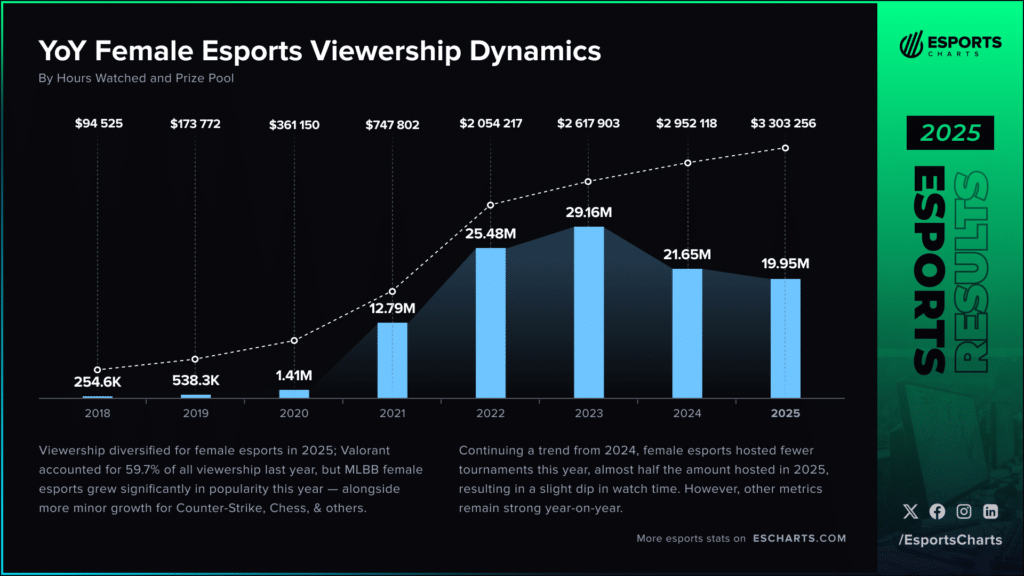
Even though VALORANT features the most robust competitive ecosystem for women, its female-only tournaments generated a mere 5.6% of the game’s overall watch time in 2024. This figure fell to 1.3% for MLBB and plummeted to just 0.2% for Counter-Strike. In fact, total viewership across the female esports landscape declined by 26% over that twelve-month period.
This is a critical factor because tournament funding does not exist in a vacuum.
Larger audiences translate to greater commercial value for sponsors, developers, and tournament organizers, which in turn leads to higher prize pools and more frequent competitions. Conversely, lower viewership makes it difficult for women’s tournaments to attract funding, even when the competitive frameworks are already established.
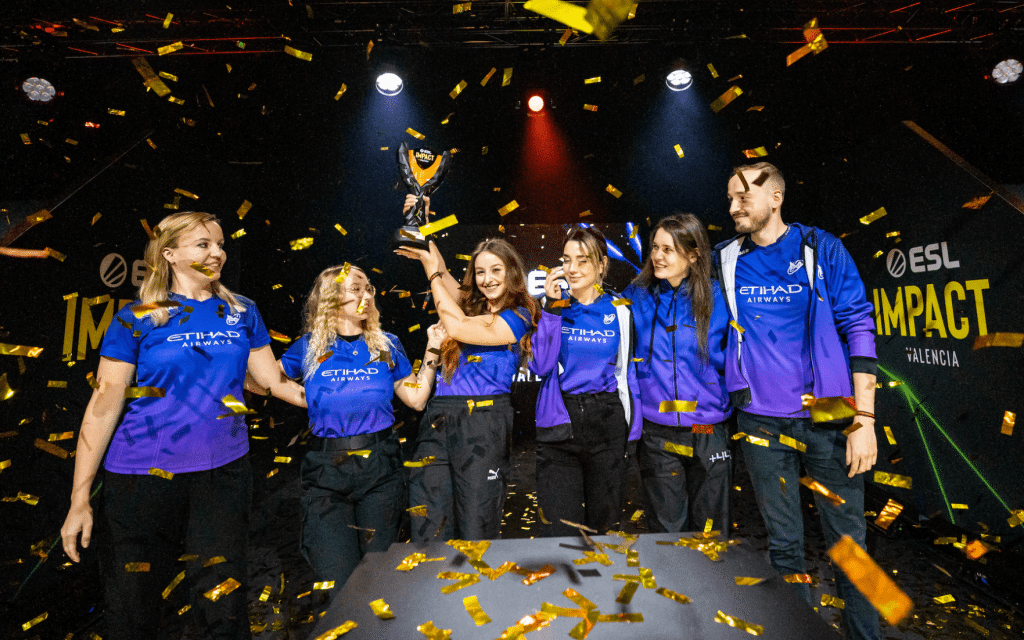
Naturally, prize earnings do not equate to fixed salaries, meaning these statistics do not directly prove unequal pay for identical roles. Total tournament winnings are influenced by numerous variables, such as the specific games played, available events, qualification processes, prize distribution models, and player career longevity.
Even so, the data highlights a much broader systemic issue. Female players are met with fewer competitive opportunities, smaller prize pools, and dramatically lower audience numbers at their events.
This leads to a more complex inquiry: can differences in athletic or mechanical performance truly explain disparities of this magnitude?
Is a gap in performance the primary cause?
A study from 2026 published in Humanities and Social Sciences Communications investigated the correlation between gender, competitive performance, viewership, and prize money within Counter-Strike.
The authors analyzed performance metrics from the ESL Impact League—a premier female-only Counter-Strike competition—and compared them to a matching male division. Their analysis drew from HLTV match statistics and Twitch viewership data across 40 events, spanning more than 3,000 player performances.
The study evaluated performance partly through the kill-to-death (K/D) ratio. The average K/D for male players was 1.02, compared to 0.97 for female competitors, indicating a minor but statistically noticeable variation in the dataset.
It is important to note that male and female players competed in isolated leagues against distinct pools of opponents, meaning these averages do not simply prove that male players are “5% better” at the game. K/D ratio reflects relative performance within a specific competitive context, not an absolute measure of skill across different leagues.
However, the factors driving these performance figures reveal a far more compelling story.
| Variable | Male Divisions | Female Divisions |
|---|---|---|
| Average Prize Pool per Event | $28,202 | $5,709 |
| Mean Viewership per Match | ~6.05 million | ~196,000 |
| Average K/D Ratio | 1.02 KD | 0.97 KD |
The massive commercial disparity
Even when controlling for performance, the researchers discovered that women’s matches averaged approximately 4.7 million fewer views compared to men’s. Furthermore, high performance did not yield the same rewards for both groups: strong play led to increased viewership and higher tournament earnings much more consistently for male competitors than for female ones.
This points to a reality where outstanding play by female competitors does not generate the equivalent commercial returns seen in the male competitive space.
Consider two players executing at an equally high level in a tournament. One performs in front of millions of viewers, while the other plays for a tiny fraction of that audience. The first competitor naturally gains more exposure to fans, teams, and brands, rendering their match a much more valuable product commercially.
This dynamic can trigger a self-reinforcing loop: high performance attracts attention, attention builds career opportunities, and those opportunities pave the way for further competitive success. Thus, the debate shifts from whether a skill gap exists to whether women are provided with the same infrastructure to develop and monetize their abilities.
Challenges faced before reaching the professional level
While this point may seem obvious, it alters the core of the discussion. Rather than focusing solely on the lack of women at the professional peak, we must examine the hurdles players face during their development. Research into women’s gaming experiences consistently emphasizes environmental factors.
A 2021 survey conducted by Reach3 Insights and Lenovo, which gathered data from 900 female gamers across the US, China, and Germany, revealed that 77% had faced gender-based hostility while playing. The most frequent issues reported were skepticism about their gaming skills, patronizing behavior, and systemic gatekeeping.
Crucially, 59% of those surveyed admitted to using masculine or gender-neutral aliases online to avoid harassment. Consider spending countless hours refining your mechanical skills, studying strategies, and analyzing game footage, only to feel compelled to hide your gender just to ensure a peaceful match.
Toxic behavior hinders the development of talent
This does not mean harassment is the sole reason women walk away from esports. It does, however, show that the day-to-day experience of gaming varies greatly depending on gender, and this difference has real consequences.
When players avoid using voice chat, decline to join competitive communities, or reduce their practice hours because of a hostile competitive environment, it inevitably damages the development pipeline long before those players can ever approach professional status.
Consequently, by the time we evaluate professional esports athletes, we are likely looking at the survivors of two radically different competitive journeys.

The role of female-only competitive circuits
This barrier is a primary reason why specialized women’s esports leagues were established.
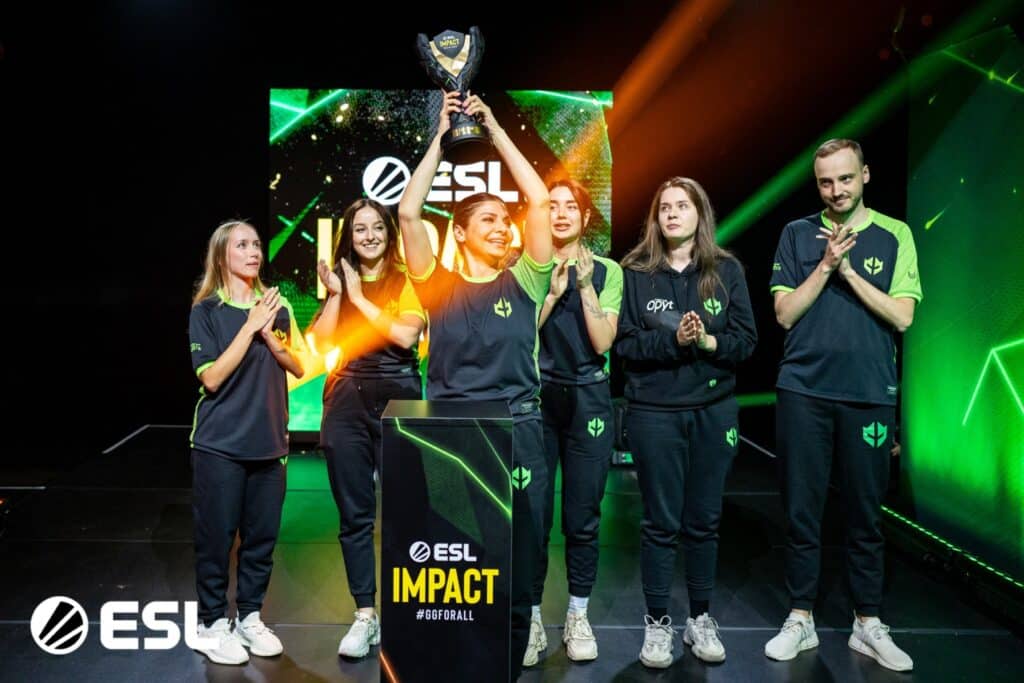
Initiatives like VALORANT Game Changers and the former ESL Impact league were not created under the assumption that women cannot compete against men. Instead, they offer vital competitive arenas for female players to gain experience, build professional rosters, and increase their visibility among fans and teams.
Furthermore, research indicates that this strategy is showing positive results.
A 2023 study by Nolla and co-authors showed that aspiring female gamers performed better and had more positive outcomes in women-only tournaments compared to co-ed events. Participants in these exclusive tournaments demonstrated more realistic self-assessments of their skills and felt a stronger sense of purpose in their tasks.
The authors concluded that dedicated female tournaments can boost player recruitment and retention, serving as a valuable stepping stone alongside open-tier tournaments.
The impact of financial instability in developmental leagues
While building a dedicated competitive pipeline is a major step, ensuring its long-term financial viability is an entirely different obstacle, as demonstrated by the challenges faced by ESL Impact.
Following a three-year run, ESL announced the suspension of its structured women’s Counter-Strike league, citing an unsustainable financial model. This decision, however, was not due to a lack of audience interest in women’s tournaments.
While Esports Charts observed a 7.9% decrease in overall hours watched for female tournaments in 2025, the number of events held fell by a much steeper 52%. Despite the reduction in total events, the average number of concurrent viewers actually saw an increase.
VALORANT Game Changers generated 6.3 million hours of watch time, which was roughly 45 times the volume of ESL Impact. Meanwhile, the female MLBB division at the 2023 SEA Games remains the most-watched women’s esports competition in history, peaking at 1.3 million concurrent viewers.
The primary challenge is not whether an audience exists for women’s esports, but whether that audience can grow large and steady enough to financially sustain clubs, organizers, and competitors over the long haul.
This is a critical concern, because when these competitive structures disappear, the damage extends far beyond the cancelled events. A reduction in leagues leads to fewer roster spots, fewer pathways for emerging players, and fewer chances for talent to gain the recognition needed to transition to the highest levels.
Final Thoughts
Ultimately, scientific research does not offer a black-and-white answer regarding any natural skill difference between genders in gaming.
While the 2026 Counter-Strike study noted a minor, statistically valid gap in average K/D ratios, the fact that these players competed in isolated divisions against different opponents limits what this metric can tell us about raw skill. A much more reliable comparison can be made regarding the scale of the competitive environments surrounding these players.
In that study, male tournaments garnered roughly 31 times more average views, and their average prize payouts were nearly five times greater. These substantial gaps persisted even after researchers adjusted for player performance.
Of course, gender alone does not explain every single disparity in esports. Factors such as competitive experience, the depth of the player pool, game choice, league formats, viewership reach, and developmental support all play a role. Nonetheless, one conclusion is clear: mechanical skill alone cannot account for a divide of this magnitude.
Opportunity is the key factor
For any player aiming to go professional, mechanical talent is merely the baseline. Success requires access to tournaments, teams willing to recruit them, high-level opponents to practice against, broadcast platforms, and sustained investment from organizations.
Women-only leagues offer a crucial foundation for this growth, but they must secure stable commercial backing to survive. Ultimately, the question isn’t whether female players possess the necessary talent for esports, but whether a sufficient number of them are ever given an equal chance to prove it.
Editorial note: This article translates academic, peer-reviewed research for a general esports readership. While every effort has been made to present the findings accurately, they should be interpreted within the limitations of the original studies, which include small sample sizes, distinct methodologies, and localized data.