It appears nearly impossible to imagine a championship-contending driver’s partner finishing down in 17th place in the Formula 1 standings, but that was precisely Yuki Tsunoda’s fate sharing the Red Bull garage with Max Verstappen during the 2025 season.
To some extent, this situation lacked any recent parallel—the nearest contemporary comparison might be Felipe Massa sitting in a disappointing 16th position after eight Grands Prix in 2012, even as his Ferrari colleague Fernando Alonso held a commanding lead in the standings, though the Brazilian driver managed to recover his form to some degree.
At the same time, Tsunoda faced a highly unusual set of circumstances. After choosing to part ways with a struggling Sergio Perez, Red Bull opted to promote Liam Lawson instead of Tsunoda for 2025, wagering that the Kiwi’s limited track time would be balanced out by what they saw as a superior long-term ceiling.
Lawson’s window to make an impression proved extremely brief. Following just two race weekends where he bowed out in the opening qualifying session and failed to register a single point, he was demoted back to Racing Bulls, which at last opened the door for Tsunoda to step up to the senior squad.
Back then, the Japanese competitor felt remarkably confident about his prospects of thriving in a seat that had swallowed up numerous predecessors.
“There is a common belief that Red Bull designs favor a very sharp front axle. Personally, I thrive in machinery that rotates sharply, and earlier in my career, I tailored my approach behind the wheel to match that setup philosophy,” Tsunoda remarked prior to his first outing with the team.
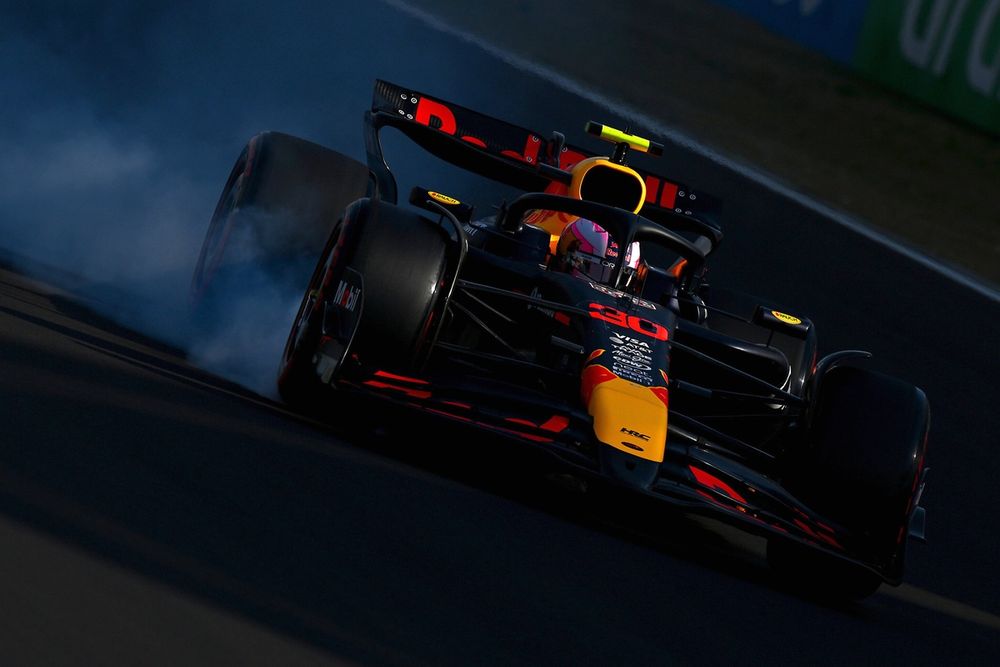
Liam Lawson behind the wheel for Red Bull Racing
Image courtesy of: Red Bull Content Pool
“Historically, the Racing Bulls entries leaned toward understeer, which presented an initial hurdle for me, but I adjusted over time until it felt natural. The challenge now lies in recalibrating to the dynamics of the Red Bull car, but given my background, I feel quite comfortable handling that transition.”
In hindsight, a bit of apprehension might have been warranted. Although Verstappen secured eight race victories—surpassing the tally of every other driver, even the eventual 2025 title winner Lando Norris—Tsunoda never once stood on the podium, managing no better than a quiet sixth-place finish in Baku; he collected a mere 30 points compared to his partner’s massive haul of 385 during their partnership.
Across 27 different qualifying shootouts, including sprint events, Tsunoda advanced to the final session eight times, got knocked out in the second segment nine times, and failed to escape the first session on ten separate occasions. He managed to beat his teammate on Saturday on only one single occasion, trailing by an average margin of six-tenths of a second.
What made the Red Bull RB21 such a difficult beast to tame? Even today, Tsunoda struggles to pin down the exact reasons.
“Usually, I can wrap my head around the vehicle, its behavior, and its overall traits,” Tsunoda explained during an episode of the Beyond The Grid podcast. “However, it felt like even after the final race in Abu Dhabi, I remained disconnected from what the car was doing. I still cannot identify the core issue or what made it so incredibly difficult for me to comprehend and adapt to this machine.
“I believed my self-assurance was solid, but during certain weekends, it just seemed to slip away entirely. To be perfectly frank, I still do not get how that car worked.”
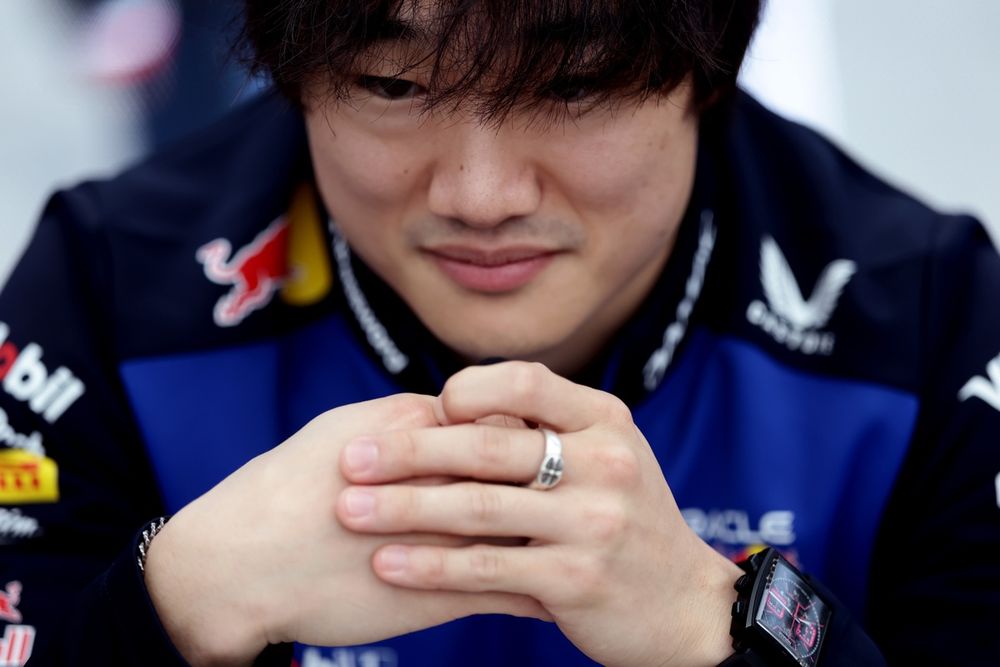
Yuki Tsunoda representing Red Bull Racing
Image credit: Mark Thompson / Getty Images
Nevertheless, Tsunoda offers some highly intriguing observations. He readily acknowledges that he chose not to alter his fundamental driving technique, convinced that his natural approach was his best asset. Yet, he eventually attempted to adopt Verstappen’s personal car setups—a move that ultimately backfired.
“To be honest, my self-belief is strong enough that I refuse to alter how I drive,” Tsunoda shared. “I have complete trust in my own hands on the wheel. Consequently, I avoid trying to mimic someone else’s style, regardless of how quick or successful that other driver might be.
“Naturally, Max represents a unique scenario. He is a multi-time champion with an established pedigree, and there are certainly valuable lessons to extract from his performances.
“My fundamental approach behind the wheel hasn’t shifted. For perhaps the very first time in my career, I did briefly contemplate modifying my style to align more with Max’s. However, analyzing the telemetry revealed that our actual inputs and driving techniques weren’t dramatically different from one another.
“What I did instead—and what I now view as my most significant misstep of the season—was trying to copy his car configurations. I did this even when the car was already suffering from loose rear-end grip, despite knowing that Max’s settings would theoretically exacerbate the problem, making the car even more twitchy during transitions and prone to sliding.
“I would opt for his settings even when battling persistent oversteer. Occasionally, it worked the other way around too: if I was fighting understeer, his configuration was even less willing to turn, yet I still tried to run it.”
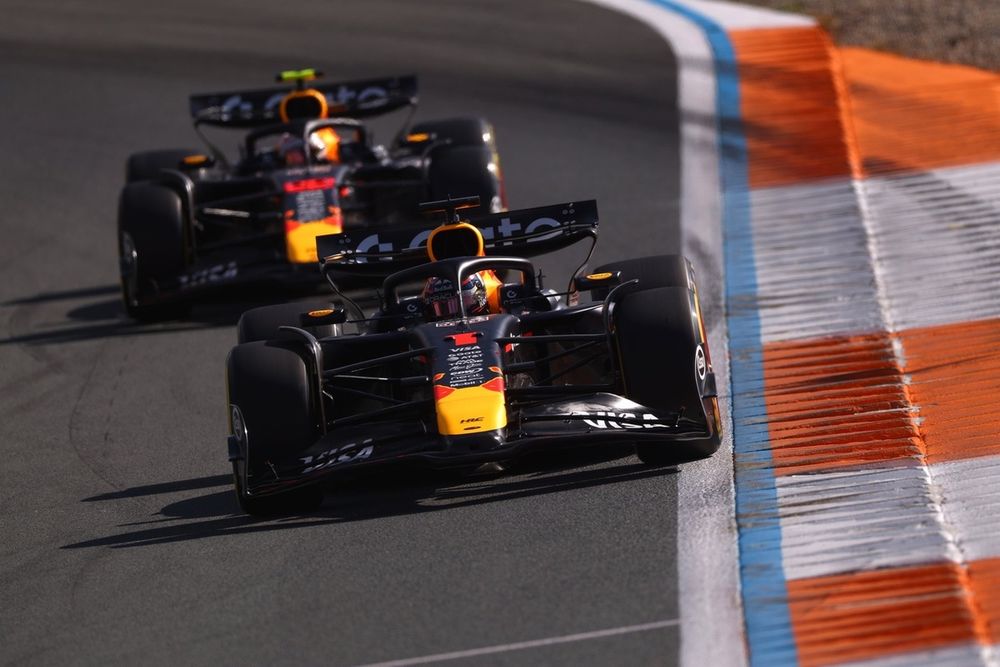
Max Verstappen alongside teammate Yuki Tsunoda of Red Bull Racing
Captured by: Zak Mauger / LAT Images via Getty Images
Tsunoda is far from the first teammate to run into a wall trying to adapt to Verstappen’s car preferences. Alexander Albon faced a similarly uphill battle next to the Dutchman over an eighteen-month span from 2019 through 2020.
Reflecting on those struggles during a 2023 appearance on the High Performance Podcast, the Anglo-Thai driver remarked: “Max has a very distinct way of driving that is incredibly tough to replicate. We all have our personal preferences; I consider myself a relatively smooth driver, but I still want a highly responsive front end that turns in immediately. Max wants the same, but his preference for sharpness is on an entirely different plane—it’s incredibly extreme.
“To put it in terms people might understand, imagine turning a computer game’s controller sensitivity all the way up to the absolute limit. The slightest touch sends the cursor flying wildly across the monitor. That is the kind of responsiveness we are talking about, and it makes driving the car a very tense experience.”
When presented with this comparison, Tsunoda was hesitant to apply it directly to the RB21. Asked if he shared that perspective, the Japanese driver answered: “To some degree, but also not really. To begin with, the vehicle has evolved significantly since Alex’s tenure, and I never got a chance to pilot the car he was referring to.
“It was certainly reactive, but it didn’t strike me as being quite that extreme. Furthermore, as I mentioned, things fluctuated constantly from week to week. At certain circuits, my setup was actually more sensitive than his, while at others, he ran the twitchier configuration. Overall, he likely preferred a slightly more responsive, sharper setup than I did.
“Where he truly excelled, regardless of whether the platform felt nervous or completely dull, was navigating those specific moments in a turn where the chassis reacts on its own. Every corner has a phase where, upon entry, the car behaves according to its inherent balance—be it a sudden pivot or a bit of front-end wash. Max can anticipate and read those split-second movements far quicker than I can, allowing him to exploit that natural momentum all the way through the turn.
“It does not fully match my usual style, but when confronted with those sudden shifts in balance, like a quick rotation or sliding, I sometimes try to bend the car to my will instead of letting it flow. Usually, I can work with the chassis’ natural tendencies and use them to my advantage, but that intuition completely deserted me while driving the Red Bull.”
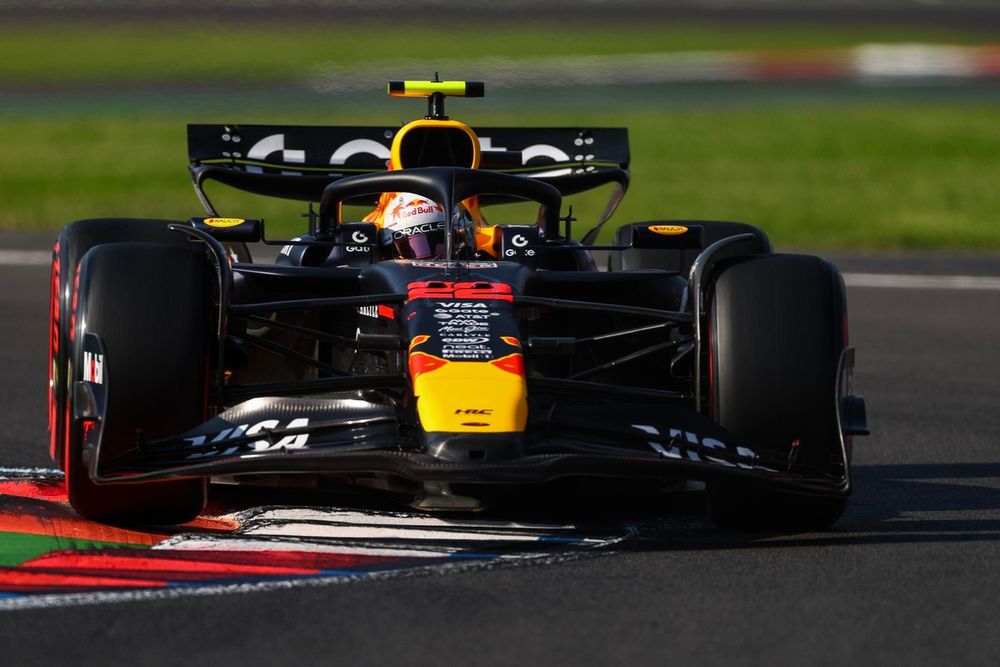
Yuki Tsunoda piloting the Red Bull Racing machine
Captured by: Zak Mauger / LAT Images via Getty Images
From his very first laps in the RB21 during Friday practice at Suzuka, Tsunoda’s initial confidence began to waver, as he noted that the actual vehicle behaved in a far more unpredictable manner than the virtual simulator had suggested.
Looking back, this early warning was a harbinger of the difficult path ahead.
“While I believed my self-assurance was in a good place, it clearly fell short of the deep familiarity I had developed over four seasons with the VCARB machinery,” Tsunoda admitted. “The Red Bull proved to be an entirely different animal, a realization that hit me the second I took it out on track at Suzuka.
“I managed to construct a basic foundation of confidence, but extracting that final percentage of performance was something that eluded me as I spent the entire season searching for that missing connection.”
By the time the circus reached the second-to-last round in Qatar, Tsunoda was informed that his services as a race driver would not be required for the 2026 season, stepping back instead into a reserve capacity. Given the lack of results, the decision raised few eyebrows, and the brutal nature of the year meant the news actually brought a sense of closure.
“I can still picture that conversation clearly,” he recalled. “The news first came directly from Helmut [Marko, who served as Red Bull’s motorsport advisor at the time].
“After all, Helmut was the mentor who paved my way into Formula 1 and welcomed me into the Red Bull junior ranks when I was just a teenager of 17 or 18. I could see that he felt a genuine sense of disappointment over how things unfolded.
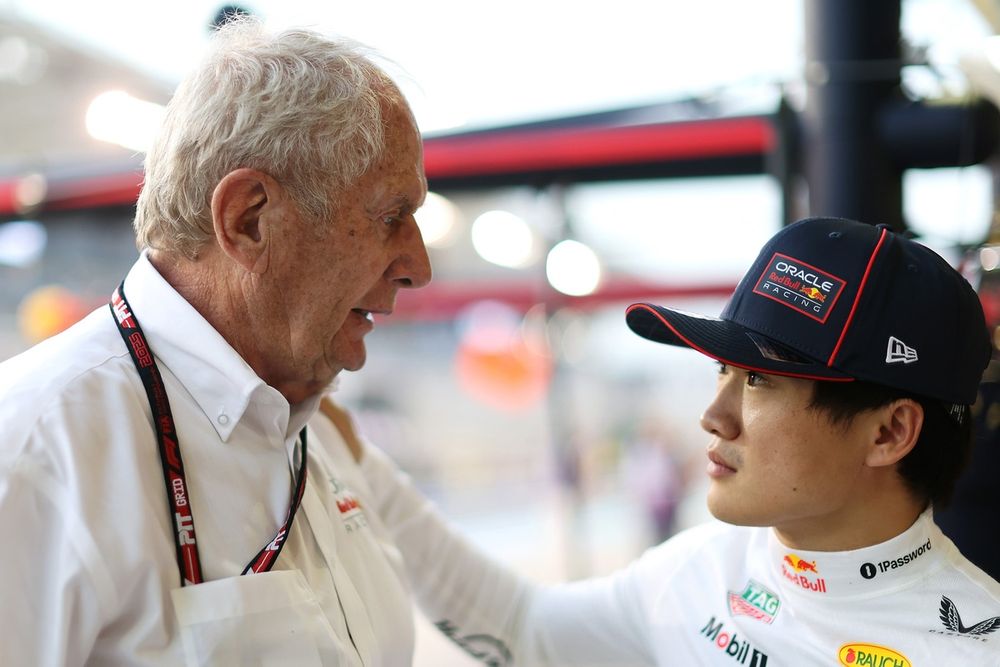
Yuki Tsunoda in conversation with Helmut Marko at Red Bull Racing
Image credit: Mark Thompson – Getty Images
“Surprisingly, when the decision was handed down, I didn’t feel completely crushed or overcome with despair.
“Of course, there was an underlying sadness and regret about losing my spot on the grid for the upcoming season. Yet it wasn’t as painful as I would have anticipated. Perhaps because I knew I had battled with every ounce of energy I possessed throughout 2025; looking back, I can’t blame myself because I left absolutely nothing on the table.
“In truth, part of me felt a quiet sense of relief, thinking, ‘Finally, I can take a breath.’ The latter half of the 2025 season had been a relentless pressure cooker, and I felt as though I was constantly holding my breath without a single moment of peace.”