Despite Max Verstappen once again achieving a podium placement, which had been the highest anticipated outcome for a significant portion of this Formula 1 season, there was hardly any sense of contentment within the Red Bull hospitality area on Sunday evening. Numerous team members in the paddock conceded that Kimi Antonelli’s race pace was simply unattainable, while both Red Bull drivers expressed their discontent over the team’s inability to fully harness the potential of their setup in Austin.
This was influenced by race-specific challenges, including strategic choices that Verstappen was dissatisfied with – primarily the preference to use the softer tire compounds even when the harder ones appeared to perform more effectively – alongside some erratic behavior from the power unit. However, the arduous Sunday afternoon at the Circuit of the Americas was also attributed to two recurring issues that have emerged throughout the season: poor race starts and communication issues concerning the team radio.
Consequently, Isack Hadjar experienced considerable frustration, encapsulating it succinctly in the media pen: “At the moment, it’s the little things we can’t do.”
“My radio issues are problematic; I’m not even aware of what’s happening. Every time I disengage the clutch, it turns into a disaster. If we resolve these two problems, we could already be on the podium. It seems we are capable of handling the most challenging situations but cannot manage the more trivial ones.”
When he mentioned ‘the hardest things,’ he was obviously referencing Red Bull’s ability to significantly reduce the gap to the leaders. In Australia, China, and Japan, the average deficit in race pace was 1.2 seconds per lap, and closing such a gap across a season is undoubtedly a considerable achievement.
Simultaneously, addressing the start concerns and controlling the radio communications have proven to be more intricate than anticipated. When Autosport addressed these observations to Laurent Mekies regarding Hadjar’s remarks, the team principal indicated that these two issues must be treated independently. Yes, the radio communication issues are unacceptable for a top-tier team and must be remedied by the close of this year, but the start dilemma is more complicated and will pose a challenge until 2027.
“There are two distinct facets to your inquiry,” Mekies articulated. “I believe there is validity in what Isack is asserting; it is genuinely frustrating to encounter communication issues in consecutive races. It complicates everyone’s efforts significantly, and true enough, it is something we would like to rectify swiftly, as it’s an aspect that should function without demanding excessive energy from us.”
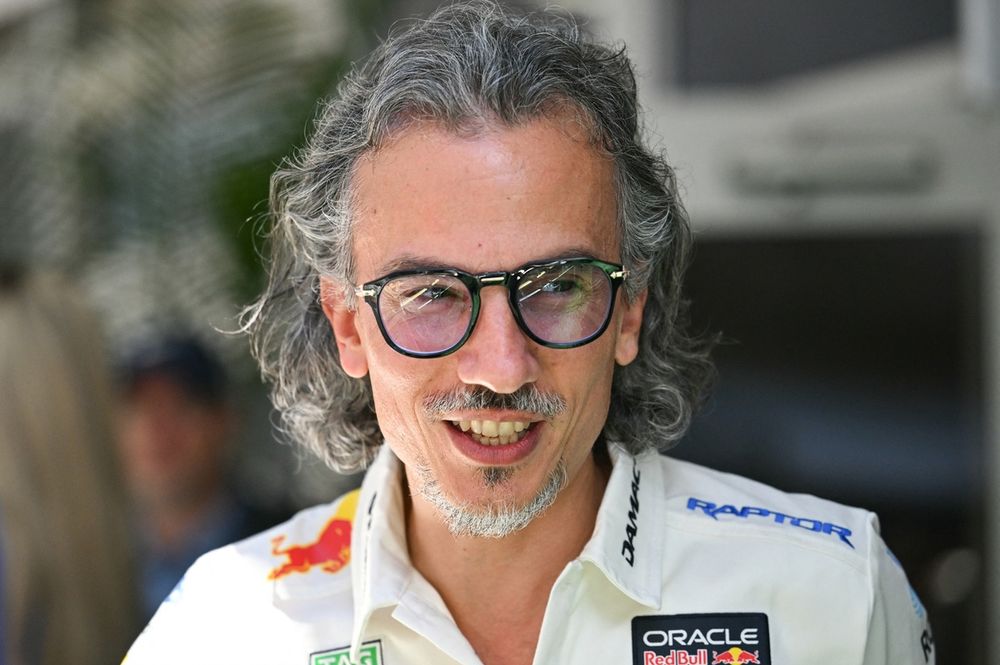
Laurent Mekies, Red Bull Racing
Photo by: Angela Weiss / AFP via Getty Images
“Thus, he’s correct on that front. The start issue is somewhat more complicated to remedy.”
Regarding the radio difficulties, both drivers faced challenges in Austin, marking Hadjar’s first encounter with such issues this year. Verstappen has experienced these more frequently. For instance, in Singapore, his race engineer Gianpiero Lambiase was unable to hear him, compelling ‘GP’ to utilize coded messages. In Austin, Verstappen was unable to hear the temporary race engineer Tom Hart – who, as per Mekies, did an admirable job – which once again complicated their communication.
Red Bull concedes that it does not completely grasp these radio problems, but Mekies is confident that they shouldn’t be too complicated to resolve.
“If we fully understood the situation, we would have fixed it already,” stated the Frenchman. “We do not fully comprehend why these issues persist. I must acknowledge that our competitors are performing better than us because we can hear their communications while we are struggling more than we wish to admit.”
Improvements in Starting Procedures Needed, But Hardware Modifications Required for Complete Solution
The start issue presents a significantly more intricate challenge. Following the Austin race, Hadjar noted that Red Bull must redesign the clutch, asserting that he adheres to all procedures yet finds the clutch too sensitive.
However, Mekies clarified that the situation is not merely that straightforward and that the start problem is actually tied to a variety of different factors.
“The starting challenge is a more complex issue to tackle, indicating that start performance is affected by almost every department within the company, likely excluding the aerodynamic division,” he mentioned.
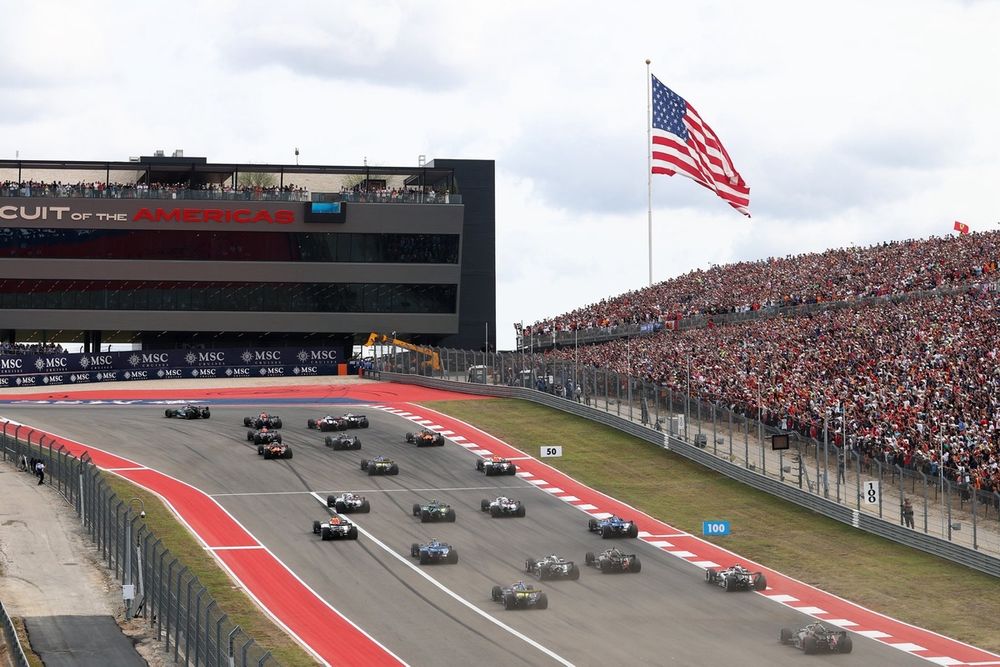
Race start
Photo by: Simon Galloway / LAT Images via Getty Images
“It involves the engine, gearbox, clutch, and multiple components. Observations since the season’s commencement have shown that we are not the standard for launch performance.”
Consequently, a comprehensive solution will necessitate a variety of hardware modifications planned for the 2027 F1 season, focusing on how the clutch, gearbox, power unit, and turbo interact.
Nevertheless, Red Bull recognizes that achieving a somewhat improved performance with the current software and hardware is still feasible, and they’re also observing their sister team, Racing Bulls, in this context. Overall, Racing Bulls tends to have better starts; however, Verstappen has mentioned that the setup is identical, and any enhancements must arise from the procedures being employed.
Mekies admitted that additional performance still could be realized in this area, although he emphasized that Red Bull has made considerable strides compared to their performance in Melbourne.
“While we have minimized the gap, and you might recall how poor our starts were earlier in the year, we are still not the reference point,” Mekies elaborated.
“Furthermore, the progress the car has made makes our continuing deficit more frustrating, especially since our competition is quite formidable.”
“In response to your observation, I am optimistic that we will keep closing the gap with our rivals from now until the year’s conclusion because we learn from every race. With each event, we find minor improvements to bridge the difference.”
However, a true long-standing resolution will need to wait until the following year.
“Conversely, I equally understand that we won’t become the benchmark prior to the season’s end,” he concluded. “Achieving that will necessitate substantial design and hardware changes, which is only something we will witness next year.”
We want to hear from you!
Let us know what you would like to see from us in the future.
Take our survey
– The Autosport.com Team