Stay connected
Include us as a favorite news provider on Google
What exactly is taking place at Manchester City? Cutting through all the background chatter reveals a very simple truth. The club parted ways with Rodri and failed to bring in any full-backs.
Most observers disagree with that take. Unforced errors at the back have led commentators to claim that the squad is losing concentration, while Enzo Maresca’s post-match remarks following a third consecutive Premier League loss only fueled rumors that the impending legal judgment is starting to weigh heavily on his players.
“I feel the issue was widespread today,” stated Maresca. “Securing loose balls and winning individual battles demands commitment and work rate; without that drive, you fall behind – and we simply couldn’t match their energy levels.”
Where Enzo Maresca’s Analysis Falls Short
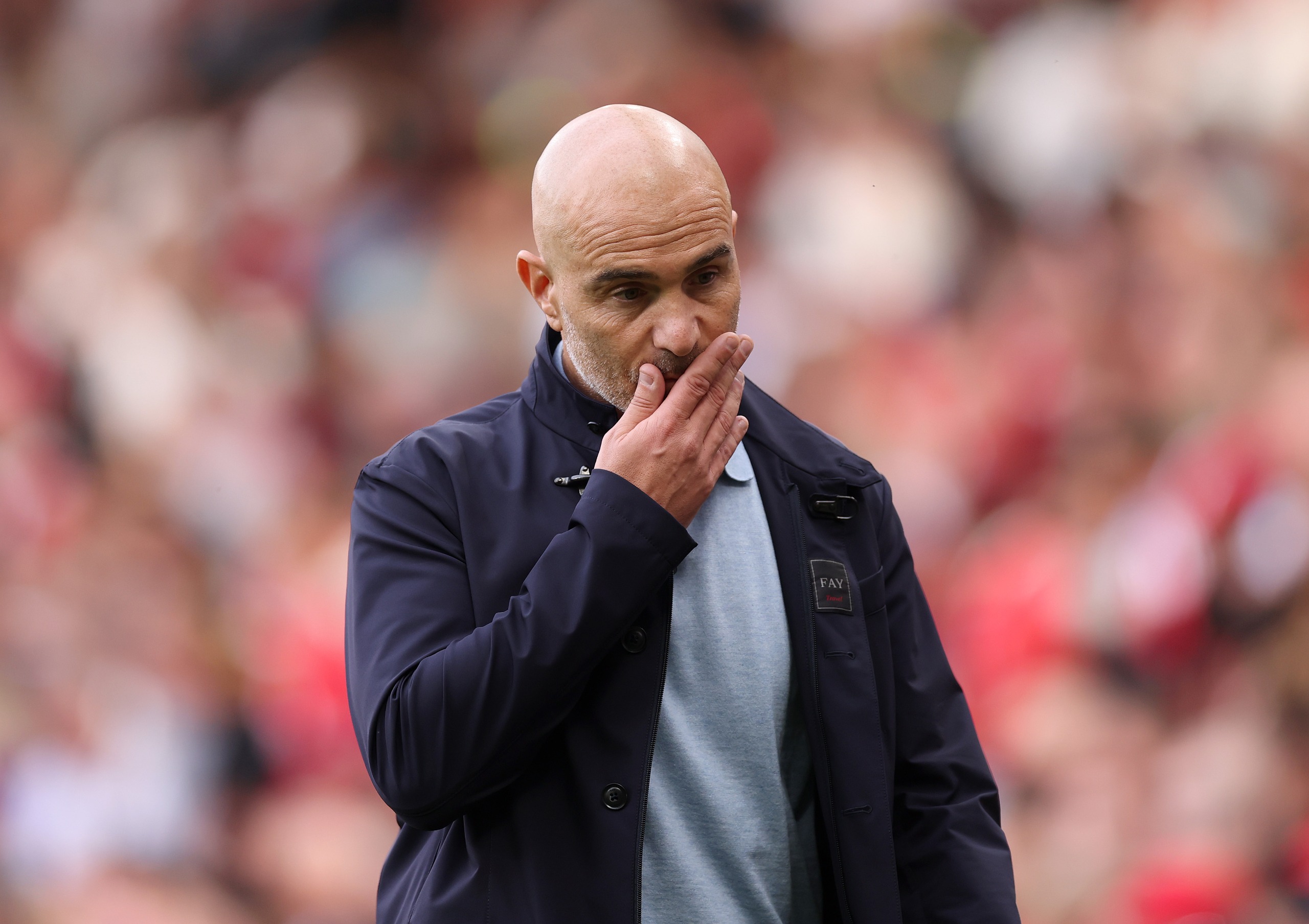
However, Maresca is mistaken — as are the analysts asserting that mentality is the primary cause of City’s decline.
Indeed, everything still comes back to Rodri. Repeating this point might feel repetitive, but its accuracy remains undeniable.
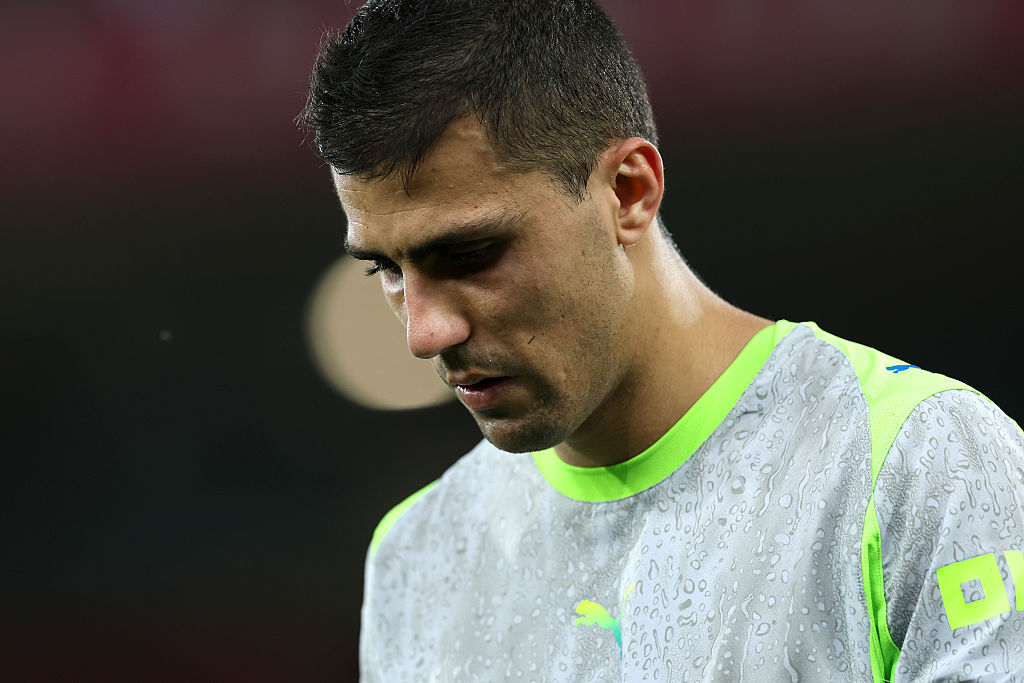
Across his seven-season tenure with the side, Manchester City recorded a 71.5% success rate when Rodri featured compared to 62.3% in his absence, tasting defeat in just 12.1% of his appearances versus 26.2% when he was missing.
The void left by his departure is still deeply felt, a fact highlighted clearly on Saturday, as his presence likely would have cut off every one of Nottingham Forest’s three scoring plays.
Manchester City lack composure when holding the ball, leaving them prone to careless turnovers that yield clear-cut opportunities for opponents. This stems directly from missing Rodri’s flawless positioning and clever, pressure-bypassing distribution. Nottingham Forest’s aggressive early pressing indicated that Oliver Glasner was fully conscious of this vulnerability.
This exact issue brought about Aston Villa’s first goal during City’s 2-1 loss, where play was forced wide to Marc Guehi — who failed to handle an awkward pass — due to the absence of a central outlet provided by Rodri. The flaw resurfaced for the opening goal on Saturday, made even worse when Elliot Anderson quite literally turned his back on the play.
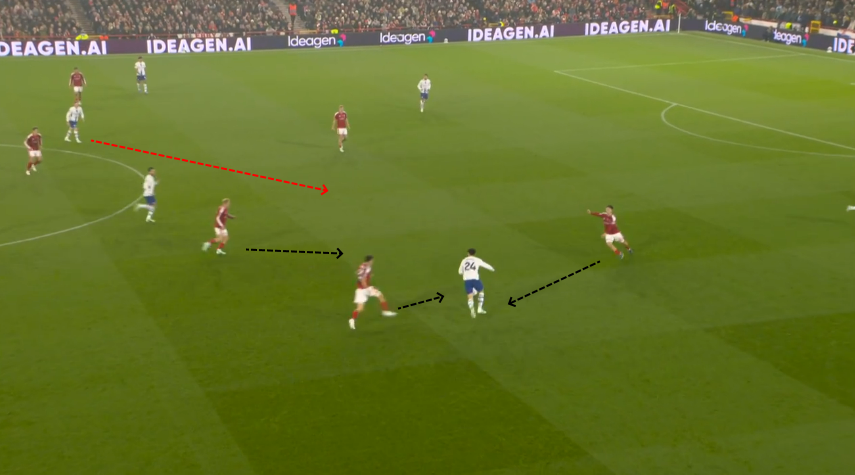
Anderson failed to offer an option for the initial ball, which would have pulled Forest’s press inward to unlock space on the flank, and he was similarly missing for the subsequent pass when Josko Gvardiol required support:
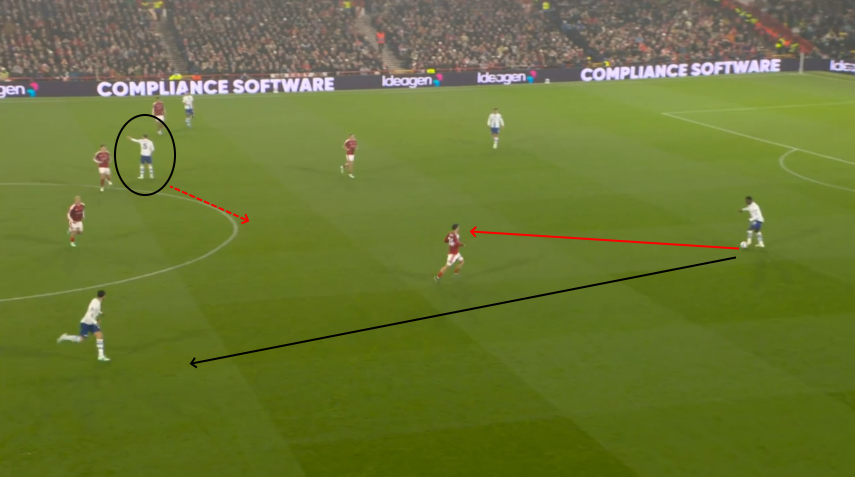
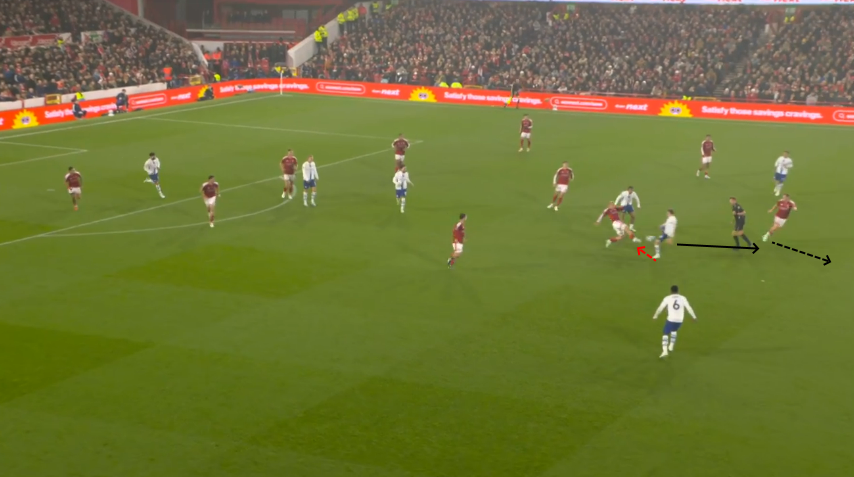
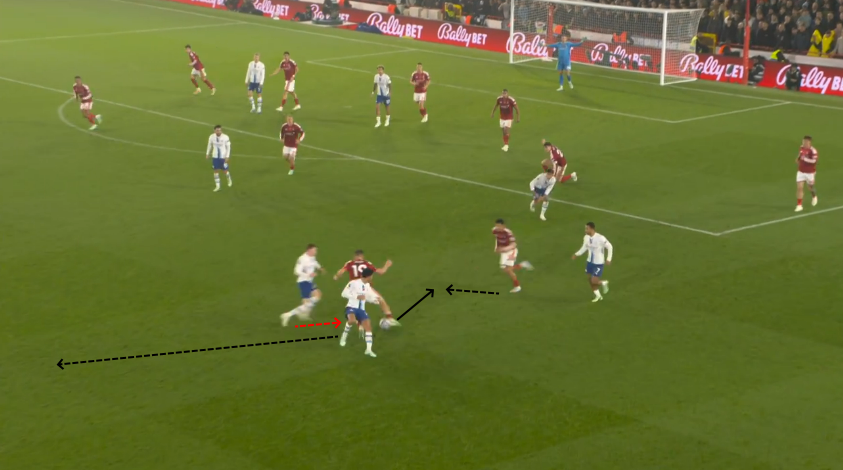
Nottingham Forest’s second and third strikes were born out of failed interception attempts by Anderson, who miscalculated the sequences and reacted too sluggishly to the transitions. It is hard to picture Rodri committing either error:
Maresca’s brand of possession-based play would appear far more structured if he possessed a player like Rodri (or Moises Caicedo during his Chelsea tenure) to dictate the tempo both in and out of possession, facilitating patient buildup from defense while offering a shield against quick transitions.
Furthermore, Maresca’s tactical setup would gain significantly more stability by utilizing natural full-backs. While the reliance on Rodri has been widely discussed, Manchester City have largely escaped criticism for oddly side-lining dedicated full-backs — a role Maresca has reshaped more inventively than any rival Premier League manager lately.
His utilization of Marc Cucurella, Reece James, and Malo Gusto — frequently tasking them with fluid, multi-positional roles that shifted effortlessly according to match circumstances — was genuinely ground-breaking, yet he found himself at City lacking specialized full-backs on either flank.
Cucurella likely would have avoided Gvardiol’s error leading to Forest’s first goal, whereas Gusto or James would have safely cleared the ball that Matheus Nunes completely missed prior to Brighton’s decisive goal. Furthermore, under Maresca’s tactical blueprint, natural full-backs would invert smoothly into midfield zones, filling the exact spaces Anderson proved unable to manage on Saturday.
It is noteworthy that City’s run of league triumphs halted once Pep Guardiola ceased deploying at least one conventional full-back; either Kyle Walker, Joao Cancelo, or both were pivotal figures throughout their four consecutive title-winning campaigns.
Parting with Rodri without securing a replacement has crippled Maresca’s framework. Neglecting to recruit any natural full-backs has turned a challenging assignment into an almost insurmountable one.