The FIA has released its concluding results for the Additional Development and Upgrade Opportunities (ADUO) for the 2026 Formula 1 season, revealing that no modifications were authorized for any of the power unit suppliers.
Beginning this season, the FIA incorporated a system within the F1 regulations that permitted power unit manufacturers to implement revisions if they were lagging behind the top engine, through tokens allocated according to a performance scale.
After the initial phase of 2026, spanning from the Australian Grand Prix to the Canadian GP, it was announced that Red Bull Ford Powertrains set the standard, while Mercedes’ internal combustion engine trails by a margin of 2-4%, which afforded the German company an additional upgrade this year and another one for next season.
Ferrari, Audi, and Honda fell into the category of being over 4% behind in ICE power, entitling them to two upgrades during the ongoing season and another two in 2027.
Red Bull Ford Powertrains sought a review of the ADUO assessment, prompting a delay in the official announcement of the initial results, as they contested the findings and asserted their status as the manufacturer with the most powerful engine.
As mutually agreed by the teams at the season’s outset, the FIA exclusively assesses the internal combustion engine; however, once a manufacturer qualifies for ADUO, modifications to electrical components, such as the battery and MGU-K, are also permitted.
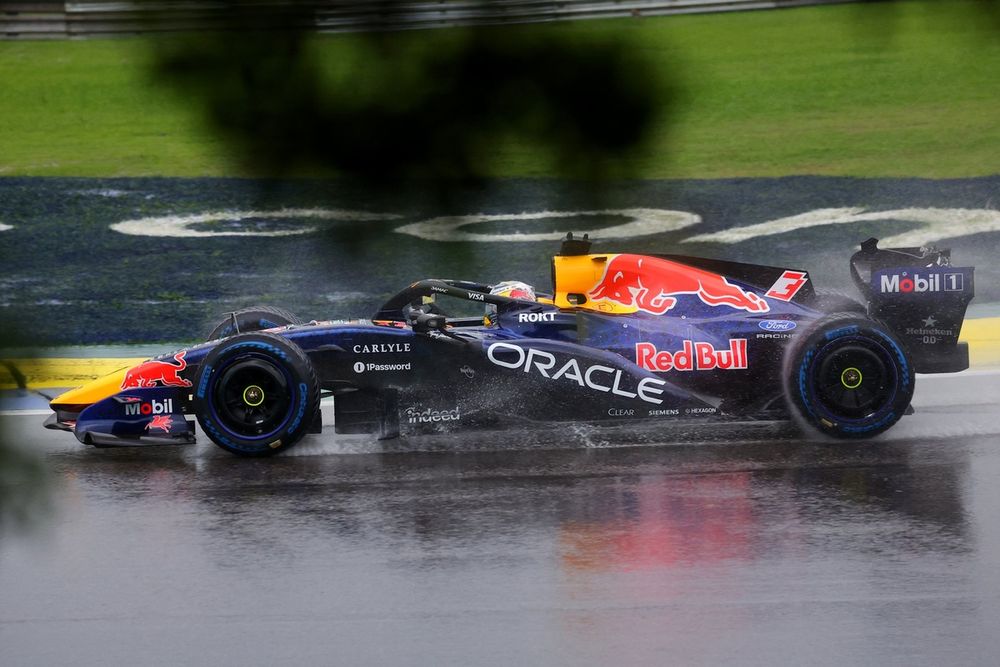
Max Verstappen, Red Bull Racing
Photo by: Colin McMaster / LAT Images via Getty Images
Thus, while Red Bull’s competitors have had the opportunity to implement power unit enhancements throughout this season, the operation based in Milton Keynes has essentially encountered an engine freeze.
In the third and conclusive FIA assessment of ADUO, which incorporated engine data from the Dutch GP through the US GP, no alterations were made, resulting in no manufacturer either gaining or losing its existing allowances.
Similarly, there were no modifications during the second ADUO phase over the summer.
“For the third round, the performance discrepancies relative to the leading ICE developed, yet these adjustments did not yield any new homologations for the Power Unit Manufacturers,” an FIA report indicated.
In light of the disagreements surrounding ADUO metrics, the FIA remains amenable to system modifications in the future, pending the approval of the power unit suppliers, while FIA single-seater director Nikolas Tombazis expresses confidence that the current framework is functioning as intended.
“The FIA has carried out comprehensive evaluations as part of this year’s ADUO review. Based on the caliber of the information and the robustness of the evaluation process, we stand by our results and reached conclusions,” Tombazis commented.
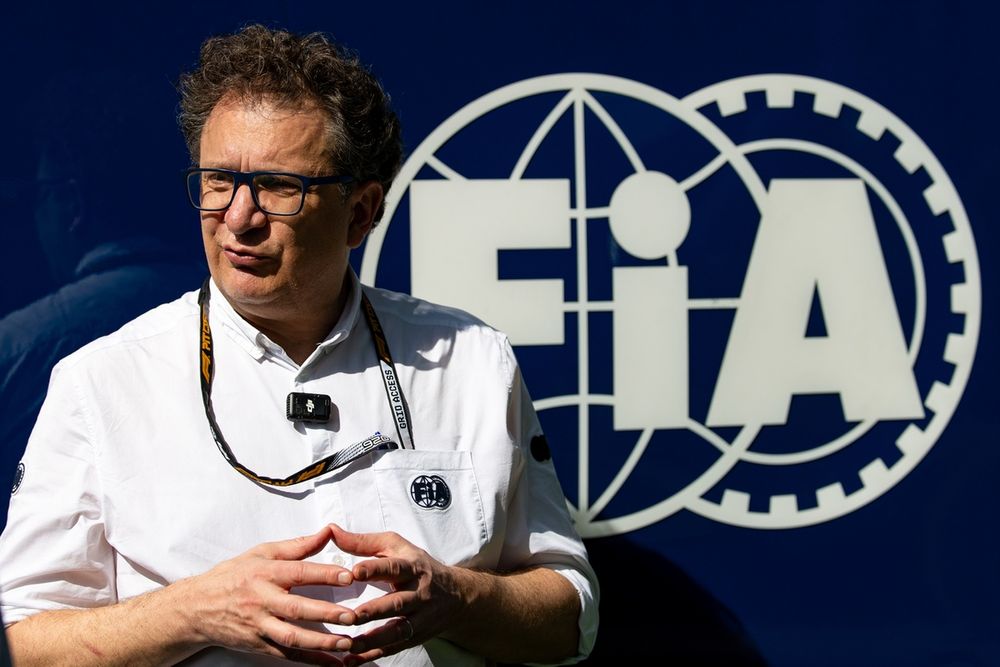
Nikolas Tombazis, FIA
Photo by: Kym Illman / Getty Images
“The inaugural year of implementation has also solidified our conviction that the ADUO concept is appropriate for Formula 1.
“Nonetheless, it is vital for the system to continue progressing to maintain its efficiency, relevance, and suitability. Consequently, we are engaged in discussions with the power unit manufacturers and teams to investigate enhancements that will ensure the sustained efficacy of ADUO in subsequent seasons.”
The forthcoming ADUO phase will commence in 2027, encompassing the initial six races of the F1 calendar from the Bahrain GP to the Miami GP.