The showings from Fernando Alonso during Dutch Grand Prix practice sessions were quite eye-catching, as he managed to slot in between the two McLarens for second place. But, can Aston Martin genuinely maintain this tempo throughout the weekend?
Alonso’s fastest lap was a mere 0.087s off the leading time set by Lando Norris. Moreover, he was just 0.002s ahead of Oscar Piastri, the championship contender who finished third. Trailing behind, the next quickest team, Mercedes, was three-tenths of a second slower, while Max Verstappen of Red Bull lagged even further.
It’s important to remember that these practice sessions always come with some degree of uncertainty. Engine modes, fuel levels, and experimental setups can vary considerably. The Zandvoort circuit, with its tight and challenging layout, adds another layer of complexity. The second practice session experienced frequent interruptions, including two red flags and a virtual safety car.
One of the red flags was triggered by a significant collision involving Lance Stroll, which greatly affected Aston Martin’s preparations. However, throughout the day, both Stroll and Alonso consistently demonstrated impressive speed, having secured third and fourth positions in FP1.
“Aston’s looking really quick,” remarked reigning champion Verstappen. George Russell also acknowledged Aston’s potential, viewing them as formidable competitors this weekend. “Aston went through a period of poor performance, but they showed strength in Hungary and achieved a good result,” he noted. “They seem to be performing well here. Currently, it appears we’re in for a battle with Aston, Max, and ourselves, although I anticipate Ferrari joining the mix.”
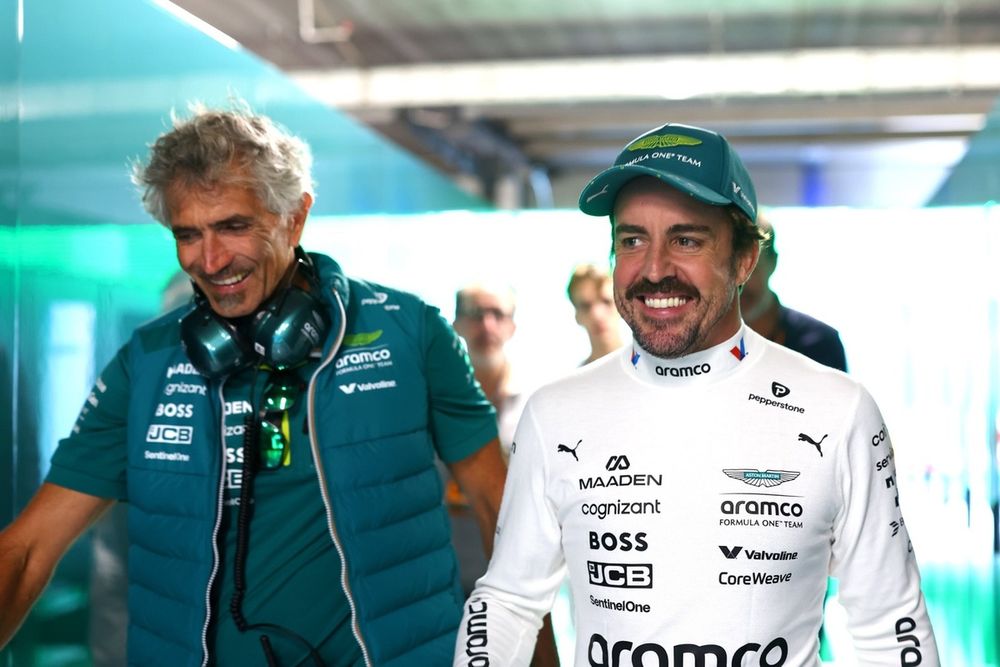
Fernando Alonso, Aston Martin Racing
Photo by: Zak Mauger / LAT Images via Getty Images
It’s understood that Red Bull typically operates with somewhat conservative engine settings during Friday practices. Verstappen’s lap time was 0.588s slower than Norris’, and a half-second behind Alonso’s. However, Helmut Marko believes that Aston’s pace is legitimate.
“Indeed, they seemed quick – during both long runs and short runs, and with all tyre types, especially Alonso,” he observed, while confirming that Red Bull is still grappling with balance concerns despite adjustments to the front wing. “The changes they implemented following Budapest have proven effective. Aston Martin is surprisingly quick. I anticipate a battle for P3 among Aston Martin, Mercedes, and ourselves.”
“We need to resolve our balance problems. Typically, it takes until Saturday for our setup to perform optimally, so let’s remain optimistic. We’re closer in the long runs, and our performance improves with harder tyre compounds.”
Even Norris acknowledged that Alonso was “definitely closer than we’d prefer at the moment.” However, he expressed minimal surprise, considering the team’s strong showing in the previous round before the summer hiatus. In Hungary, Alonso and Stroll recovered from a dismal Spa weekend, qualifying fifth and sixth, respectively, and translating those positions to fifth and seventh in the race.
This turnaround, occurring just a week after being the slowest team, may seem unexpected. However, it’s likely due to the updated AMR25’s exceptional performance on twisty circuits that demand high downforce. Its lack of aerodynamic efficiency could explain the greater impact of its drag on circuits requiring high top speeds, like Spa. This deficiency wasn’t penalised at the Hungaroring, and while some within the team don’t believe Zandvoort suits the car as well as Budapest, its high-downforce capabilities are evident.
In Formula 1’s increasingly competitive midfield – a sentiment often repeated, but true – even a slight advantage can determine whether a team reaches Q3 or ends up at the back of the grid.
“Hungary was a strong event for us, and now we’re heading to Zandvoort and still demonstrating good pace in practice,” Alonso stated. “We know it’s just practice, but it’s encouraging to see our times near the top. We’ll see what we can achieve tomorrow. Everything we’ve introduced on the track is performing as expected, which boosts our confidence for the upcoming winter season.”
However, few believe that McLaren has reason to worry during qualifying, including Alonso. “No, not particularly. I don’t believe we can compete with the McLarens. But some of the top teams, like Mercedes, Ferrari, and Red Bull, don’t seem too far ahead, so we’ll aim to be in that mix.”
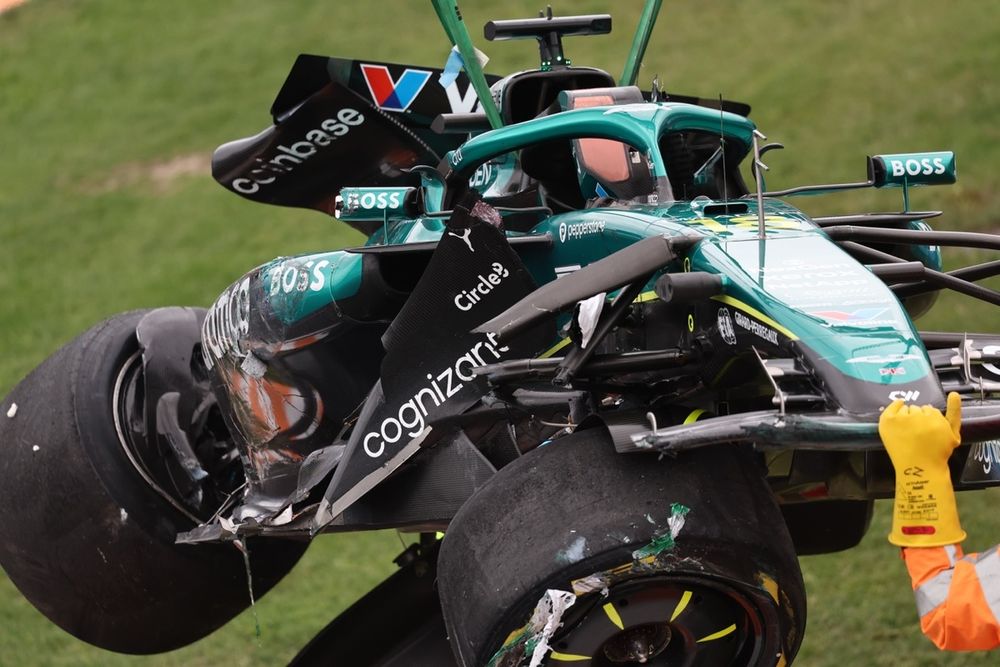
Lance Stroll was unhurt in a huge crash in FP2
Photo by: Jakub Porzycki / NurPhoto / Getty Images
Due to the disruptions, Alonso only managed a very brief “long run” during FP2, so we have limited data on Aston Martin’s potential race pace. During the few laps Alonso completed on medium tyres, he was approximately four-tenths slower than Norris. However, with a one-stop race virtually certain, a strong qualifying performance will be critical, as it was in Hungary.
Fortunately, Alonso’s run was longer than Stroll’s, who didn’t even reach that stage due to a heavy impact with the banked Hugenholtzbocht, also known as Turn 3. The collision caused extensive damage to the entire right side of Stroll’s car, but he fortunately emerged unscathed.
“I experienced a small lock-up, and after that, I was just a passenger,” Stroll explained. However, he shared Alonso’s optimism regarding the team’s genuine pace. When asked whether he and Alonso could compete for the front rows, Stroll responded, “I believe so. It certainly appears that way.”
“We displayed competitiveness throughout the day, and Fernando continued to do so in FP2. We’re in a promising position, and we’ll see what we can achieve.”
In this article
Be the first to know and subscribe for real-time news email updates on these topics