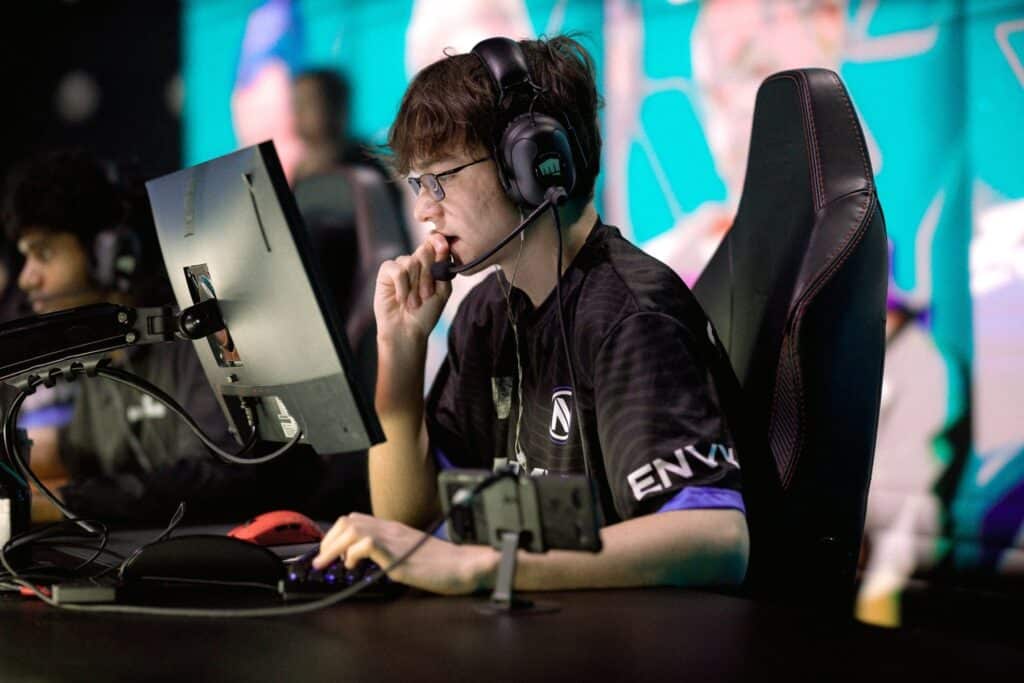
Just recently, the VALORANT competitive gaming scene was shaken by the surprising announcement that the talented duelist, Alex “canezerra” Banyasz, had been issued a one-year hardware suspension from all games published by Riot Games.
This prohibition encompasses the very game to which he had devoted the past three years, striving to join the Tier 2 circuit and potentially rise to the VCT Americas with ENVY during the previous year. canezerra was nearing his 18th birthday—the age threshold for competing in the VALORANT Champions Tour and finally sharing the stage with celebrated figures in his field—with less than two months to go.
“I committed a grave error and uttered statements I profoundly regret. There is no justification for my actions. I extend my sincere apologies to my supporters, ENVY, Riot, and everyone who stands by me—I have failed you,” canezerra acknowledged in his official announcement posted on X (previously Twitter).
Concurrently, ENVY publicly declared that they were ending canezerra’s agreement with the North American competitive gaming collective. ENVY’s declaration cited “numerous breaches of [Riot Games’] Terms of Services” as the cause for the ban. Nevertheless, specific information regarding these breaches has not been released, nor has Riot Games issued an official comment.
The lack of transparency, coupled with the harshness of the punishment, ignited intense debates throughout the VALORANT community, involving supporters, online personalities, competitors, and other figures in the esports industry. Was Riot’s decision overly severe? Did this sanction prematurely end the trajectory of a rising talent?
Professional Gamers Serve as Examples. Or, Ideally, They Ought To
For competitive gaming to be regarded as a legitimate sport, it must adhere to certain standards. This entails a commitment to honesty and fair play. Moreover, it requires representation by individuals who exemplify these fundamental principles.
Persistent stereotypes about gamers—depicting us as isolated individuals unable to engage socially in the “real world”—are widely known. While largely baseless, these caricatures hold a kernel of truth. The gaming and esports sectors continue to grapple with issues of hostility and mistreatment. Even within professional ranks, our field remains deficient in providing equitable chances and secure environments for underrepresented groups and other disadvantaged demographics.
When the media covers esports, whom do they focus on? Whom do enthusiasts and aspiring players admire? They invariably turn their attention to the most recognizable personalities in our domain. These include professional players performing live, responding to interview inquiries, or sharing their matches on online streaming services.
“Upon achieving professional player status, willingly or not, you transform into a public personality, serving effectively as an influencer or representative for your team and the esport itself. This necessitates a careful consideration of your conduct and statements,” an X user contended during the discussion surrounding the Canezerra situation.
Competitive gamers inherently influence the perception of our industry. Furthermore, they embody the types of conduct deemed acceptable, or even desirable, at the pinnacle of competition. Young, impressionable admirers endeavor to emulate their heroes, irrespective of whether those heroes embrace this role. Such authority, in my view, ought to be entrusted solely to those capable of exercising it judiciously.
Additionally, the distinctive position held by professional players within our arena could be utilized to foster beneficial change. Both within and beyond the game, professional athletes should aim to speak out against detrimental conduct or, at a minimum, demonstrate appropriate behavior.
Professional Competitors Act as Brand Representatives
ENVY’s choice to release canezerra from their roster could appear severe, yet from a commercial standpoint, it represented the sole viable course of action. This illustrates a point where competitive gaming deviates from its intrinsic passion and thrill, exposing a more dispassionate and unforgiving aspect.
In their capacity as public figures in esports, professional players act as representatives for their respective games, teams, and associated sponsors and collaborators—a role that carries both positive and negative implications. Should a player’s actions risk commercial partnerships or financial backing, they transition into a detrimental asset.
“Irrespective of an individual’s popularity, dedication, or skill, repercussions will invariably follow,” stressed professional VALORANT competitor, Ethan “Ethan” Arnold, via social media. “I’m uncertain when this concept faded for so many over recent years, but it was a commonly understood principle when I began my esports career a decade ago.”
“One’s personal reputation holds paramount importance today, and it’s surprising that organizations and colleagues don’t attempt to assist or prepare individuals for this, particularly given the pervasive use of social media and its impact on our personal and professional existence.”
A player’s conduct doesn’t merely jeopardize sponsorship agreements; it can also tarnish a product’s image among competitive gaming audiences. This results in a diminished brand, a reduction in supporters, and ultimately, fewer commercial opportunities over time.
For example, certain community members raised past accusations against canezerra concerning hate speech and remarks trivializing sexual assault, subsequently faulting ENVY for allegedly neglecting proper vetting procedures for their players.
Game Publishers Wield All Authority Here, Perhaps Even Excessive Authority
While a consensus exists among many community members and competitive gaming experts that breaches of Terms of Service and harmful behavior warrant penalties, the duration of canezerra’s suspension has sparked considerable debate.
“Competitive ladder players can utter anything without even getting a three-day suspension?” queried LP porridge, the Founder and Owner of the esports collective Lost Puppies. “This decision is utterly astounding, what the f***???
“One might suggest ‘perhaps they’re setting an example with him,’ yet you frequently encounter ten times more egregious conduct in your own ranked matches that goes entirely unpunished. A YEAR??? This situation is so illogical, it genuinely bewilders me.“
However, what real benefit comes from debating the severity of the ban when we lack absolute certainty regarding the precise conduct that prompted Riot Games’ action? Regardless of one’s stance in the discussion, it amounts to mere conjecture.
In my view, a distinct subject merits examination here: the unrestrained authority that publishers exert within the competitive gaming environment of their titles. As proprietors of the games to which we commit our personal and professional existence, these publishers determine the manner and participants of our engagement with esports.
Should this be passively accepted? Or ought such authority to be curtailed, or at minimum, subjected to oversight by autonomous regulatory organizations?
As previously noted, video game publishers operate as commercial enterprises, and occasionally, their financial objectives diverge from ethical competitive standards. A notable instance involves Hearthstone professional player Ng “blitzchung” Wai-chung, who faced a one-year suspension and forfeiture of his 2019 prize money after publicly voicing support for Hong Kong’s pro-democracy demonstrations. Blizzard Entertainment subsequently lessened the sanction due to widespread public criticism, with many in the community alleging the company used BlizzCon as a deterrent to safeguard its ties with Chinese commercial entities.
Riot Games has a reputation for adopting stringent positions against specific team and individual player conduct. For instance, in the previous year, the publisher imposed a one-year competitive ban on Joseph “Ban” Seung-min, citing that the VALORANT player “might have been involved in activities related to match-fixing.”
“Riot is unambiguously defining the kind of community it intends to cultivate and the degree of behavior it will permit,” stated VALORANT commentator Marcus “Marks” Wong subsequent to the canezerra announcement. “They are establishing an unequivocal boundary. If you disagree with that, then perhaps you are not the demographic they wish to retain.”
A Promising Career Derailed, Yet Whose Fault Is It?
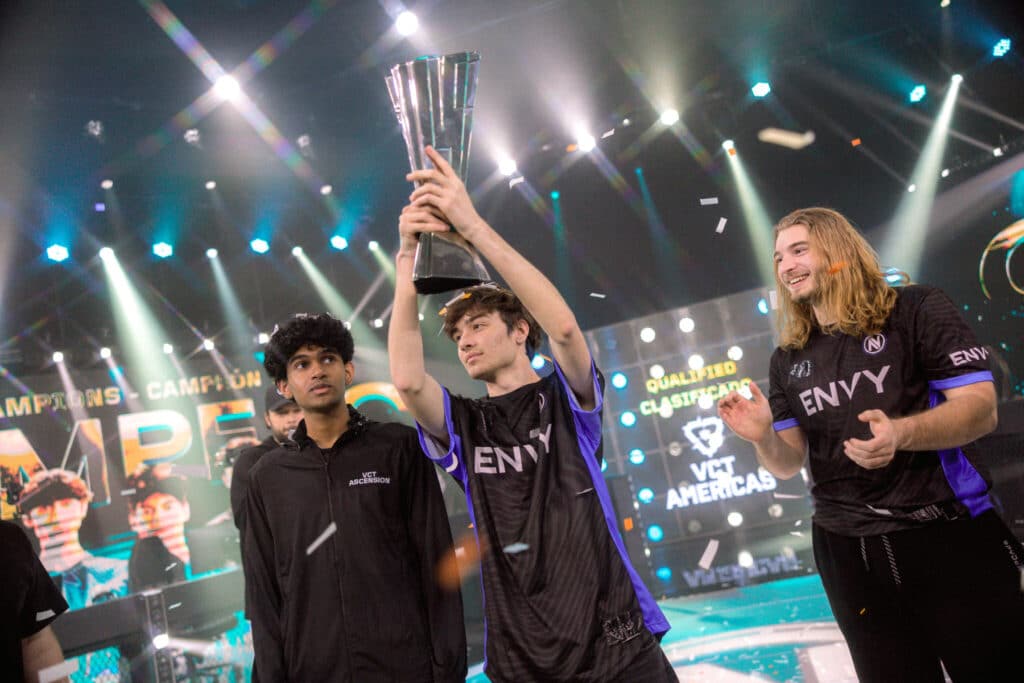
“The reality that he is barred from playing or streaming the game for a full year, in addition to being removed from his team and competitive play, is, in my view, appalling. He is about to turn 18, possessing an incredibly promising outlook,” penned VALORANT content creator Connor “PROD” Moran concerning canezerra’s suspension. “There were numerous alternative approaches to this situation, and they chose such an egregious one. A huge failure on the part of Riot Games.”
Has Riot Games irrevocably damaged the career path of an emerging VALORANT talent? It seems probable that canezerra will need to cultivate an individual identity beyond VALORANT if he aims to maintain prominence until his hardware restriction is lifted. He has, however, already started this process with his recent Counter-Strike broadcast. Moreover, precedents like Jay “sinatraa” Won demonstrate that it is feasible to forge a successful streaming profession even after facing significant allegations and a dispute with Riot Games.
Furthermore, I believe a player’s future career opportunities ought not to influence in-game sanctions. To foster a secure gaming atmosphere, all participants, irrespective of their societal standing or skill level, must abide by an identical code of conduct. Accountability for rule infractions is universal. As previously examined, professional players should be subjected to an even more rigorous standard, owing to their unavoidable capacity as exemplary figures both within and beyond the game.
Given that many professional players commence their competitive trajectories early in life, they usually internalize their distinctive standing within the community from an early stage.
As articulated by VALORANT content creator Splash: “From the age of 14, when NCAA basketball coaches began scouting me, I understood the necessity of being accountable regarding coaches and scouts observing my social media activity, maintaining exemplary behavior in both public and private spheres, and consistently avoiding problems or disputes.”
Nonetheless, I believe Colin “CoJo” Johnson, the Senior Team Director for Fnatic VALORANT, presented a crucial argument concerning the obligations of esports organizations toward emerging talents.
“It falls upon the experienced players, General Managers, and coaches to genuinely address this improper conduct PROMPTLY, rather than waiting until it gains widespread attention,” CoJo emphasized on social media. “An excessive number of individuals shy away from holding prominent players and budding talents responsible, or simply overlook it completely.
“Our duty is to cultivate upright individuals—not merely skilled players, particularly when we recruit them directly from high school or university, at which point they might become somewhat excessively online or socially undeveloped.”