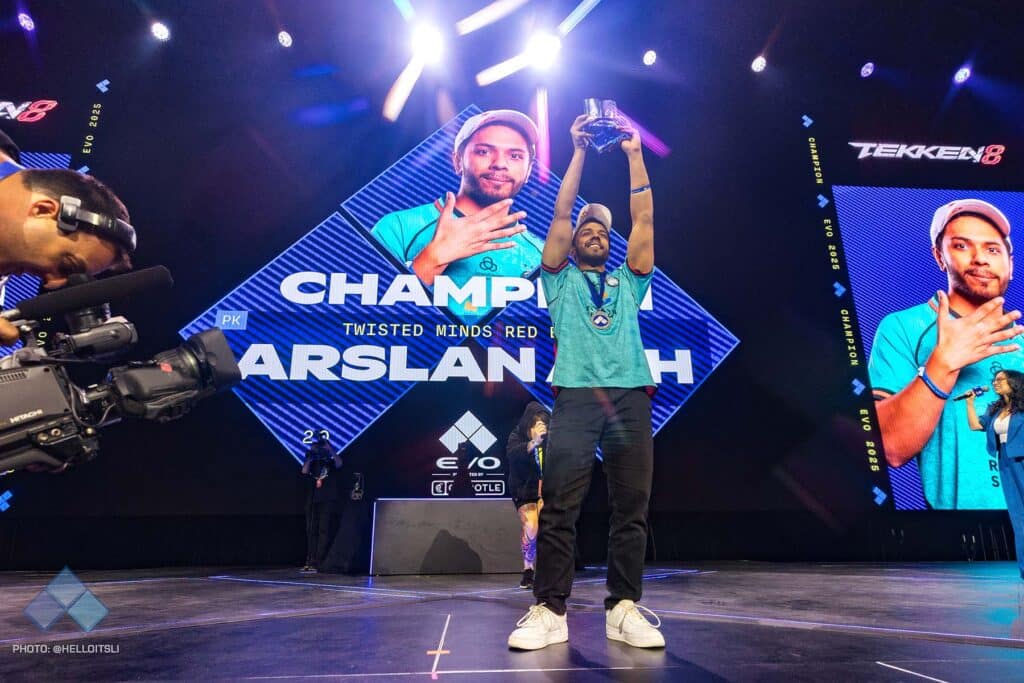
I initially disapproved of Evo’s growth. When RTS, a Saudi Arabian corporation, acquired Evo and revealed numerous new competitions, I felt quite disheartened. Similar to Arslan Ash, I worried this development would diminish the esteemed reputation of the grand gathering in Las Vegas.
Nonetheless, the reasons behind my reservations about Saudi Arabia’s increasing influence within the esports sector are complex. My concern isn’t primarily about fighting game participants getting more opportunities to compete. On the contrary, I believe we require an increase in major tournaments akin to Evo, extending beyond just the Fighting Game Community.
Esports Audience Exists, Yet Its Expansion Has Stalled. Perhaps Growth Isn’t Essential.
Recently, much discussion has revolved around the concept of esports requiring “rescue.” Although it’s common to declare things are “perishing,” I would contend that esports is simply not flourishing. The majority of prominent esports games aren’t experiencing significant increases in audience numbers or financial investment. Sponsors, capital providers, developers, and event managers alike find it challenging to envision how esports can achieve sustainability, particularly given the free online access to its events.
Should any esports venture attempt to levy even a modest $10 fee, its supporters would stage a protest.
The peak viewership for the League of Legends Mid-Season Invitational reached 2.3 million in 2023, 4.8 million in 2024, and 3.44 million in 2025. This data shows no clear upward trend. There’s no indication that League of Legends, widely considered the globe’s foremost esports title, is set for substantial expansion in the future.
The International serves as Dota 2’s premier annual competition. In 2023, it attracted a peak of 1.44 million viewers. This figure slightly increased to 1.51 million in 2024, and then climbed to approximately 1.79 million in 2025. Once more, esports is not fading away. It is merely… persisting. The existing fanbase remains loyal for a period. However, the influx of new followers is minimal. I would still categorize esports as a relatively specialized pursuit.
Inquire of the general public about esports, and they’re likely to imagine a younger relative playing Fortnite or recall an irritating streamer on Kick. The majority of individuals aren’t observing elite professional players competing on a platform. I maintain that this situation will endure indefinitely, and that esports will never achieve widespread appeal. One won’t witness a Street Fighter 6 or Apex Legends professional showcasing moves at the Macy’s Day Parade on television. And frankly, that’s a relief.
Nevertheless, the actual concern is the diminishing excitement among the current esports audience. Several years prior, discussions about team rivalries were far more prevalent; one might even observe such contentious remarks appearing across social media and in promotions. Your feeds would be inundated with endless memes. Matches would be meticulously analyzed on Reddit. Debates over who constituted the greatest of all time were common.
Over the past few years, the atmosphere has seemed rather contrived. Live transmissions lack vibrancy. The storylines feel predictable. The community doesn’t engage in spirited debates about anything. Occasionally, it becomes challenging for our authors to uncover compelling narratives to explore. Much of the content remains superficial.
I’ve encountered various propositions regarding what might “rescue” esports from this ongoing decrease in enthusiasm. What will sustain fan engagement? What will ignite passion? Some suggest a greater adoption of mobile gaming. The audience in South Asia is quite substantial, with whole nations engrossed in mobile esports. However, I’m uncertain if such a phenomenon can be replicated in North America and Europe.
In my view, the authentic solution resides within the realm of the fighting game community.
Return to Esports’ Origins: Enthusiastic and Skilled Individuals

Forgive my repetition, but the fighting game community is fundamentally rooted in genuine enthusiasm from the ground up. It embodies resilience. Perseverance. Financial incentives are minimal; perhaps a few thousand dollars if fortune favors you. There’s no widespread recognition. You won’t achieve prominence beyond the FGC. Most individuals outside this community remain unaware of its goings-on.
Nevertheless, they persist in practicing diligently, dedicating ten hours daily for countless years. They travel to competitions even when they lack the financial means. Their dedication is extreme. This very attitude is what the broader esports industry ought to adopt.
Esports has strived for mainstream acceptance, drawing parallels from conventional athletics. The structured seasons. The franchised organizations. Yet, once more, it all appears contrived. It seems uninspired. Imposed. Commercialized.
Within the FGC, elements of disorder, rich backstories, intense emotions, competitive animosities, and general commotion abound. The supporter base, though limited in size, possesses considerable strength. They are deeply committed.
How might we replicate such an ethos for titles like Counter-Strike 2? Or League of Legends? These games already boast numerous adherents, commanding audience figures far exceeding the FGC’s aspirations. But how can they generate true excitement?
My belief is that they require a greater number of gatherings akin to Evo.
Evo represents a grand tribute to every aspect of fighting games. Nearly every active fighting game community participates at Evo, convening in an enormous convention facility to practice collectively and observe contests displayed on numerous monitors. Although these fighting games are often regarded as fringe interests at other competitions, they receive adoration and high esteem at this event.
Each fighting game cultivates its own unique following. They possess diverse characteristics. Some, perhaps, with less pristine hygiene. Just a joke. Mostly. Yet, at Evo, they unite to honor fighting games collectively. Even if your primary interest was observing Tekken 8, you would likely explore Guilty Gear -Strive-. You would find yourself rooting for Fatal Fury: City of the Wolves. This fosters a spirit of unity.
Popular esports previously exhibited this dynamic through Major League Gaming (MLG), during its era of hosting local area network (LAN) competitions for shooter titles such as Call of Duty and Halo, all within a single venue. This transcended a mere esports championship. It constituted a convergence of dedicated first-person shooter enthusiasts who sought a sense of affiliation and the spectacle of overlooked talents receiving acclaim on stage.

My conviction is that we ought to abandon all grand displays and reinstate these authentic communal gatherings. This is precisely why Evo’s acquisition concerns me. The intense drive to attract a broader demographic through celebrity streamer exhibitions and similar endeavors doesn’t align with the true essence of the FGC. Or of gaming itself. Do you recall the earlier days when everyone transported their desktop computers for a LAN party? Or needing to bypass your high school’s network security to enjoy StarCraft in the library? In that era, esports functioned as a tribute to the typically teased enthusiasts. It provided an avenue for shared belonging.
Presently, we are presented with streamer exhibition matches. We observe teams making entrances onto stages accompanied by smoke effects and hip-hop music. We witness colossal productions featuring musical acts between competitions. It conveys an impression of attempting to assimilate with the general public once more. “Behold, our immense enjoyment! Observe our triumph and sophistication!” Why not simply acknowledge our collective identity as enthusiasts? Why not concentrate solely on the core tenets of esports: skill, fervor, endurance? What significance do these extraneous elements hold?
The Super Smash Bros. competition, Supernova, comprehends this principle. It declared its return this year at an expanded location, offering double the area. However, rather than compromising by including arbitrary popular titles or other strategies to attract a broad audience, it unveiled even more offerings tailored to Smash players’ preferences. Supernova serves as an homage to the Smash community. In addition to significant championships, it features arcades, retro tournaments, the Smash 64 Combo Contest, and The Smashies awards ceremony… This provides a means to unify all segments of the Smash communities, even if they typically experience discord.
Should esports entities and event planners cease their efforts to attract the general populace and redirect esports toward its foundational principles, I believe the enthusiasm could be revived. Neither the Chipotle advertisements nor the cryptocurrency endorsements have successfully garnered additional supporters. The audience figures remain unchanged. We should simply direct our attention to dedicated esports enthusiasts and cater to their desires.
The article The waning excitement in esports, and how events like Evo suggest a solution: abandon mainstream aspirations first appeared on Esports Insider.