Grievances have been circulating even prior to the launch of the current Formula 1 campaign. These frustrations tend to peak periodically, particularly on track layouts dubbed ‘energy-starved,’ where the combination of curves and straightaways, along with the nature of the bends, prevents modern machinery from effectively replenishing battery stores over the course of a lap.
Although a rule adjustment introduced just before the Miami Grand Prix curbed the widely disliked ‘yo-yo racing’ effect stemming from varying battery charge levels among drivers, new issues have emerged. Lately, significant pace discrepancies triggered by the engine’s automated learning algorithms—which adjust to minor shifts in track grip and driving styles—have sparked substantial frustration.
During the Spa round, Oscar Piastri voiced his frustration, describing the current dynamic as a “rather poor way to go racing.”
Nevertheless, no swift resolutions are on the horizon, despite some critics calling for a complete ban on these machine-learning systems. Such detractors frequently point to Article B1.9.1 of the F1 sporting code as their ultimate argument, which mandates: “The driver must drive the car alone and unaided.”
Even so, a strong case remains that elite competitors will successfully navigate these intricate and irritating hurdles. This viewpoint was shared by Neil Houldey, McLaren’s engineering technical director, during a media session held over the Formula 1 summer shutdown.
“In reality, the competitors who comprehend their requirements, stay fully focused, and rank among the finest drivers globally will continue to set the quickest times,” he remarked when questioned by Autosport about whether driver capability can still be evaluated fairly today.
“The landscape has shifted slightly… achieving a quick lap is no longer purely a matter of maximum velocity; it now relies heavily on the underlying cognitive strategy that produces those sector times.
“Spa serves as an excellent illustration: Oscar ran on a slightly altered energy deployment mapping, costing him a fraction of a second, yet he remained close to Lando’s pace. Ultimately, these disparities normalize over time. You can still identify the gap between top-tier talents and average competitors in both qualifying runs and race distances.
“My ultimate conclusion is that everything balances out eventually. While a specific qualifying run or race might penalize one competitor over another, the most skilled racers will invariably occupy the top spots by the conclusion of the championship.”
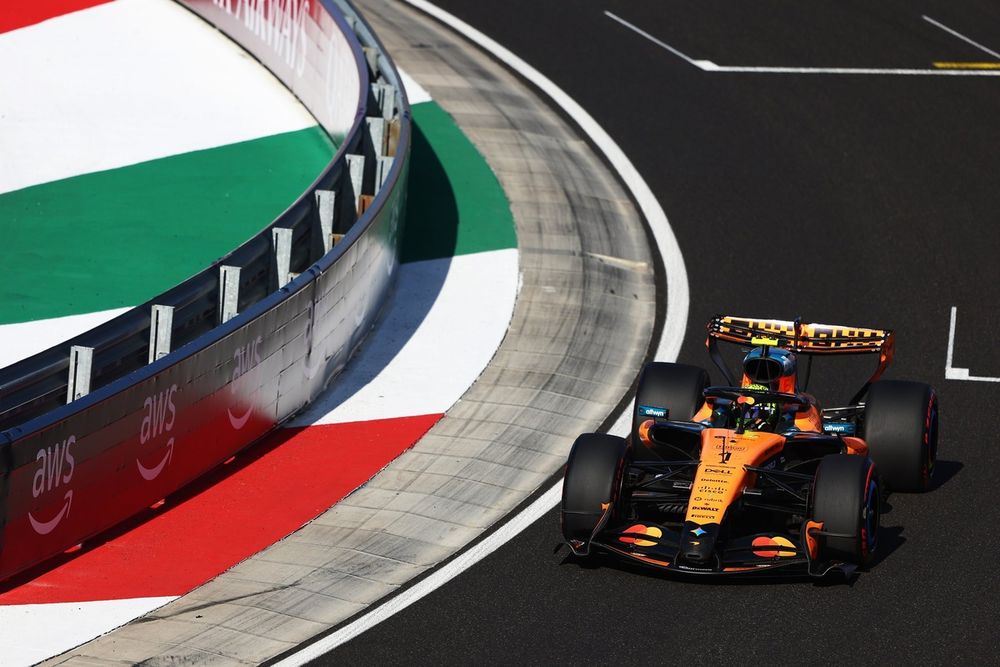
Reigning frontrunner Lando Norris secured his maiden Grand Prix victory of the season in Hungary
Photo by: Andy Hone/ LAT Images via Getty Images
At its core, the primary constraint of the active regulations—which mandate an almost equal distribution of hybrid electrical output and internal combustion engine power—lies in the battery’s storage capacity. Because the system must recoup energy during a lap, automated software control is essential for both vehicle safety and peak performance, gradually reducing electrical assistance to avoid sudden power drop-offs.
The automated learning systems also serve a competitive purpose, aiding engineers in defining the theoretical “perfect lap”—the ideal blend of energy recovery and release that yields the quickest time. The regulatory adjustments in Miami, which granted the governing body greater flexibility to lower recovery thresholds, effectively traded maximum top-end speed for a more consistent, albeit slightly reduced, velocity curve.
However, this setup demands extreme precision from the cockpit regarding throttle control and other inputs. For example, if a racer enters a turn with too much aggression and loses more speed than their teammate at that spot, the subsequent acceleration demands higher battery reserves, penalizing them with reduced power on the remaining straights.
Houldey characterizes this dynamic as a completely fresh risk-versus-reward scenario for drivers, where sheer aggression yields fewer benefits compared to a highly calculated and methodical approach.
“It has certainly transformed into a more cerebral challenge,” he explained. “Competitors are managing far more variables than in previous years—even during the ground-effect period from 2022 to 2025, drivers faced heavy workloads. Now, there is an added layer of complexity; you must perfect not only your corner entry speeds but also your energy management, throttle inputs, and overall driving style.”
“Extracting maximum performance from these vehicles presents a steeper technical hurdle for both the engineering crew and the person behind the wheel. Ultimately, though, the most cohesive partnership between machine, racer, and pit wall will come out on top, just as it always has.”