It will hardly come as a surprise to anyone following motorsports that Formula 1 will not feature any races during April. The ongoing strife in the Middle East, which shows no immediate signs of de-escalation, has compelled F1 to cancel its events scheduled for Bahrain and Saudi Arabia.
This five-week pause until the Miami Grand Prix, set for the opening weekend of May, isn’t a comprehensive stoppage akin to the teams’ summer recess. Nevertheless, while it provides a welcome respite for F1’s exceptionally diligent traveling personnel, work proceeds rapidly at the factories. Teams are busy analyzing data from the season’s initial races and preparing upgrades for Miami and subsequent events. For some, this interlude is a beneficial opportunity to address deficiencies, while others might have preferred more time on the track.
Teams at a Disadvantage – Mercedes
Unsurprisingly, the outfit that would have gained the most from a continued racing schedule is the one most likely to triumph in Bahrain and Saudi Arabia. Mercedes has demonstrated itself to be the dominant force in the championship and would have had an excellent chance to accumulate additional points by securing victories in the Middle Eastern rounds before competitors could introduce significant advancements.
Commenting solely on the competitive aspect, Mercedes principal Toto Wolff remarked: “I believe we might have wished for the two Middle Eastern races to go ahead so we could earn more points.”
Mercedes is not taking its early lead for granted, anticipating an intense development competition in the coming weeks and months that could see rivals narrow the gap or even draw level. Concurrently, Mercedes’ client teams are steadily closing in on the factory team’s initial advantage in maximizing the complex new power units.
“Competitors have now figured out how to best utilize these systems to their benefit, and we observed initial signs of this [at Suzuka],” Wolff elaborated. “What appeared to be an easy win for us in the first two races is no longer the case. Miami will represent a fresh start for me as well.”
Additionally, having two fewer races before June means Mercedes-powered teams will compete less before the stricter compression ratio evaluations are enforced. These tests are slated for introduction following rival concerns about the Brixworth-based manufacturer’s practices. However, whether this will significantly impact Mercedes and its customers remains a subject of debate, with Mercedes consistently asserting it will not be an issue.
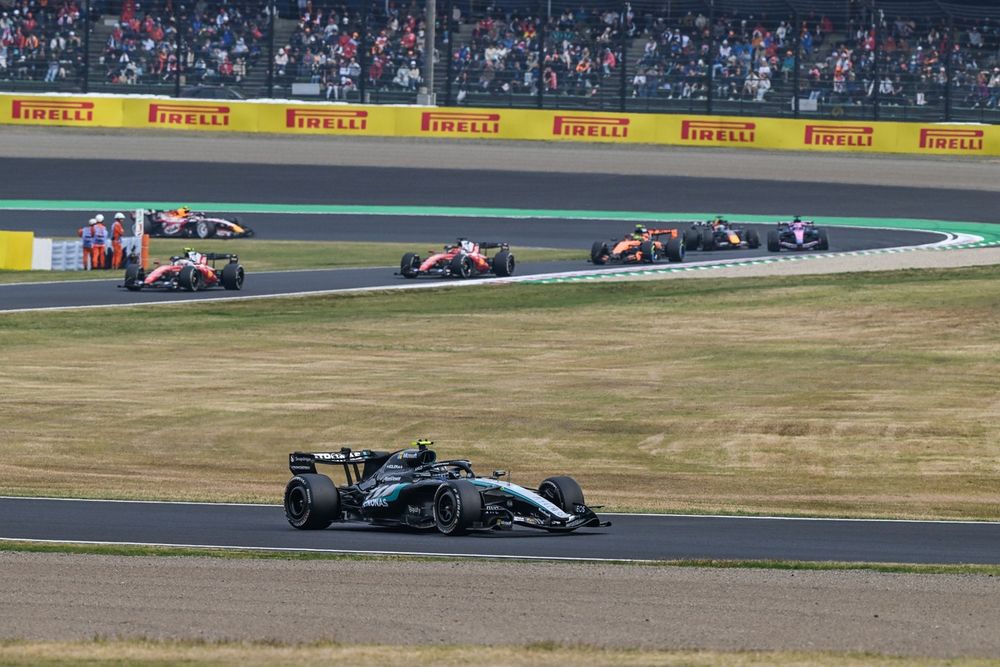
Andrea Kimi Antonelli, Mercedes
Photo by: Artur Widak / NurPhoto via Getty Images
Teams to Benefit – McLaren
There are multiple contenders here, as any team trailing Mercedes will naturally appreciate the hiatus. McLaren stands out as a prime example, having already targeted Miami for the debut of its initial major upgrade package, rather than rushing components for Bahrain. Consequently, it will incur no losses from the absence of Middle Eastern races and will instead cede fewer points to Mercedes and potentially Ferrari.
McLaren’s season began plagued by reliability problems, with various battery-related malfunctions forcing both Lando Norris and Oscar Piastri to retire from the Chinese Grand Prix before it even started. However, the reigning world champions appeared to turn a corner in Japan, where Piastri demonstrated strong performance, earning a second-place finish after leading in the early stages.
Norris still faced challenges following additional reliability issues that restricted his practice time. Nonetheless, the team has progressively managed to extract greater performance from its Mercedes power units and meet its energy deployment requirements.
“I believe there are some indications of progress in terms of performance and overall competitiveness. This advancement, I think, stems from our ability to extract a bit more from the chassis through setup adjustments. But primarily, we’re getting more out of the power unit,” Stella informed Sky following qualifying in Japan.
The team now aims to replicate its impressive performance from 2023 by making significant strides in Miami, although its competitors will undoubtedly be pursuing similar improvements.
Teams at a Disadvantage – Aston Martin
On one hand, the break seems advantageous for Aston Martin’s engine supplier, Honda. The Japanese manufacturer will have additional time to address a disappointing start to the season and implement further reliability improvements without the demands of participating in two race weekends, with another enhancement reportedly planned for Miami.
However, given that Aston Martin is unlikely to contend for points in the near future anyway, there was minimal drawback to racing in Bahrain and Saudi Arabia for the racing division. Instead, Aston now forfeits valuable mileage crucial for understanding and developing its AMR26, having fallen significantly behind during pre-season testing and in Australia. As Honda’s sole user, the more data the team can collect, the better.
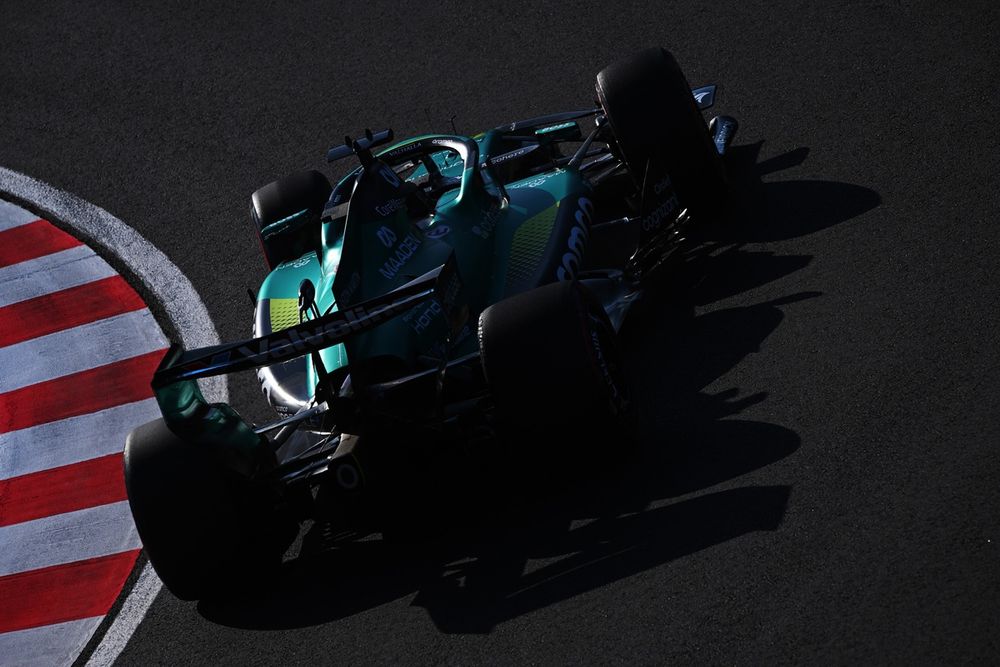
Lance Stroll, Aston Martin Racing
Photo by: Rudy Carezzevoli / Getty Images
“We cannot achieve miracles in merely five weeks,” stated Mike Krack, Aston’s trackside chief engineer. “It is an ongoing effort. I believe we have seen with the issues we’ve experienced since Barcelona that with diligent work over two to three months, we’ve managed to enhance reliability to a point where we can at least operate and compete. Therefore, I don’t think we will close the performance gap by Miami, but we will strive with all our might to reduce it.”
Teams to Benefit – Williams
Alongside Aston Martin, Williams has emerged as one of the most significant letdowns since the introduction of the new regulations. Their car is overweight, lacks aerodynamic downforce, and exhibits fundamental balance issues that seem challenging to rectify quickly. Similar to McLaren, Williams has also faced considerable effort in optimizing the potent Mercedes power unit.
Consequently, Williams has yet to secure a qualifying position higher than 15th across four qualifying sessions, which includes China’s sprint weekend.
Team principal James Vowles described a frustrating weekend in Japan as a “defining moment,” as Alex Albon effectively utilized the latter half of the Grand Prix as an extended test session. By adjusting front wing settings on Sunday, the team was able to gain a slight head start on its extensive task list at its Grove facility, with concurrent efforts underway to reduce the FW47’s weight and boost its aerodynamic capabilities.
“It’s clearly the same situation for every team, but for us, we’re going to leverage it somewhat more than the others,” Albon noted. “We’re pushing extremely hard for this upgrade for Miami, primarily to simply have it ready. We’ll essentially be at the factory every week during this period.”
Carlos Sainz further commented: “This is precisely what we needed. A kind of reset to formulate a fresh strategy, considering that everything we’ve implemented from 2025 into 2026 clearly hasn’t worked, and we need to start anew.
“I cannot guarantee that we will be substantially more competitive in Miami, but this five-week break could yield significant performance gains for us from the middle to the end of the season.”