The professional competitive landscape for Super Smash Bros. is widely known for its financial struggles. Competitions frequently rely on public contributions, leading to prize funds amounting to just a handful of thousands. Despite this, dedicated individuals persist in practicing Melee for numerous hours daily, an aspect that renders this community unique… and perhaps somewhat illogical.
A prominent illustration of the scarcity of viable career options within the Smash environment is the case of Jason “Mew2King” Zimmerman. Regardless of his activities—be it competing, instructing, or broadcasting—Mew2King consistently struggles to earn sufficient income from Smash, even after committing his whole existence to this domain.
Concern for Mew2King has been prevalent among the Smash community for a considerable period. He has endured substantial emotional distress, harassment, and difficulties. Despite these challenges, he has maintained his dedication to Smash, a sphere where he has devoted most of his life to meticulously examining its intricate systems more thoroughly than any other participant.
During his competitive tenure, Mew2King’s contract with Echo Fox was terminated. Consequently, he lost the backing of a sponsor who would cover his travel expenses to tournaments or provide a consistent wage. Instead, Mew2King turned to live broadcasting and instructional roles, avenues that have historically proven unsuccessful for him.
By January 2026, information surfaced indicating his Twitch streaming efforts yielded merely $2 hourly. Even Juan “Hungrybox” DeBiedma advised him at that juncture to seek a part-time position. A conventional employment opportunity.
Mew2King expressed a lack of enthusiasm for this prospect: “I’m just gonna do what I love, which is gaming. I’m just gonna do that forever.”
Nonetheless, the situation deteriorated further as May 2026 approached.
Mew2King Pleads For Assistance From The Smash Community
StreamElements declared its imminent closure this month, prompting Mew2King to solicit aid from his supporters. Over the last two to three years, StreamElements accounted for 40% of his earnings, as detailed in an urgent Google Document published by the professional player.
Despite the cessation of service, Mew2King affirmed his intention to persist with full-time streaming and coaching. Yet, he also informed his audience that complimentary coaching would be provided in exchange for their sponsorship in Marvel Strike Force, a mobile gaming title. Additionally, he implored followers to subscribe to his Twitch channel or initiate Twitch Raids.
Concurrently, he has reduced the number of advertisements on Twitch. The Smash competitor faced criticism earlier this year for allegedly bombarding his broadcasts with excessive ads, rendering them intolerable. Naturally, this measure was taken to generate additional revenue. The negative reaction, however, resulted in a decline in his viewership.
“I have limited options now, sadly, for livelihood,” he stated.
This desperate plea incited negative online reactions.
A particular response read: “Get a f***ing job already. You can’t be a loser for three decades straight. The Melee train is over, you squeezed all you could out of it, and look at how long it lasted. Now it’s time to get back to the real world and live in reality, which is working 8 hours a day every day.”
A more considerate comment suggested: “You really should find a part-time job. You can pursue your passion for gaming while making some money on the side.”
It’s important to acknowledge that Mew2King is not presently self-reliant. He lives with Asperger’s Syndrome and has previously mentioned requiring a caregiver. While his current circumstances are unclear, it is presumable that securing a high-paying position would be challenging for him, though part-time employment might be feasible depending on its nature.
Regardless, the fundamental issue at hand, in my opinion, transcends Mew2King’s specific predicament and points to the broader condition of Smash and competitive gaming overall.
Competitive Gaming Might No Longer Offer A Sustainable Career Path
There’s a perception that the esports industry is in decline.
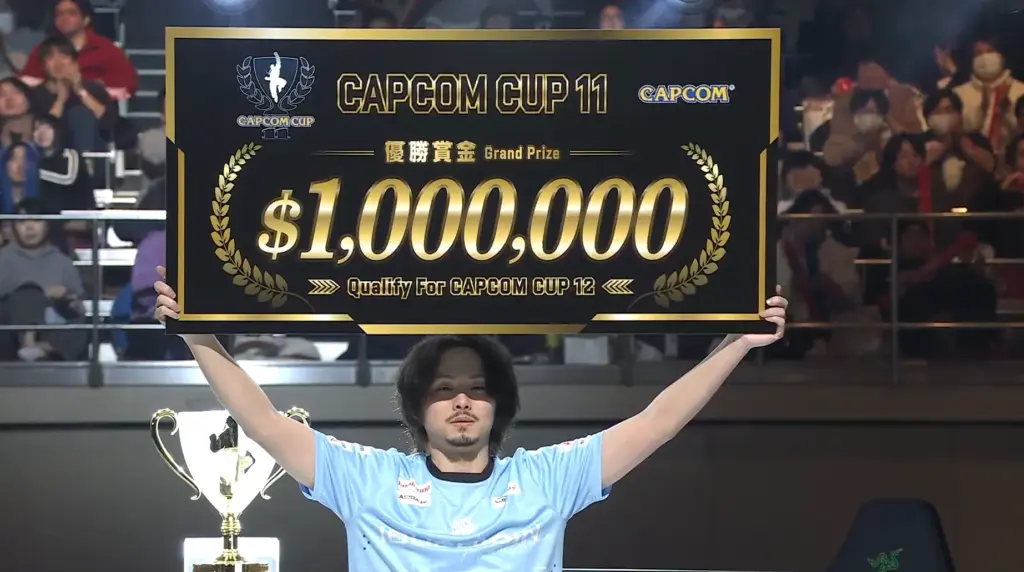
A majority of competitive circuits lack financial security. Although certain ones may outwardly present success through substantial player earnings and considerable prize funds, the entities operating them are consequently struggling. Moreover, it is far more typical for these circuits to possess negligible funds, depending on corporate endorsements and investment from Saudi Arabia for their continuation. Even the extensive Capcom Cup for Street Fighter 6 boasts a $1 million prize pool solely because the remainder of the tournament series offers minimal monetary incentives.
During my previous discussion of Mew2King’s struggle, I recalled how Hungrybox maintained a full-time engineering position even during the pinnacle of his professional playing career. He participated in and triumphed at tournaments, yet concurrently held a conventional employment to sustain himself. Presently, Hungrybox holds partial ownership of Team Liquid and derives income from various other channels. However, the act of competing alone did not provide him financial security.
It is disheartening. High school competitive gaming clubs continue to promote the notion of esports as a viable profession. Universities now offer esports curricula. Yet, financial resources or stability are scarce once one enters the professional arena. A minimal number of esports professionals achieve significant wealth. The majority of college students enrolled in esports programs are improbable to ever serve as coaches for prominent organizations or excel as elite players in a top-tier league.
While remuneration varies across competitive gaming, those titles that offer substantial earnings demand participation within the top 0.1% of players to even approach a salary in the six figures.
However, this isn’t merely due to a large number of individuals lacking the skill to reach that elite 0.1%. It is primarily because opportunities are scarce. Indeed, available prospects are continuously decreasing. Professional teams are withdrawing from various game titles frequently. Certain organizations are ceasing operations entirely. Players and personnel often face delays in receiving payments for extended periods, sometimes spanning months or even years. As an example, BLEED Esports currently has an outstanding debt exceeding $300,000 in unremunerated wages.
Witnessing an individual devote their whole existence to a competitive domain, encompassing high-level play and mentoring other elite participants, only to end up financially destitute, serves as a stark warning. While other competitors might not be facing identical circumstances presently, this situation highlights that professional gaming remains an pursuit driven by fervor. Earning substantial income, or any income at all, is improbable. One participates purely out of affection for the game.
Regrettably, numerous elite players lack the capacity for conventional full-time employment, compelling them to use streaming as a secondary income source. They commit over ten hours daily to intense practice with their respective teams. Nonetheless, I believe Mew2King could allocate some time. It is simply distressing that the situation has deteriorated to this extent. It is now unequivocally evident: financial success in esports is unattainable unless one ranks among the top 0.1% in highly popular titles.
Even so, your career longevity is restricted. Covering the salaries of such high-tier players strains the organizations, which are prone to eventually disbanding due to insufficient capital and profitability. This outcome leaves competitors unattached to a team and with even fewer alternatives.
On Reddit, a fan of competitive gaming inquired about the financial instability of esports teams. The most insightful response? “If you spend a lot of money without making any money, you would also have little money.”