As the 2025 season concludes, the ground effect period in Formula 1 has also concluded. While the FIA earlier suggested progress was trending “in the right direction,” the governing body acknowledges that not every aspect achieved complete success. This is particularly evident concerning the impact of disturbed air, which has re-emmerged as a more significant challenge over the last couple of seasons.
Regulation Flaw: The ‘Omission’ of Excessively Low Ride Heights
A further challenge arose from these vehicles demonstrating high sensitivity to their ground clearance. Achieving peak performance mandated teams to operate them at incredibly low and rigid settings.
The phenomenon of porpoising presented significant difficulties in 2022, and its associated discomfort persisted to some degree afterward. Numerous competitors voiced concerns about bodily strain, with Max Verstappen noting in Las Vegas that there were moments when his “whole back is falling apart”.
Upon reviewing the recently finished regulatory period, Nikolas Tombazis, the director for single-seater cars, conceded that the FIA had misjudged the significance of ride height.
Tombazis informed specific media outlets, including Autosport, that “The fact that the optimum [ride height] of the cars moved so much lower was a miss in the 2022 regulations.”
“It’s something that we missed — and not only us but also the teams. In all discussions, nobody raised that issue. It was something that became obvious very, very close to the start of the championship, when it was too late to change the regulations.
“The initial porpoising, which hasn’t totally disappeared but has obviously improved massively, was also something that had not been anticipated. I wish we had done better there.”
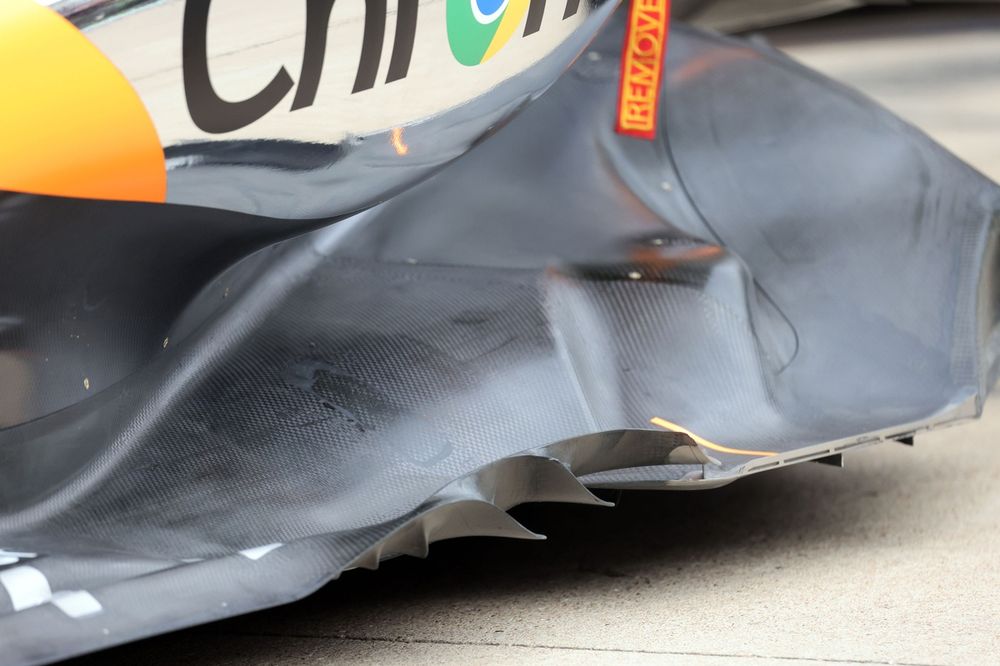
McLaren MCL38 floor
Photo by: Andreas Beil
Nevertheless, the FIA dismissed the idea that these problems with ride height might have been resolved by imposing stricter limits on suspension design for teams.
He stated, “We don’t believe that suspension changes would have had a first-order effect.” He continued, “It would perhaps have given them a [different] set of options, but we don’t think the simplification of the suspension rules would have had a first-order effect.”
Disqualifications Stemming from Plank Abrasion: Was there an Alternate Approach?
The tendency of teams to push the limits with ground clearance led to a secondary consequence: increased scrutiny on the wear of the underbody plank and skid plates. This concern has been highlighted multiple times throughout the recent regulatory period, notably at the 2023 US Grand Prix and McLaren’s situation in Las Vegas more recently.
Consistently, inspecting the plank proved to be a laborious undertaking, consequently preventing every car from being examined following each grand prix. The inspections were further complicated by the various distinct approaches adopted by teams for their car floors and skid blocks. This prompts an inquiry into whether greater uniformity could have streamlined processes for the FIA, though Tombazis considers such a view oversimplified.
“Please don’t take this single phrase without my complete thought, but all of these problems would go away the more we go towards a standard car. You can easily have a Formula 2 car with a bit more performance, and then you don’t have porpoising, you don’t have any loopholes, and you don’t have any plank issues.
“You can solve all of these things with more prescription. But clearly, we want Formula 1 to be a technological battle as well. We don’t want it to be a single car with different stickers on it. And therefore we do leave some leeway to the designers.
“Specifically for the plank, there was an additional factor as well. Different teams had different ways to deal with the reliability concerns of cars banging on the road all the time. To say, this is your design and it’s rock solid, then some teams would have said, ‘well, but you can’t do that because if our engine takes a hit there, it’s going to break’. You have the ERS systems and so on, so you have to consider various other issues before you introduce a standard system of some sort.”
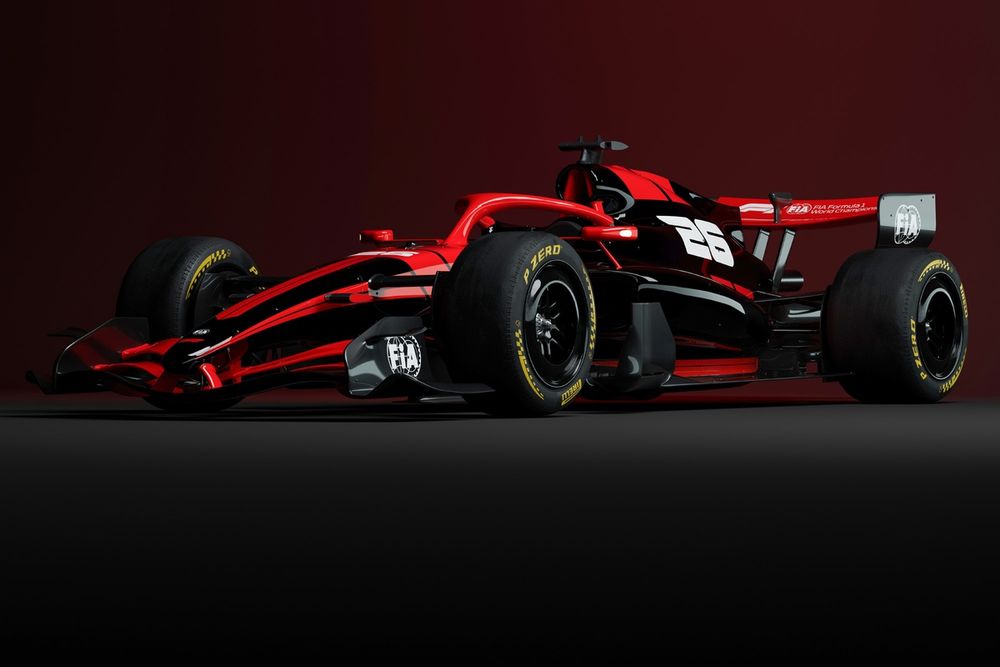
F1 2026 car renders
Photo by: Liberty Media
Anticipating an Absence of Porpoising Problems in 2026?
In the upcoming season, the influence of ride height and plank abrasion is expected to diminish. The 2026 rule set incorporates a form of ground effect, though significantly reduced compared to the 2022-2025 period, thanks to a more straightforward floor design. The FIA anticipates this change will elevate the ideal ground clearance, thereby theoretically precluding a recurrence of porpoising issues.
Tombazis stated, “We believe it is very unlikely to have similar characteristics because of a much flatter floor.” He added, “How much the downforce increases as you go lower is not as pronounced with this car as it was in last year’s car. We believe that will reduce the chance of porpoising.”
Despite this, the FIA wishes to temper expectations regarding its optimism before the cars are raced, considering the unexpected complications encountered in prior seasons.
“When the cars run for the very first time and have some issue, I wouldn’t exclude it. But I would say that the rules are inherently less in that direction. So given the teams did a pretty good job of solving the issue with the previous generation of cars, it should be a much easier problem next time.”