Juan Manuel Fangio – 38 years, 10 months, 27 days
1950 Monaco Grand Prix
Formula 1 history saw its very first grand chelem—where a driver secures pole position, leads every single lap, and records the quickest lap on their way to winning—during only the second event of the inaugural world championship.
The legendary Juan Manuel Fangio, who would go on to claim five world championships, dominated qualifying by a margin of 2.6 seconds. The 38-year-old Argentine driver managed to clear the Tabac turn just moments before a harbor wave flooded the tarmac, triggering a massive pile-up that eliminated the majority of his competitors, including the rest of the top five qualifiers.
“Fortune was on my side,” Fangio remarked to Autosport, rejecting any claims that he possessed some form of ‘sixth sense.’ “A comparable crash had occurred back in 1936, and by chance, I had noticed a picture of that event at the Automobile Club just the previous day.
“Exiting the chicane, I sensed that the spectators’ behavior was unusual. Even though I was in the lead, their eyes weren’t on me; they were peering further down the track. Rather than facing forward, they had turned away. It was clear that something happening at Tabac had captured their attention more than the race leader.
“That was when the image from the photograph flashed in my mind, and I slammed on the brakes with all my strength. It was an incredibly near miss.”
Ultimately, Fangio ended up putting a lap on every single competitor. While this might not rank as his most brilliant performance, it secured its place in the history books nonetheless.
Alberto Ascari – 33 years, 11 months, 23 days
1952 French Grand Prix, Rouen-les-Essarts
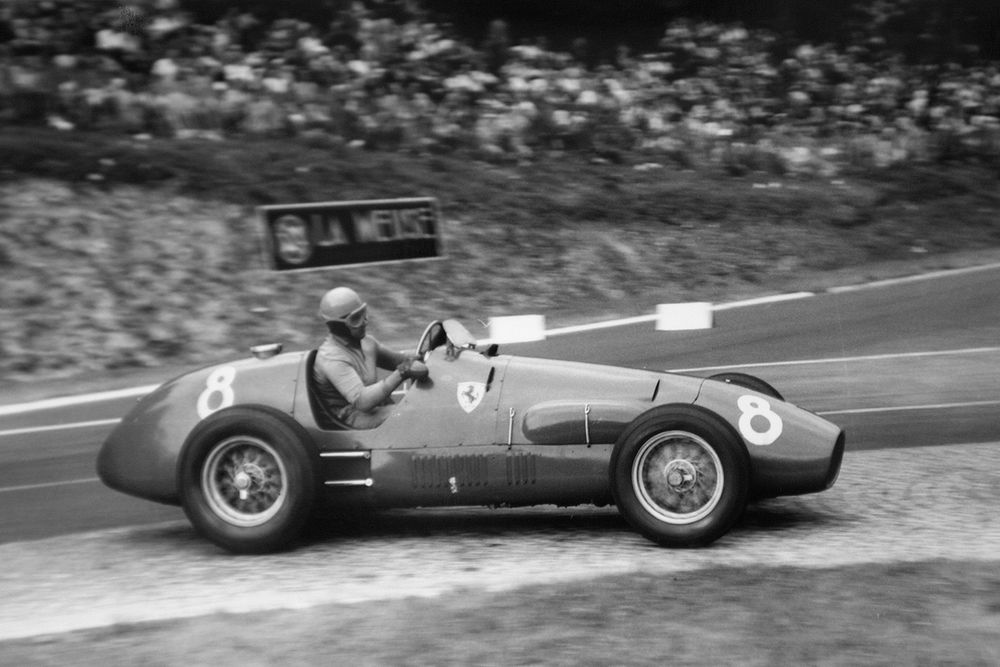
Alberto Ascari piloting the Ferrari 500
Photo by: LAT Images via Getty Images
The sport did not witness another grand chelem until the era of Alberto Ascari and Ferrari, who swept the 1952 and 1953 seasons under Formula 2 rules, capturing an astonishing five grand slams across a mere 14 races.
The sequence began at the first French Grand Prix hosted at Rouen in 1952. Ascari covered the 5.1-kilometer circuit in 2m14.8s, finishing ahead of his Ferrari stablemates Giuseppe Farina and Piero Taruffi by margins of 1.4 seconds and 2.3 seconds.
Ascari conquered the 388-kilometer distance without making a single pit stop, maintaining control even when rainfall threatened the track. He crossed the finish line 1m10.7s clear of Farina, while Taruffi fell a full lap behind, and the remaining field trailed even further back.
Mike Hawthorn – 29 years, 2 months, 26 days
1958 French Grand Prix, Reims
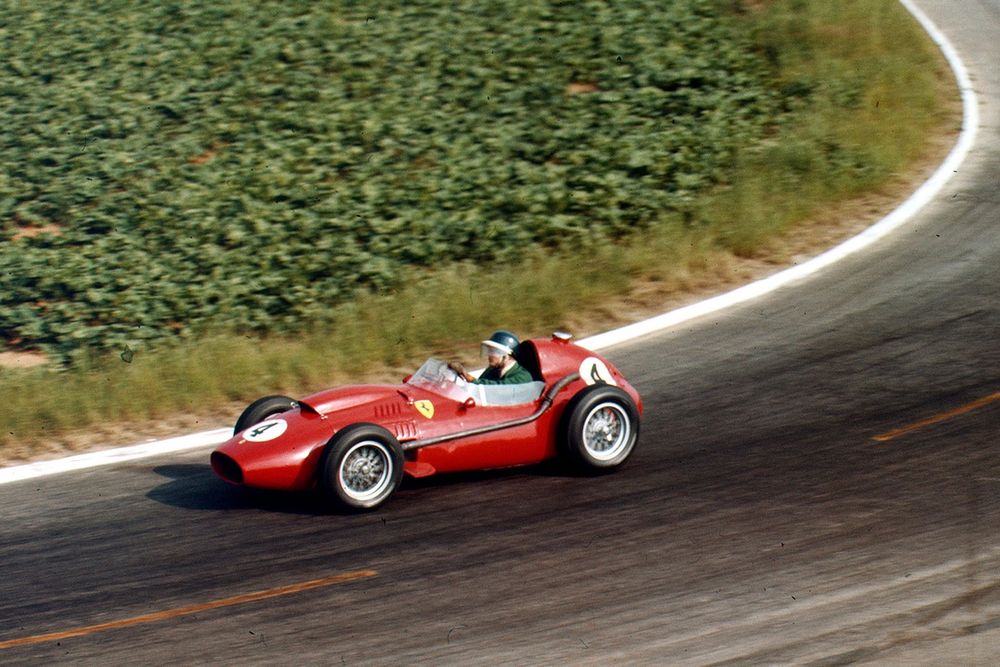
Mike Hawthorn driving the Ferrari Dino 246
Photo by: LAT Images via Getty Images
Mike Hawthorn became the subsequent racer to enter the elite grand chelem club, setting a milestone as the first competitor to achieve this feat while still in his twenties.
As a loyal Ferrari competitor, Hawthorn had regularly secured top-three finishes in prior campaigns—including making history as the youngest driver to reach an F1 podium at age 23 during the 1952 British Grand Prix in a private Cooper. However, the 1958 French GP would stand as only his third and final career grand prix win.
As the sole driver to secure points in every round up to that point of the season, Hawthorn was chasing championship leader Stirling Moss. Nevertheless, Hawthorn seized pole position at Reims, beating his teammate and competitor Luigi Musso by seven-tenths of a second, while Moss was left two seconds back in sixth place.
Musso pressured Hawthorn during the opening phases but veered off course on the tenth lap. Just three weeks after walking away from a major accident at Spa-Francorchamps, the 33-year-old Italian racer was ejected from his overturning Ferrari and succumbed to his injuries a few hours later.
Hawthorn cruised to an easy victory, finishing 24.6 seconds ahead of Moss in what would be his final triumph in Formula 1. He went on to secure the world championship title by a razor-thin margin, aided by Moss’s legendary sportsmanship, as Moss advocated on Hawthorn’s behalf to prevent a disqualification at the Portuguese GP.
Upon clinching the championship, Hawthorn chose to retire from racing, only to lose his life in a tragic highway crash a mere three months afterward. He was just 29.
Jim Clark – 26 years, 4 months, 17 days
1962 British Grand Prix, Aintree
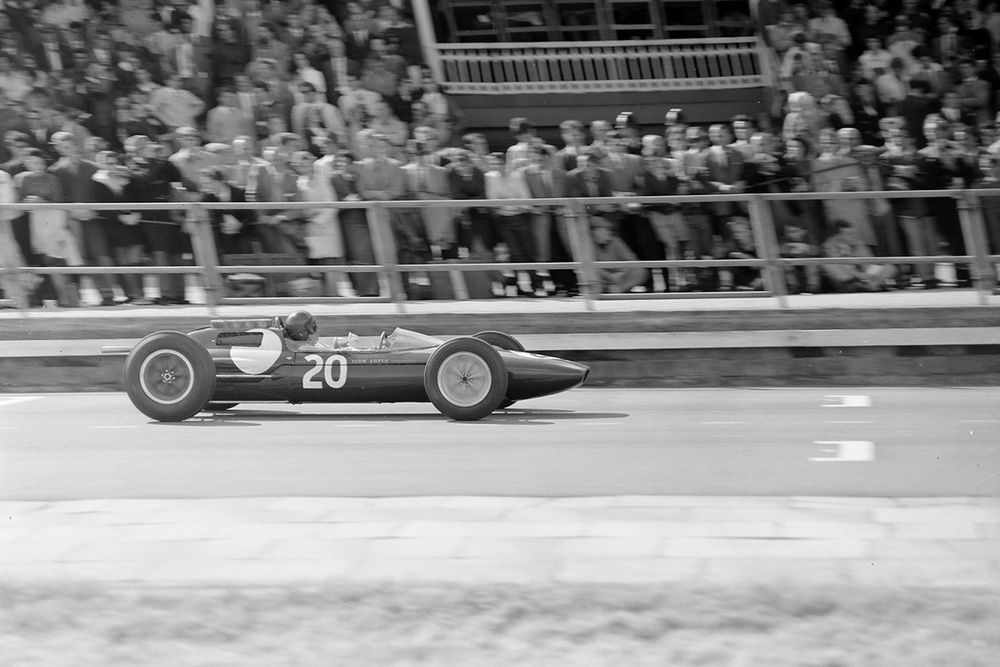
Jim Clark behind the wheel of the Lotus 25 Climax
Photo by: Autocar / LAT Images via Getty Images
The 1962 season saw Team Lotus roll out the legendary Lotus 25—a chassis that would secure 14 grand prix wins—and Jim Clark demonstrated a masterclass in extracting its absolute potential.
At 26 years of age, Clark emerged as a genuine championship threat that season. However, technical failures sidelined him in three out of the initial four races. Although he secured his first-ever victory at Spa-Francorchamps, he did so from 12th place on the grid, ruling out a grand chelem.
Everything aligned at Aintree, where Clark captured the third pole position of his career (on his way to a record-setting 33), beating John Surtees by 0.6 seconds. He stayed ahead of his countryman’s Bowmaker Lola for the duration of the grand prix, steadily extending his advantage to cross the line 49.2 seconds ahead.
Though mechanical failures repeatedly cost Clark titles in 1962, 1964, and 1967, restricting him to just two championship trophies, he still managed to record eight grands chelems—a benchmark that remains unmatched—prior to his tragic death during a Formula 2 event at Hockenheim in April 1968.
Ayrton Senna – 25 years, 1 month
1985 Portuguese Grand Prix, Estoril
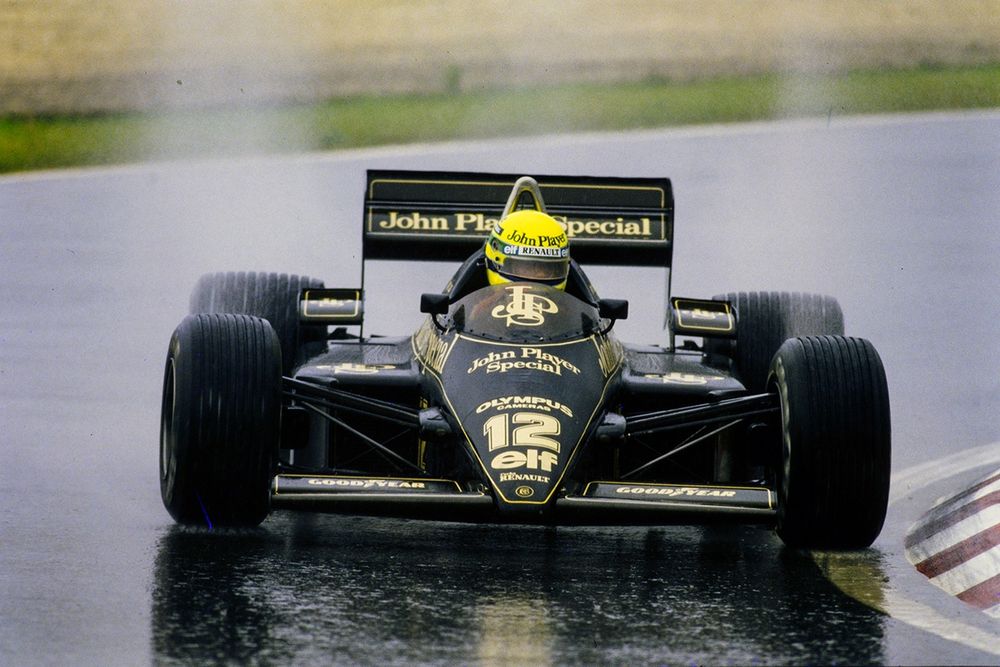
Ayrton Senna handling the Lotus 97T Renault
Photo by: LAT Images via Getty Images
While a total of ten different competitors achieved grands chelems over the following 23 years, it was only with the arrival of Ayrton Senna that the record for the youngest achiever was truly under threat.
Following an outstanding debut year with Toleman, Senna moved to Lotus for his second season in Formula 1. At Jacarepagua, he secured fourth on the grid and held third place before being halted by an electrical glitch, setting the stage for an extraordinary performance at Estoril.
The 25-year-old Brazilian claimed a commanding pole in dry weather—marking his first of a historic 65 poles—by outqualifying McLaren’s Alain Prost by 0.413 seconds. Torrential rain created chaos during the Grand Prix, resulting in only nine of the 26 starters completing the race to be classified.
By the end of the opening lap, Senna led his teammate Elio de Angelis by 2.65 seconds, a lead that grew to 12.9 seconds by lap ten. He continued his relentless charge to finish a staggering 63 seconds ahead of Ferrari’s Michele Alboreto, culminating in a legendary victory celebration alongside Lotus team boss Peter Warr.
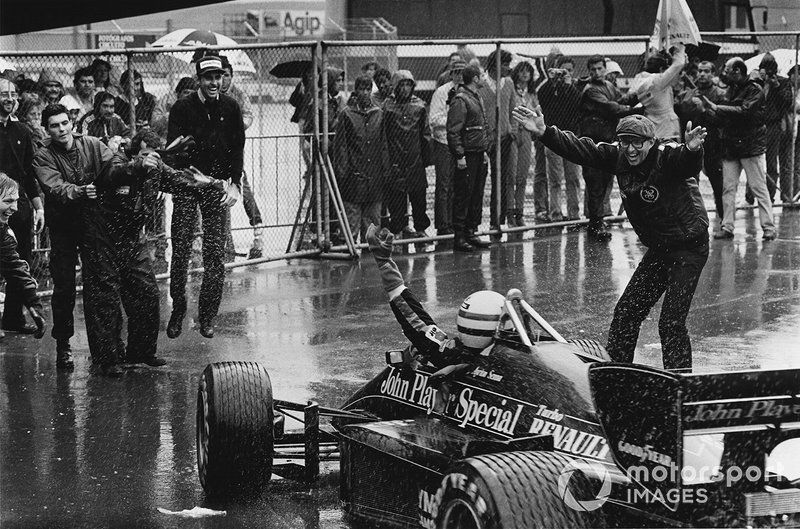
Image courtesy of: Motorsport Images
“The car was drifting constantly—maintaining control was a massive struggle,” Senna reflected later. “Everywhere you looked, cars were sliding due to a severe lack of traction coupled with immense horsepower. My sole technical issue was with the braking system, which is entirely normal under such extreme circumstances.
“As soon as you approached another car, visibility dropped to zero. Everyone assumes my race was flawless, but that isn’t the case—I lost count of how many times I ran off the track! At one point, I slid completely onto the grass with all four wheels, entirely powerless, before the car somehow gripped and returned to the track.
“People praised my driving skills, but in reality, it was pure fortune.”
Years down the line, when commentators labeled his legendary 1993 performance at Donington as his peak achievement, Senna disputed it: “Absolutely not! I was aided by traction control back then.
“Granted, I drove a clean race [at Donington], but the machinery was far more manageable. It was a nice victory, yes, but it doesn’t even come close to what occurred at Estoril in ’85!”
Sebastian Vettel – 24 years, 3 months, 27 days
2011 Indian Grand Prix, Buddh
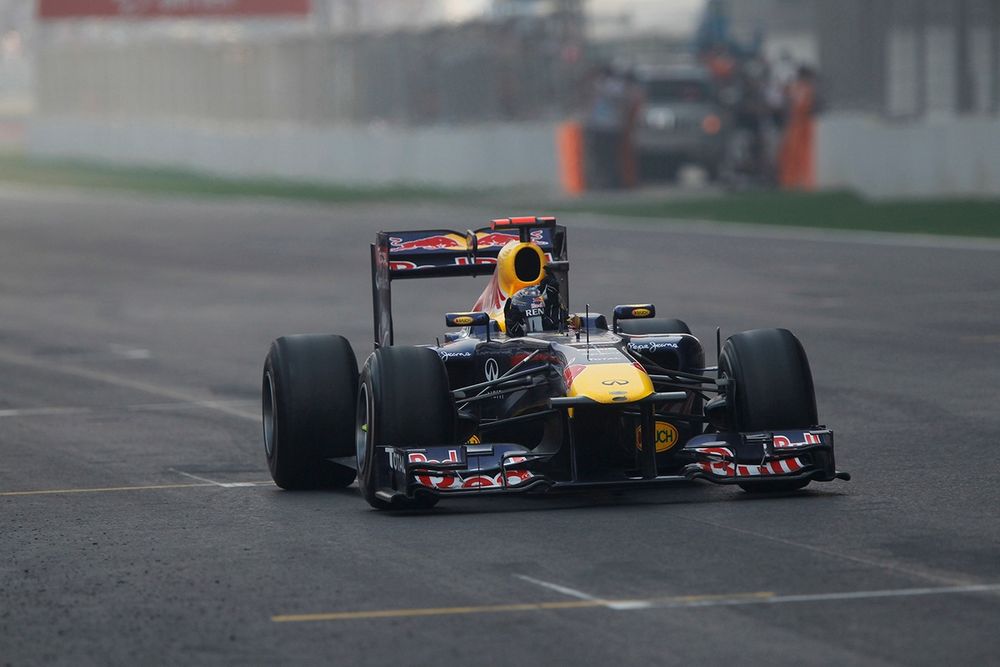
Sebastian Vettel steering the Red Bull Racing RB7 Renault
Photo by: Andrew Ferraro / LAT Images via Getty Images
In contrast to the other names on this list, Sebastian Vettel had already secured a world title before earning his very first grand chelem.
The Red Bull star had neared the milestone on multiple occasions, such as the 2009 British Grand Prix—where he briefly yielded the top spot to teammate Mark Webber due to an earlier pit stop—and the 2011 European Grand Prix, where a tyre swap one lap ahead of Felipe Massa briefly interrupted his lead.
Another near-miss occurred at the 2009 Japanese Grand Prix, which he controlled entirely from pole to the checkered flag, only for Webber to deny him the grand chelem by setting a faster lap by a mere 0.003 seconds.
Vettel eventually achieved the perfect weekend during Formula 1’s first-ever race in India. He secured pole position by 0.296s over Lewis Hamilton, beat Webber’s mark by 0.271s to claim the fastest lap, and built a 4.8-second cushion over Jenson Button in the opening ten laps, coasting to a comfortable 8.4-second win.
However, the Red Bull pit wall was less than pleased with Vettel’s pursuit of the fastest lap. When asked if the driver had sought approval to secure the grand chelem, team principal Christian Horner stated: “Certainly not, because he is well aware of our feelings on the matter.
“We took every precaution to control his pace, dialing back the engine settings, disabling KERS, and short of placing an obstacle on the track, we had run out of options to slow him down.
“Ultimately, we place our full confidence in his abilities. I am certain he maintained a safe buffer, and his primary objective remains winning the race. While he is aware that fastest laps yielded no championship points back then, he enjoys achieving those extra milestones to seal an immaculate weekend.”
During that same event, Vettel surpassed Nigel Mansell’s record for total laps led in a single season—finishing 2011 with 739 laps led compared to the British driver’s 694 in 1992, though Mansell achieved this over fewer races and Max Verstappen would completely shatter the record in 2023.
Max Verstappen – 23 years, 9 months, 4 days
2021 Austrian Grand Prix, Red Bull Ring
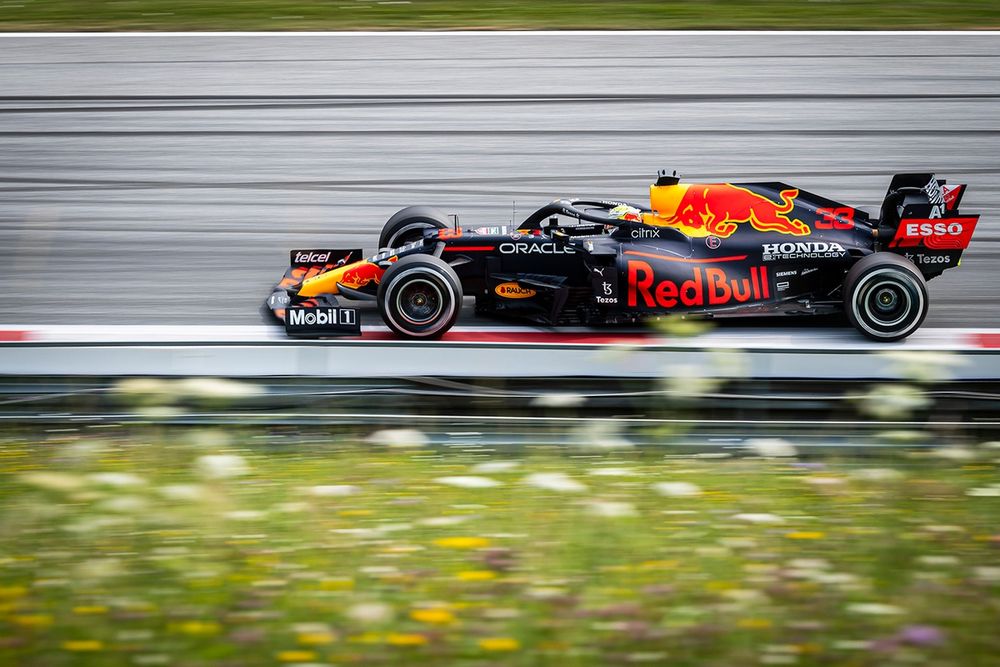
Max Verstappen representing Red Bull Racing
Photo by: Jure Makovec / SOPA Images / LightRocket via Getty Images
It is rather interesting that Verstappen claimed the title of youngest grand chelem winner only in his 128th start—a career span matching the total combined races of Fangio, Ascari, and Hawthorn. This is primarily because he made his F1 debut at the tender age of 17 and lacked championship-winning machinery until the 2021 season.
In truth, Verstappen had put in a grand-chelem-worthy performance at the 2020 Abu Dhabi Grand Prix; he controlled the race from pole position, but a late pit stop from Renault’s Daniel Ricciardo in search of the fastest lap point robbed him of the achievement.
By the time the paddock gathered at Red Bull’s home track in 2021, Verstappen held a commanding lead in the drivers’ standings, with Hamilton trailing him by 32 points.
The Dutch racer edged out Lando Norris’s impressive McLaren by a slim 0.048 seconds to take pole, a run he self-deprecatingly described as ‘quite poor.’ Once the initial safety car period concluded, he pulled away effortlessly during the Grand Prix. Verstappen eventually crossed the line 18 seconds ahead of Mercedes’ Valtteri Bottas, recording a fastest lap that was 1.562 seconds quicker than anyone else, aided by a late tire change, though he had already set the benchmark prior to that stop.
“To be frank, it was unbelievable,” Verstappen remarked. “The car handled flawlessly, almost as if on tracks. Regardless of the compound we bolted on, it felt fantastic to drive. Truly remarkable.
“I am somewhat surprised by our performance today. I never anticipated such a dominant run.”
Kimi Antonelli – 19 years, 9 months, 3 days
2026 Monaco Grand Prix
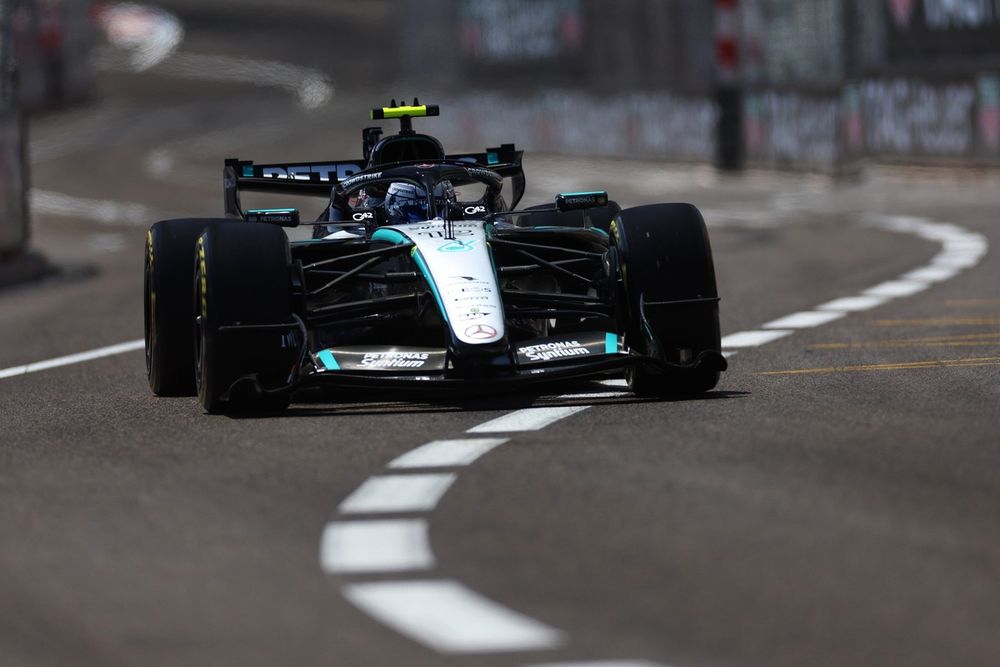
Andrea Kimi Antonelli driving for Mercedes
Photo by: Alastair Staley / LAT Images via Getty Images
Mercedes’ sensational prodigy, Kimi Antonelli, lowered the grand chelem age record to under 20 years—a milestone that will likely stand uncontested for many years to come.
Following a challenging debut season in the sport, Antonelli has benefited from highly competitive machinery in 2026, while demonstrating much greater maturity and skill behind the wheel.
The 19-year-old Italian driver narrowly missed a grand chelem in China earlier this year, where he secured his first career pole by 0.222s and the fastest lap by 0.125s over teammate George Russell, only for Lewis Hamilton’s rapid launch in the Ferrari to snatch the lead away on the opening lap.
However, on the streets of Monaco, Antonelli edged out Verstappen by 0.043s to secure pole with what the second-year driver termed a ‘perfect lap.’ He controlled a highly unpredictable race from start to finish, building an advantage of 29 seconds over Hamilton. He then weathered a late red flag and a standing restart to claim victory in the final eight-lap sprint.
“The sheer speed surprised me, but today I truly felt at one with the car, allowing me to maintain a very high-tempo pace while the car reacted perfectly,” Antonelli noted. “So yes, it was unexpected, but it was simply a day where all the pieces fell perfectly into place.”
Reflecting on the red flag, he remarked: “I was extremely frustrated since Lewis was lining up right beside me for the restart, and given their quick launches, I feared the worst. Fortunately, my start was solid, and he suffered from excessive wheelspin, which eased my run into the opening corner. Nonetheless, gathering my focus again after the interruption was quite a challenge.”
Now holding the records as the youngest pole-sitter, fastest-lap setting driver, race leader, championship leader, hat-trick scorer, and grand chelem winner, the young star is well-positioned to become the youngest world champion in F1 history in 2026, which could shatter Sebastian Vettel’s record (23 years, 4 months, 11 days) by more than three seasons.
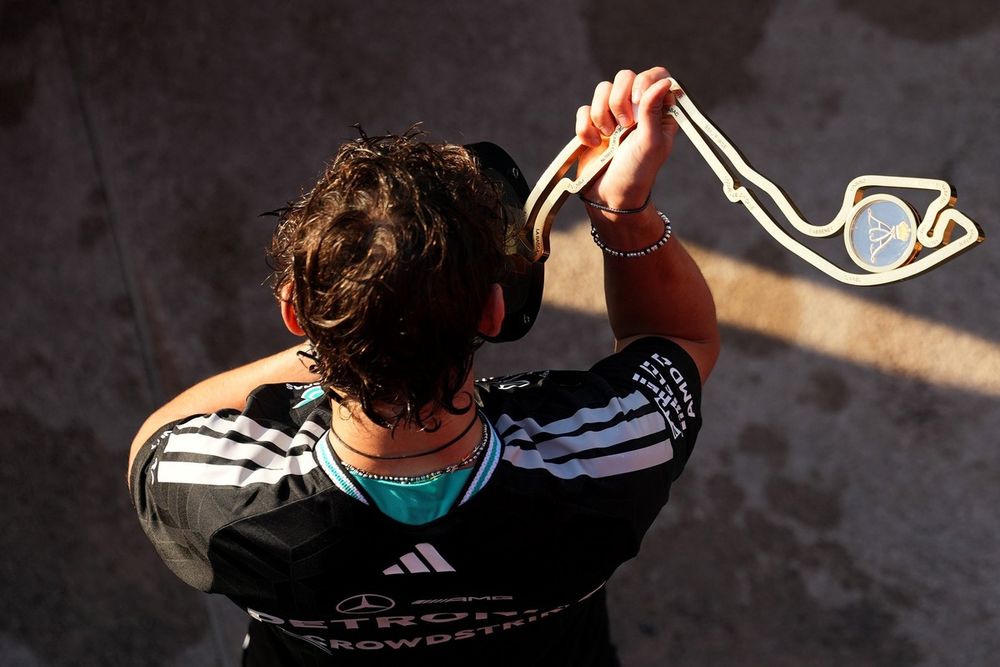
Andrea Kimi Antonelli driving for Mercedes AMG
Photo by: Alex Bierens de Haan / LAT Images via Getty Images