The composition of the 2026 Formula 1 field is gradually becoming clearer, with only four teams yet to formally announce their driver selections for the upcoming season.
Mercedes is one of these teams, although they are widely anticipated to maintain their current driver partnership of George Russell and Andrea Kimi Antonelli. The other three teams in this situation are Alpine, Red Bull, and Racing Bulls.
However, there’s speculation that Isack Hadjar is in a strong position to take over from Yuki Tsunoda at Red Bull, while Arvid Lindblad of F2 could potentially begin his inaugural season at the affiliated Racing Bulls team alongside Liam Lawson.
The situation at Alpine, however, is considerably more uncertain. Their primary driver, Pierre Gasly, has a contract extending until the close of 2028, but Franco Colapinto is under pressure to secure his position, having failed to accumulate any points thus far in 2025.
This is despite a noteworthy nine-race stint with Williams the previous year, where the then-rookie secured points in two races and impressed many within the racing community.
So, what course of action should Alpine take regarding Colapinto? Should they extend his contract, or seek a replacement for the struggling 22-year-old? And if a replacement is sought, who would be a suitable candidate?
Give Colapinto another year – Stuart Codling
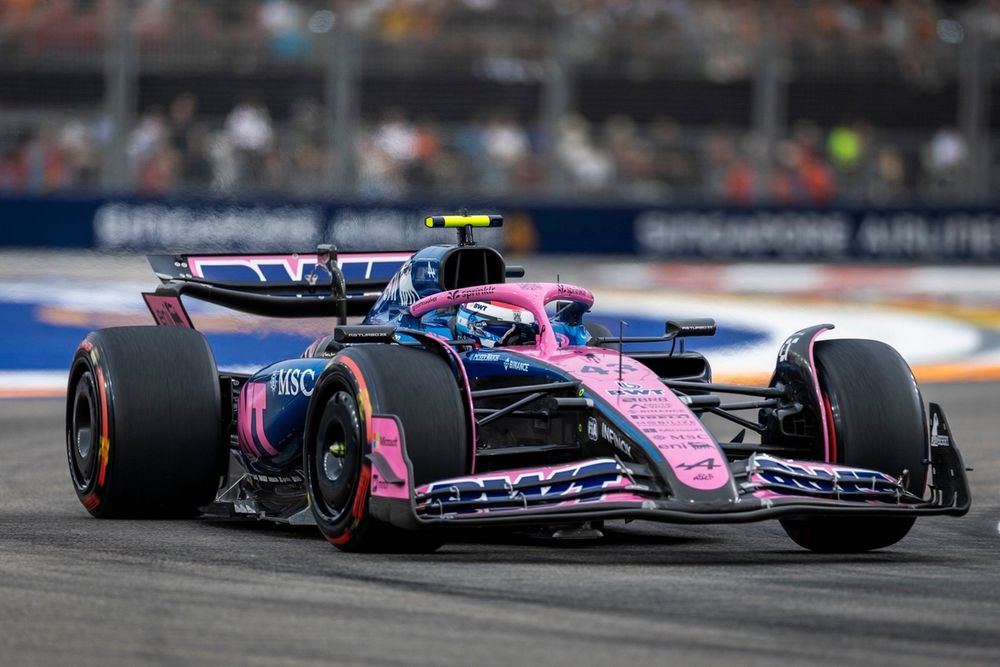
Franco Colapinto, Alpine
Photo by: Sam Bloxham / LAT Images via Getty Images
Formula 1 is filled with individuals prone to forgetting quickly, yet I still recall when Colapinto was considered a promising talent. In fact, around this time last year, there were those who emphasized that he had outperformed an experienced and highly respected teammate, Alex Albon, in qualifying during only his second Grand Prix weekend. However, it’s important to note that Albon only had one lap in Q3 due to the team leaving an airbox fan in place, which makes this claim somewhat questionable.
Subsequently, Colapinto’s eagerness led to him crashing into the wall on a few too many occasions, but he had already demonstrated his speed sufficiently.
In this season with Alpine, his tendency to err has remained, but his speed has been overshadowed by a difficult-to-handle car that has seen minimal development. Dismissing Colapinto now would be akin to Red Bull’s error of cycling through several drivers in the second seat before acknowledging that the car itself was the problem.
Alpine has no such illusions, but they face external pressure to perform. Consequently, Flavio Briatore may be tempted to make changes to demonstrate his active involvement.
However, who else would represent a significant improvement? Colapinto is undoubtedly performing better than what we’ve seen this season. With a better car, we should witness the potential he displayed in his initial races with Williams.
Tsunoda would be a major coup should Red Bull release him – Ben Vinel
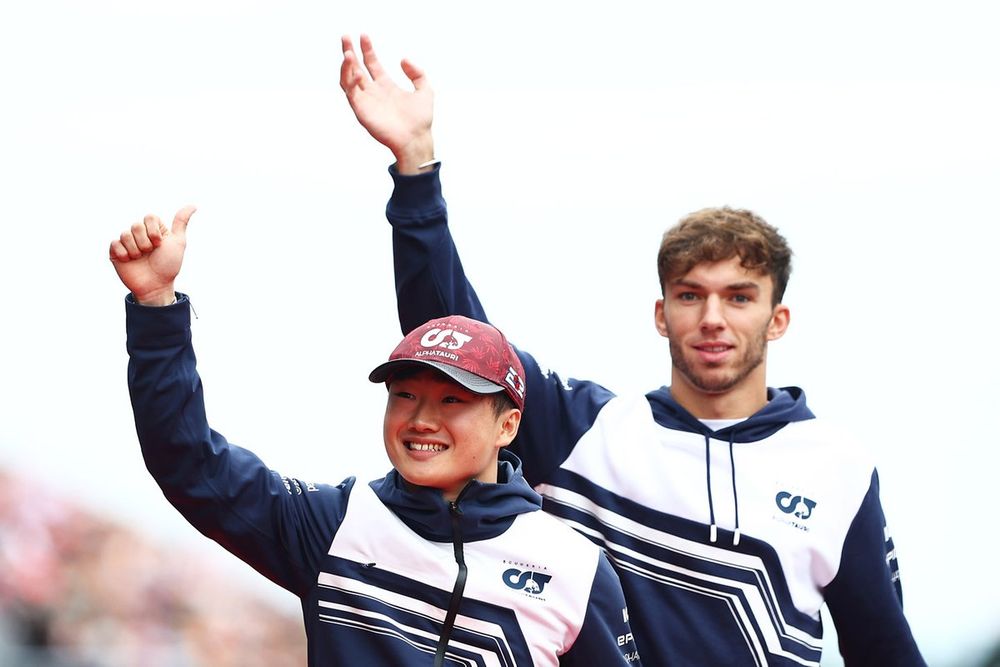
Yuki Tsunoda, AlphaTauri, Pierre Gasly, AlphaTauri
Photo by: Red Bull Content Pool
I believe that Tsunoda should be a straightforward choice for Alpine, assuming he becomes available.
While it’s conditional, it’s not improbable, as Red Bull may wish to make room for Lindblad’s transition to F1 next year, and Tsunoda hasn’t quite reached the anticipated level alongside Max Verstappen – a situation similar to his predecessors.
Tsunoda is undoubtedly fast, though still somewhat inconsistent but gaining experience. His time at Red Bull isn’t unfolding as he might have hoped, but he is gaining valuable insights in this challenging environment. Experience within a top-tier team is always beneficial in F1, which is why Cadillac chose Valtteri Bottas and Sergio Perez, two drivers who may be past their peak but possess the ability to guide the new American team effectively.
Additionally, Tsunoda’s relationship with Gasly shouldn’t be overlooked. They were teammates at AlphaTauri during Tsunoda’s first two seasons in F1. Tsunoda had only spent two years in Europe before his F1 debut in 2021 and was still adjusting to the culture. Gasly acted as a mentor, and they are now friends.
Granted, teammate harmony is not the most crucial factor for a team’s success, excluding F1’s most extreme rivalries, but it would still be a welcome advantage for Alpine.
F2 leader Fornaroli can be the next Bortoleto – Jake Boxall-Legge
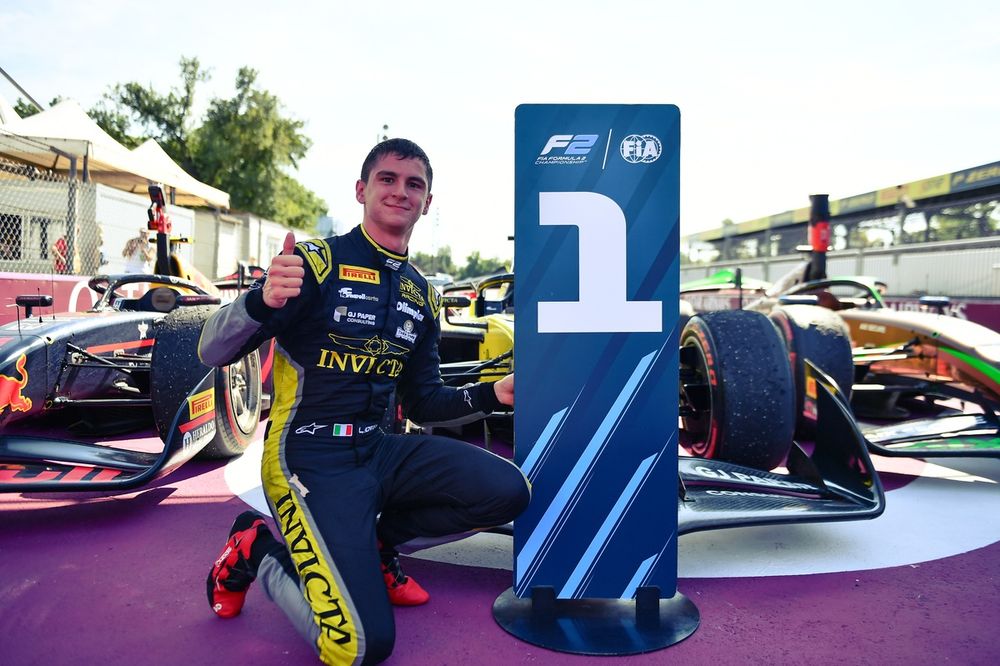
Race winner Leonardo Fornaroli, Invicta Racing
Photo by: Formula Motorsport Ltd
From my conversation with Leonardo Fornaroli for the October edition of Autosport, it became evident how dedicated he is to reaching Formula 1. Despite lacking the support of a current F1 team’s academy, he has been remarkably consistent and professional in F2, combining victories with points finishes in almost every race. He’s a reserved individual who avoids incidents and isn’t the most flamboyant racer, but his performance as a rookie has been incredibly impressive.
Fornaroli should definitely be considered for a seat at Alpine next year.
If Gabriel Bortoleto (who followed a similar path through the junior ranks) can reach F1 and quickly demonstrate his place in the series, then Fornaroli should be viewed as a comparable talent. Much has been made of his winless run to the F3 title in 2024, but a) he has refuted the suggestions that he can’t win races with his four F2 victories this season, and b) at Alpine, the expectation of winning races is unlikely to be immediately apparent.
What the team requires is someone who can consistently deliver points finishes when given a car capable of achieving them. This has been his operating style for the past two seasons. Alpine needs stability in the second seat, and Fornaroli’s potential suggests he can provide that. While Colapinto has shown improvement recently, he hasn’t been consistent.
Although Briatore might prefer to promote from within the Alpine system, there is considerable potential outside of the program that deserves an opportunity.
A messy environment has made it hard for Colapinto – Ed Hardy
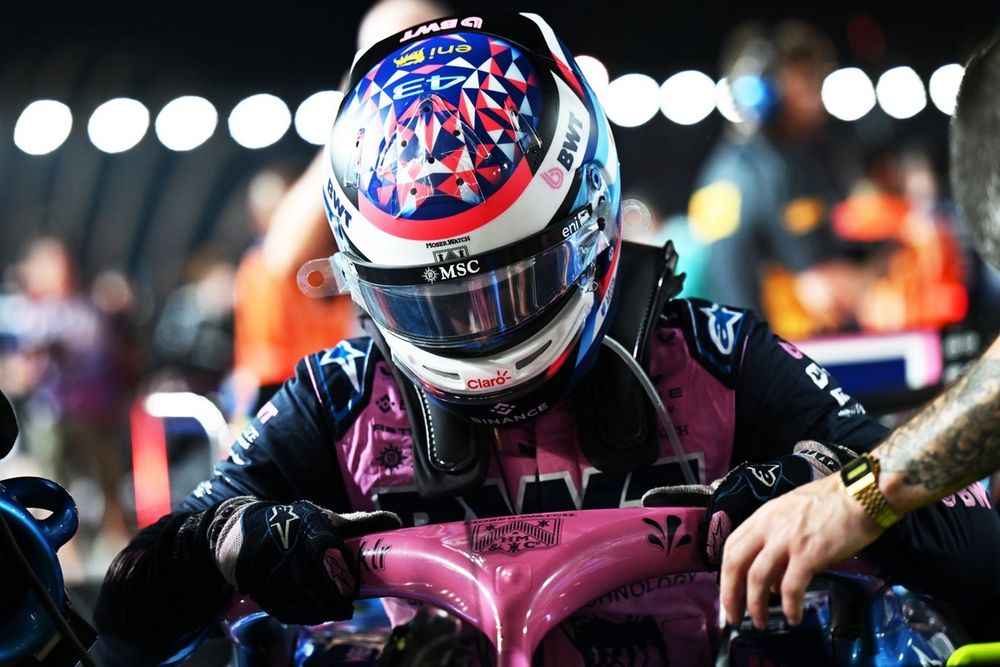
Franco Colapinto, Alpine
Photo by: Sam Bagnall / Sutton Images via Getty Images
Let’s be honest: Colapinto isn’t a superstar. He had a modest junior career, only managing fourth place in his second F3 season, and wasn’t really on anyone’s radar to reach F1. He simply got there by being in the opportune position at the right moment.
Admittedly, his start with Williams was notable; two point finishes in his first four Grand Prix represented a significant improvement over his predecessor, Logan Sargeant. However, many drivers can perform well when they have something to prove, as demonstrated by Nyck de Vries before securing an F1 drive.
Colapinto’s early results were never going to be sustainable long-term, and this has been evident this year as he still awaits his first points finish for Alpine. But Alpine, as a whole, is somewhat disorganized, and the issues go deeper than just Colapinto.
The management structure, for instance, has been constantly changing, the rumors of a Christian Horner takeover persist, and it’s unclear why they have assembled such a large team of reserve drivers.
Amidst this chaos, the team needs stability, and one way to achieve that is by not frequently changing Gasly’s teammates, as this only exacerbates the problem. While there are doubts about Colapinto being a long-term solution for Alpine, would his results improve if the team offered him their full public support?
A driver can perform much better with confidence and freedom, and Colapinto isn’t currently receiving that. He is still only 22 years old, so it’s understandable if he isn’t fully developed yet.
Therefore, patience is needed. Let him develop, see how he adapts to the new regulations, and if he’s still struggling in a year’s time, then it might be time to move on. But the current sample size is too small, and the environment at Alpine would make it difficult for anyone to perform well.