Following a challenging sprint qualifying session at Zandvoort where he struggled to keep his car on track, Aston Martin Formula 1 competitor Fernando Alonso emphasized that further calibration is required to fully exploit Honda’s upgraded engine.
Both Alonso and his teammate Lance Stroll were equipped with Honda’s second-generation V6 power unit, as the Japanese supplier chose the Dutch Grand Prix venue to debut its single permitted in-season engine update for the year.
Although the revised engine was initially tested during a promotional filming day post-Hungary in late July, both racers faced unexpected driveability complications when pushing the upgraded unit to its limits during Friday’s track action in Zandvoort.
Alonso ran off the circuit at the opening corner during SQ1, reporting severe engine vibrations before ending up at the very bottom of the timesheets in 22nd place, three seconds behind the frontrunners. Stroll achieved only marginally better results, placing ahead of the Cadillac entries but ultimately finishing a disappointing 19th.
Alonso explained that while practice sessions were relatively smooth, engine complications arose during qualifying. He noted that the power unit continued to push forward under braking, making deceleration highly unpredictable.
Additionally, he mentioned that the SLM setting—designed to reduce drag—failed to activate, preventing him from utilizing the rear wing DRS. These combined issues made completing a clean lap exceptionally difficult.
He remarked that trying to slow the vehicle down while the engine continues to apply throttle makes control nearly impossible.
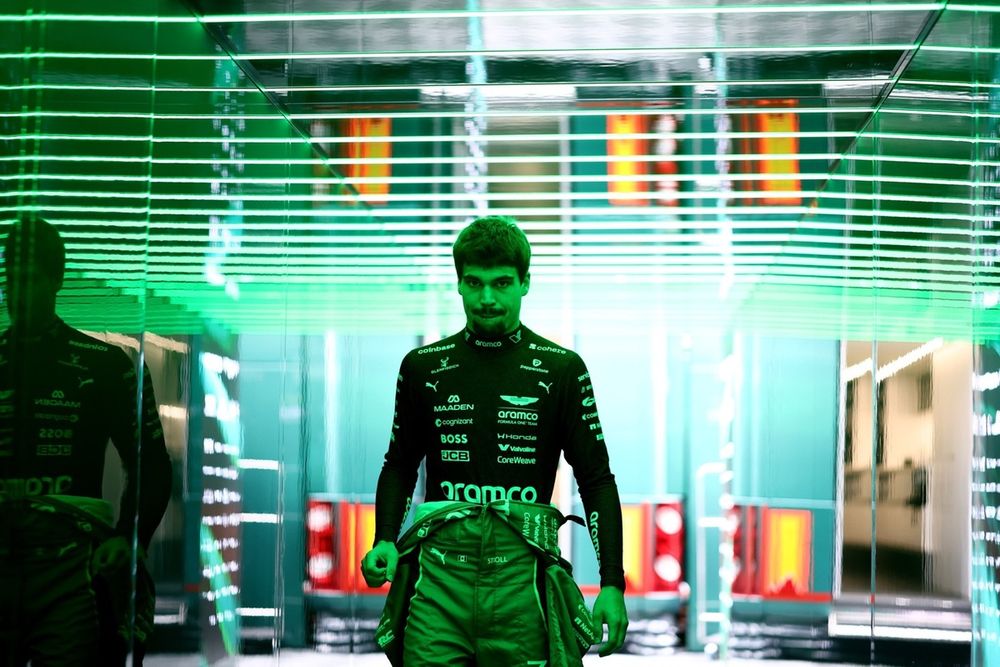
Aston Martin Racing’s Lance Stroll
Photo by: Alastair Staley / LAT Images via Getty Images
Stroll echoed these concerns regarding the new power unit’s behavior, noting that they wrestled with driveability alongside several other unresolved anomalies that the team must investigate.
He pointed out that while the high winds affected all competitors equally, the team would spend the evening analyzing the telemetry to find solutions for the upcoming sessions.
Honda’s development cycle restarts
At first glance, Friday’s outcome appears to be a frustrating regression for the team, particularly after a substantial aerodynamic upgrade package in Hungary had successfully elevated the Silverstone-based outfit back into the competitive midfield.
However, Honda was fully prepared for this challenge, knowing that introducing the new power unit meant much of the calibration work completed earlier in the year to resolve initial driveability problems would have to be repeated from scratch for this latest spec.
In a detailed discussion with Autosport, Honda’s F1 project lead Shintaro Orihara stated that the manufacturer had created specific systems to enhance driveability, making solid headway and nearing their targets.
He explained, however, that integrating the second specification altered the fundamental combustion profile of the engine, leading to a substantial shift.
Consequently, how the power unit behaves during cornering has changed, requiring them to rebuild their driveability maps once more.