Although Aston Martin debuted its initial major development package for the AMR26 in Hungary, Honda is set to introduce its opening upgrade of the 2026 Formula 1 campaign at Zandvoort.
Thanks to the initial aerodynamic updates overseen by Adrian Newey this season, the chassis performance gap has been notably narrowed. While Aston Martin remains far from its ultimate objectives, data compiled by Paceteq reveals that their race pace deficit was trimmed to “only” 2.034 seconds per lap during the Hungarian Grand Prix.
In the prior rounds held at Silverstone and Spa-Francorchamps, that gap exceeded five seconds per lap, though two crucial factors must be kept in mind. First, both of those legendary venues are significantly longer, and second, the tight layout of the Hungaroring puts far less emphasis on straight-line engine power.
Engine performance remains a major weak spot for Aston Martin, but Honda is aiming to make progress as the season’s second half gets underway by introducing its first ADUO development step of the year.
This specific update is entirely dedicated to the internal combustion engine (ICE), which trackside general manager and chief engineer Shintaro Orihara continues to highlight as the Japanese manufacturer’s primary disadvantage relative to rival engine builders.
“Our power unit performance is unquestionably lacking compared to rival suppliers,” Orihara stated. “Consequently, the most critical area for us to address right now is our engine output, as the current gap is quite substantial.”
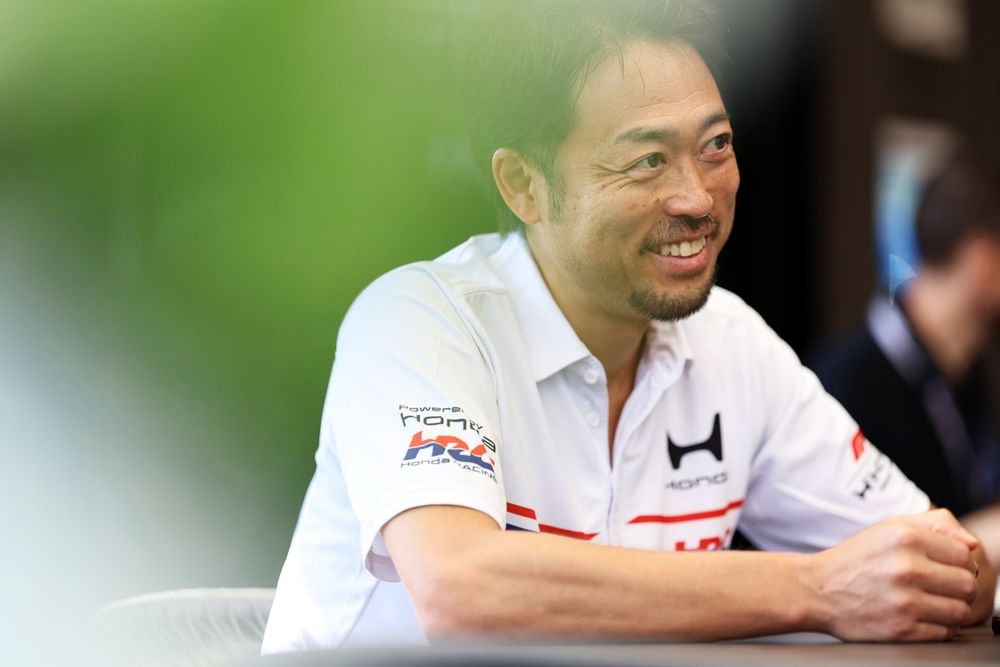
Trackside General Manager and Chief Engineer of Honda Racing Corporation, Shintaro Orihara
Photo by: Alastair Staley / LAT Images via Getty Images
“If we do not boost the performance of our internal combustion engine, other adjustments are essentially useless. For instance, optimizing electrical energy deployment serves no purpose if the base engine output is deficient,” Orihara pointed out in an exclusive conversation with Autosport.
“Because of this, our undivided attention is currently on maximizing the output of the engine. Once we hit our targets there, we can turn our attention to refining other minor details. Nevertheless, our primary focus remains squarely on the combustion engine itself.”
Honda is fully aware that eliminating their power deficit will be a gradual process, necessitating further developments beyond this initial package—with optimistic projections indicating a potential power boost of up to 30 horsepower.
When discussing the goals for the upcoming Zandvoort upgrade, Orihara described a target that mirrors what Aston Martin set out to achieve in Hungary: re-entering the competitive mix.
While that milestone has been reached regarding the car’s aerodynamics, Orihara insists that identical progress must now be demonstrated by the engine department.
“Our goal is to return to a competitive level where finding a mere 10 or 20 milliseconds, which we work tirelessly for every race weekend, actually yields a tangible reward on track.”
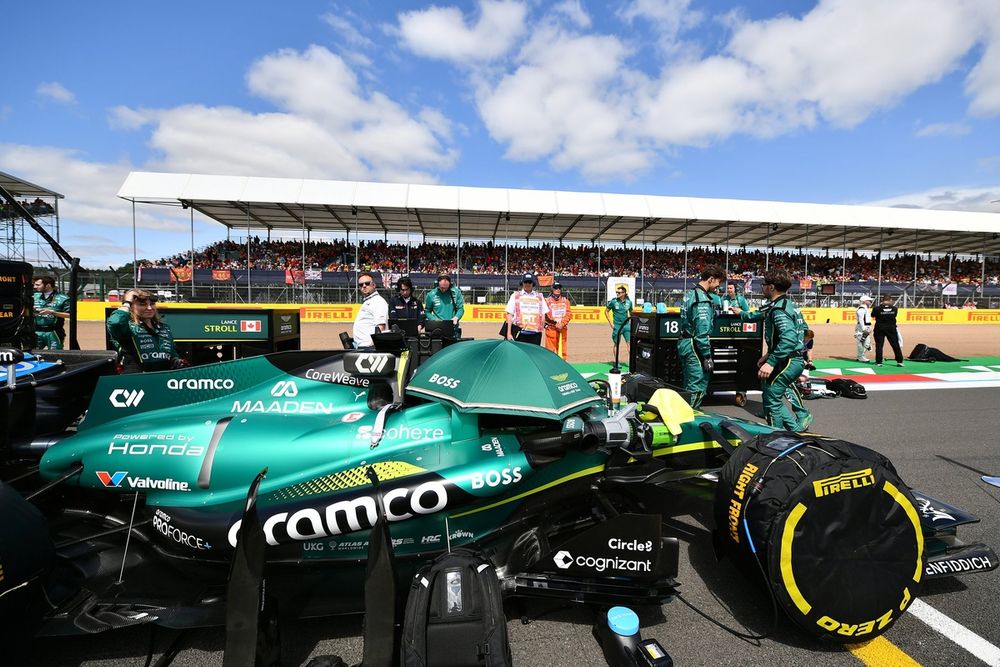
Aston Martin Racing’s Lance Stroll
Photo by: James Sutton / Formula 1 / Formula Motorsport Ltd via Getty Images
Honda encounters new drivability hurdles with updated power unit
Since the engine is receiving such substantial modifications, the Zandvoort package introduces a new set of challenges. This centers around ‘drivability’—a term frequently highlighted in the early stages of this F1 season, referring to the power delivery characteristics felt by the drivers.
“We created specific simulation tools to refine our power delivery, making solid progress and getting very close to our target parameters,” Orihara remarked.
“However, introducing the second specification of our engine will alter the combustion process considerably. Perhaps not completely, but it represents a major shift.”
“This will also affect how the power unit behaves when navigating corners. As a result, we will need to re-calibrate our drivability settings.”
This process is closely linked to Aston Martin’s aerodynamic developments, which also influence the engine’s operational feel.
“As the vehicle’s specification evolves, cornering speeds will increase, which in turn shifts the requirements for smooth power delivery.”
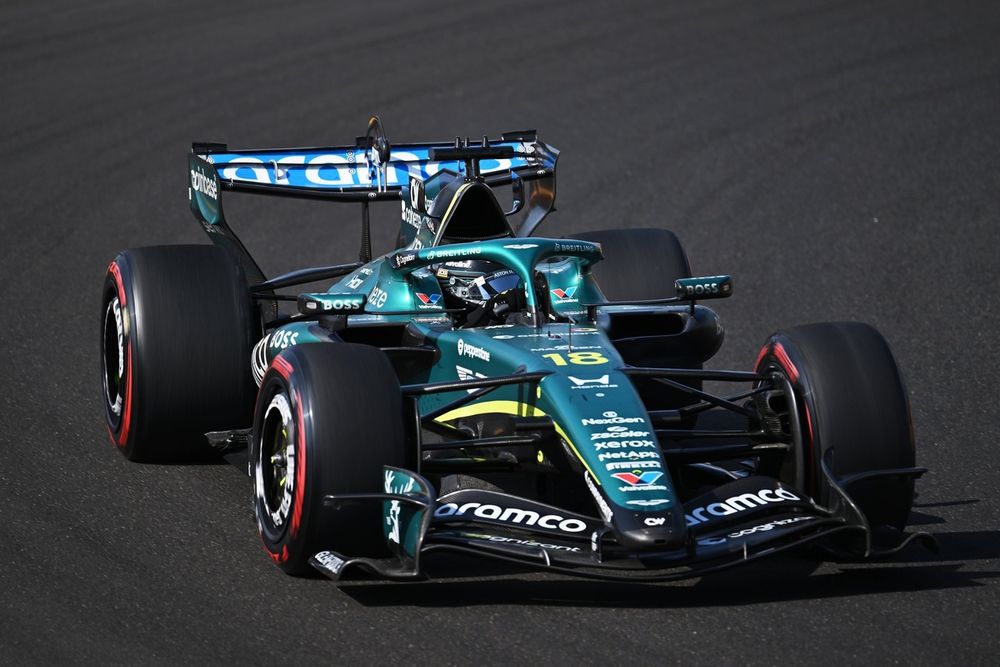
Lance Stroll competing for Aston Martin Racing
Photo by: Sam Bagnall / Sutton Images via Getty Images
While this suggests Honda might repeat the driveability struggles they faced at the start of the campaign, Orihara clarifies that the manufacturer will not be starting from scratch. The lessons learned over the past months will be directly applicable to the revised engine.
“We have made significant strides over the first portion of the season, establishing an optimized methodology for refining power delivery,” he noted.
“We are set to deploy the new engine and will undoubtedly have to put in extra hours to dial in the driveability, but we now possess the knowledge of how to approach it and where to focus our efforts.”
“That experience has been highly valuable, and we can easily transfer those insights to our B-specification engine.”
This focus on power delivery is why Aston Martin’s recent promotional filming day at the Hungaroring using the updated power unit was incredibly valuable. The track run provided both partners with vital preliminary telemetry, helping to prevent any unexpected setbacks when they hit the track at Zandvoort.