In Augusta, Georgia, as Rory McIlroy completed another triumphant journey through the cordon from the 18th green of Augusta National towards the clubhouse, his emotions were less tearful but equally joyous, and the fading daylight in Georgia highlighted the trajectory of his professional golf journey with increased clarity.
His career narrative is now undeniably structured into three distinct phases, each intrinsically linked to the Masters tournament.
After a 21-year-old McIlroy secured the subsequent major championship in 2011, following his collapse from a four-stroke advantage at the beginning of the final round here, his eventual status among golf’s legendary figures appeared certain.
Subsequently, as he matured, a prolonged 11-year period without a major title win began to cast “what if” scenarios over his professional story, until he ultimately achieved his career Grand Slam at Augusta the previous year.
Currently, following McIlroy’s capture of his sixth major championship this past Sunday, we find ourselves observing the third, and possibly most compelling, segment of his career as his 37th birthday nears in a matter of weeks. Having secured two Masters triumphs within the past year, McIlroy has unequivocally established his position among the top ten golfers throughout history. For approximately the next decade, a singular query holds significance: What ultimate heights can he reach?
Precisely when it seemed he might not even be acknowledged as the premier player of his generation — prior to last year’s Masters, Brooks Koepka boasted five majors and Scottie Scheffler, with two, was just beginning his peak performance years — McIlroy discovered an elevated level of play.
The current situation now presents a considerably altered perspective.
With six major championships, McIlroy stands alongside golf legends like Lee Trevino, Nick Faldo, and Phil Mickelson. His subsequent major victory — which currently seems highly probable — would place him in the company of Arnold Palmer, Sam Snead, Gene Sarazen, and Bobby Jones.
His triumph on Sunday cemented his legacy as the most accomplished European golfer of all time. Given continued fitness and drive, he is anticipated to become the most successful Ryder Cup participant ever. He now possesses 30 PGA Tour victories, an achievement only 17 other golfers have matched. Furthermore, he is just a U.S. Open and an Open Championship away from completing the double Grand Slam, a feat previously accomplished solely by Jack Nicklaus and Tiger Woods.
What an ambitious new objective for him to pursue?
“At the beginning of the week, I expressed feeling that the Grand Slam was the ultimate objective, but then I recognized it wasn’t, and instead, I am navigating a broader path,” McIlroy remarked on Sunday evening. “I’m not sure, I’ve just secured my sixth major title and sense that my game and physical condition are in excellent form, and while I hesitate to quantify it, I perceive this victory as merely a segment of my ongoing pursuit, with further aspirations yet to be realized.”
This week, McIlroy achieved something unprecedented in his major championship career: He claimed victory without exhibiting his top performance.
During the initial stage of McIlroy’s career, such an outcome would have appeared unachievable. His first four major wins occurred with relative ease, all within a 38-month span, dominating those tournaments from inception to conclusion. However, with the passage of time, it seemed he struggled under pressure to either control his play or force a good score on days when his game was not at its peak.
While the Masters triumph from the previous year demonstrated McIlroy’s resilience and capacity to recover from significant setbacks, this particular victory highlighted his sheer determination.
McIlroy’s golf play for much of this week was not aesthetically pleasing. Across three rounds, his tee shots were notably erratic. The impressive, high-arching approach shots that typically set up simple birdie opportunities were conspicuously absent. He established a six-stroke advantage by the tournament’s midpoint through exceptional recovery play and flawless putting. He then relinquished that lead entirely on Saturday, despite performing largely similarly to the initial 36 holes, except the putts simply stopped falling.
Then, on Sunday, as McIlroy departed the 6th hole, trailing his playing partner Cameron Young by two strokes and standing two-over par for the round, the situation did not resemble his more infamous collapses. Instead, it appeared he simply lacked his usual prowess, receiving a score consistent with his subpar performance.
“I discovered myself in a remarkably comparable situation today to my position in the final round of the previous year, lagging by two or three shots, but I merely executed consistent golf from that point forward,” he stated. “My ability to recover from difficult lies, my short game proficiency, and my putting performance were the decisive factors in my tournament victory this week.”
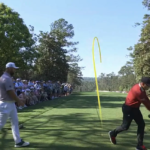
Yet, across the concluding 11 holes, McIlroy delivered the most impressive golf among all competitors — and, considering the pressure, some of the finest play of his entire professional life. This included a precision wedge shot to within seven feet at the 7th hole, a straightforward birdie at the par-5 8th, a pinpoint shot on the 12th hole for one of only four birdies recorded there that day, and a powerful 350-yard drive on the 13th, positioning him for another birdie on the same par-5 where he had double-bogeyed in the previous year’s final round.
At that juncture, the competition was virtually concluded. On a day when Scheffler repeatedly failed to capitalize on chances, and other hopefuls such as Young and Justin Rose struggled to generate momentum on the back nine, McIlroy appeared to display greater consistency in his play and superior emotional management than in any major championship he had participated in since his early twenties.
The sensation was somewhat akin to how legends like Woods and Nicklaus secured some of their major titles. While other competitors were overwhelmed by the pressure, McIlroy elevated his baseline performance to such a degree that only a handful of exceptional shots were sufficient to outdistance the competition.
“It required a decade for me to claim my fifth major, and my sixth arrived relatively quickly thereafter,” he remarked. “I’m not assigning a specific quantity, but I absolutely have no intention of ceasing at this point.”
McIlroy’s statistics and remaining career span will likely prevent him from reaching the discussion reserved for Woods and Nicklaus. Nevertheless, with half a dozen major titles, a recently acquired composure in high-pressure situations, and potentially another ten years of elite golf still to come, McIlroy possesses a viable route to achieving the third spot in golf’s all-time rankings.
Just over a year ago, prior to his initial Masters victory, such an achievement no longer appeared conceivable. Yet, through some means, McIlroy has redefined his career story. In this third phase of his professional journey, it now unexpectedly feels as though nearly any accomplishment is attainable.