Andrea Stella, the head of the McLaren team, has called upon Formula 1 to endorse a series of modifications to the upcoming 2026 power unit regulations, aiming to enhance both the racing spectacle and overall safety.
The transition within F1 towards power units featuring a significantly larger electrical element, constituting nearly half of the entire power generation, generated considerable apprehension for an extended period. However, following the cars’ vigorous on-track debuts at the Barcelona shakedown and the inaugural official pre-season test in Bahrain, it has become apparent that three primary unresolved challenges are presenting the most significant difficulties for both constructors and competitors.
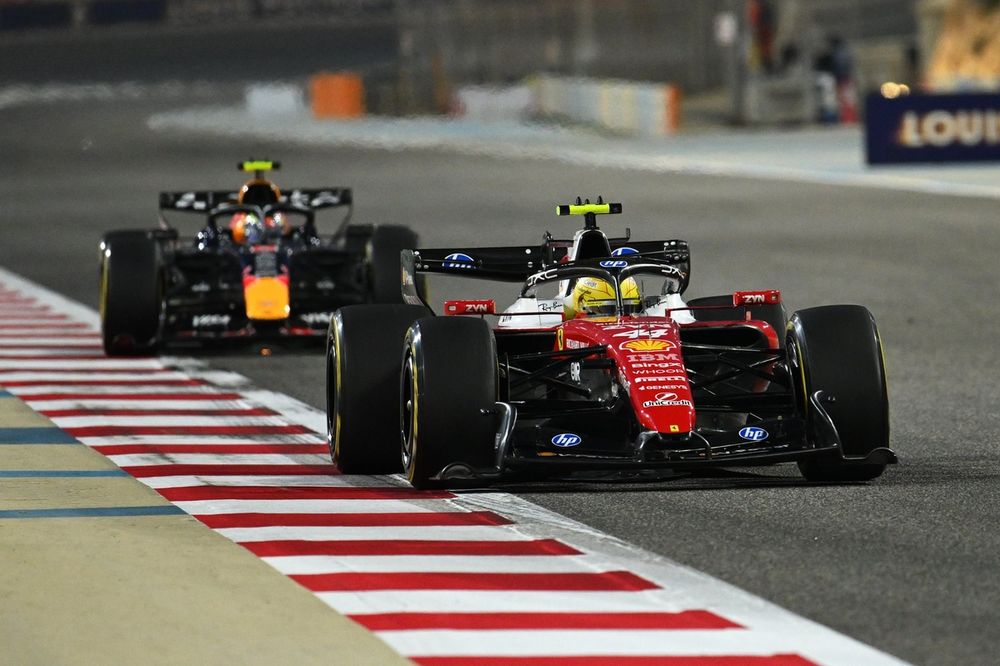
Chief among these is the procedure for race commencements, which has grown in intricacy as vehicles now depend on their V6 engines to accelerate the turbocharger at the outset. During testing in Bahrain, vehicles were observed applying throttle for more than a quarter of a minute to elevate boost pressure to the necessary threshold. Nevertheless, misjudging this process even slightly risks either a sluggish departure or causing the car to enter anti-stall, a situation encountered by Alpine’s Franco Colapinto late on Friday. Additionally, cars positioned towards the rear of the starting formation often take their places so late that, under existing protocols, they may not even have the necessary ten seconds to adequately spool the turbo.
Apprehensions also exist regarding the need for drivers to ‘lift and coast’ as they approach the end of a straight, a practice that could result in perilous convergence rates with another vehicle following at full pace. A further concern stems from vehicles experiencing such severe energy depletion that their battery power is exhausted prematurely, thereby reducing the opportunity to achieve an overtaking speed advantage over a preceding car, particularly without a system akin to DRS.
Adding to the urgency of this situation is the recognition that tracks like Barcelona and Bahrain are far from the most challenging in terms of energy recovery, suggesting that the frequency of issues could significantly increase on circuits demanding greater power.
Lewis Hamilton, Ferrari, Isack Hadjar, Red Bull Racing
Photo by: Sam Bagnall / Sutton Images via Getty Images
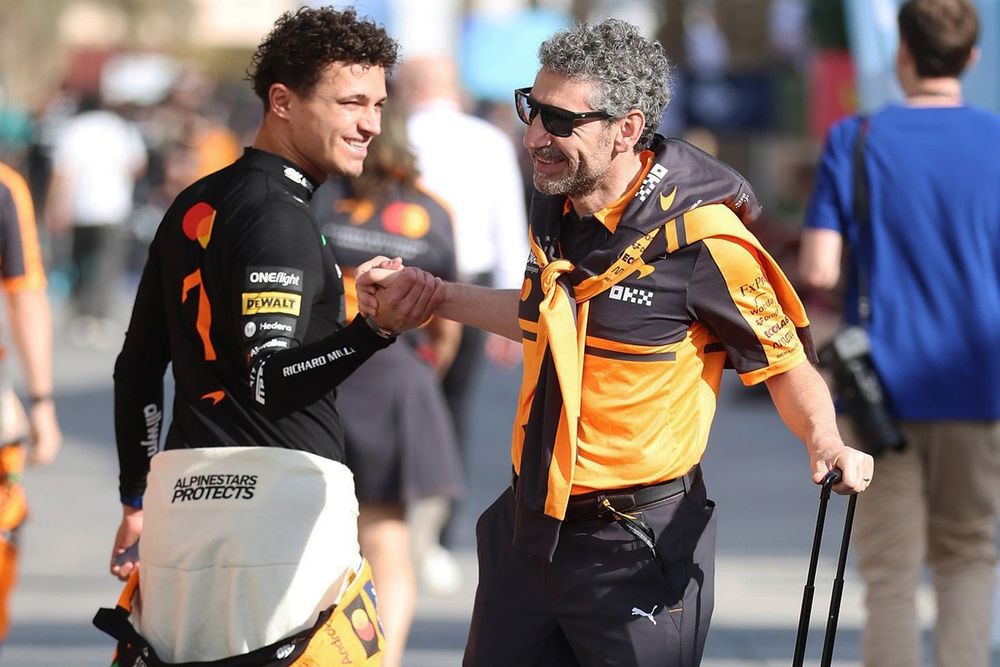
The McLaren team principal, Andrea Stella, is strongly encouraging the Formula 1 fraternity to collaborate on implementing vital adjustments before the Melbourne season-opening event, with the goal of enhancing both safety and the excitement of the races. An upcoming F1 Commission assembly next Wednesday, involving the eleven teams, the FIA, and commercial rights holder FOM, presents a chance to sanction any last-minute revisions prior to the Australian grand prix on March 8th.
Regarding the intricate race start processes, Stella commented, “Our discussion is not centered on qualifying speed or our pace during the race. Instead, it concerns grid safety.” He continued, “Certain subjects inherently surpass mere competitive advantage. In my view, ensuring safety on the starting grid, which can be achieved through straightforward modifications, is an absolutely obvious decision.”
A potential remedy involves adjusting the chronological sequence of the starting ritual to provide drivers with an extended period to bring their turbochargers up to the optimal rotational speed while stationary on the grid.
Stella elaborated, “It’s crucial that the start-of-race protocol ensures every vehicle’s power unit is prepared for immediate deployment, as the starting line is certainly not where you want cars struggling to get away.” He added, “This issue holds greater importance than any competitive concern. Therefore, I believe all participating teams and the FIA ought to act responsibly regarding the necessary actions.”
The act of overtaking has become more challenging due to the elimination of the Drag Reduction System (DRS) and the adoption of active aerodynamic features, which permit all vehicles to flatten their front and rear wings on specific straight sections, thereby restricting their capacity to generate a differential in velocity.
Stella elaborated, “Historically, the DRS mechanism provided a significant aerodynamic benefit to the car trailing another.” He further stated, “Conversely, this season, if you are pursuing another competitor, you experience identical drag and equivalent power, making overtakes considerably more arduous. Our own drivers, having competed against others throughout the three-day testing period in Bahrain, reported extreme difficulty in executing overtakes.”
Lando Norris, McLaren, Andrea Stella, McLaren
Photo by: Steven Tee / LAT Images via Getty Images
The newly introduced boost feature is perceived as insufficient in counteracting the absence of DRS, primarily because vehicles typically lack adequate energy reserves for deployment. A potential remedy could involve lowering the highest permissible electric power output during races, presently set at 350kW; this modification offers the dual advantage of enabling cars to retain energy longer on straightaways and guaranteeing that the revamped boost mode effectively generates a more pronounced speed differential as intended.
Stella observed, “The availability of supplementary energy when closely trailing another car within a second’s distance is challenging to utilize effectively, as this additional power often results in only a marginal increase in deployment, predominantly at the very conclusion of a straight, if at all.”
He continued, “Therefore, I believe that, collectively as the F1 community, we must investigate potential actions to establish a reasonable viability for overtaking maneuvers. Failing this, we risk sacrificing a core aspect of motorsport’s essence, namely empowering drivers with the opportunity to pass competitors.”
Stella’s concluding argument, focusing on reducing the requirement for ‘lift and coast’ techniques, also presents a substantial safety issue due to the immense speed differentials that arise with contemporary vehicles when a preceding car depletes its battery. This scenario raises the possibility of recurring incidents similar to Mark Webber’s significant airborne collision in Valencia back in 2010.
Stella warned, “Such a scenario is far from optimal when cars are in close pursuit, and it could lead to racing circumstances previously witnessed on several occasions, including Webber’s incident in Valencia, [Riccardo] Patrese’s in Portugal, and other similar events that we are absolutely determined to avoid in Formula 1 going forward.”
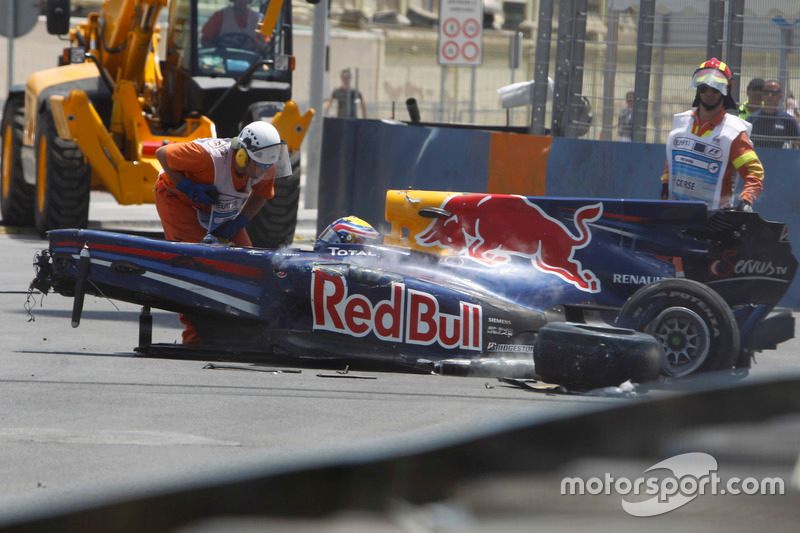
Marshals remove the wrecked car of Mark Webber, Red Bull Racing
Photo by: Motorsport Images
A method to at least mitigate the necessity for ‘lift and coast’ strategies involves adjusting the rules concerning ‘superclipping,’ a process where vehicles commence energy recovery even while maintaining full throttle. At present, cars are permitted to ‘superclip’ a maximum of 250kW; however, raising this limit to the electric motor’s entire 350kW capability would provide vehicles with greater energy reserves to deploy, thereby avoiding the need for riskier driving methods.
Stella summarized, “The core issues revolve around three straightforward aspects: race starts, effective overtaking, and establishing methods to prevent ‘lift and coast’ practices.” He added, “I believe these direct technical resolutions are already available and will be deliberated during the upcoming F1 Commission meeting.”
“I consider it essential because it is both achievable and uncomplicated,” he asserted. “Therefore, we must avoid overcomplicating straightforward matters and refrain from delaying actions that can be implemented at once.”
The outcome of whether the teams will reach a consensus during the F1 Commission gathering is still uncertain, although the FIA retains the authority to enforce modifications if deemed necessary for safety reasons.