Exercising prudence is perpetually essential when examining Formula 1 car introductions, particularly when new regulations are implemented. Several years prior, Red Bull engaged in deceptive practices concerning its sidepod inlets, presenting distinct configurations at its Milton Keynes unveiling and in digital renderings. By the time of the ensuing test sessions in Bahrain, the specification had once more changed, highlighting the measures teams employ to prevent competitors from acquiring excessive information before the season commences.
Nonetheless, initial tests with the 2026 vehicles have revealed several intriguing design approaches from various constructors. The elevated rake concept, a characteristic prominent up to 2021, has seen a partial resurgence, with a majority of teams seemingly returning to a pushrod setup for their front suspension, and Ferrari notably demonstrated active aerodynamic features on the track for the inaugural occasion.
Has a Revised Diffuser Strategy Emerged Because of Less Complex Floors?
Following Mercedes’ initial track run, another element that garnered considerable notice was the diffuser. Given the 2026 rules, which mandate less intricate floor designs, these surfaces produce considerably reduced downforce compared to the ground-effect period, thereby making the optimization of the diffuser’s performance a particularly compelling engineering challenge.
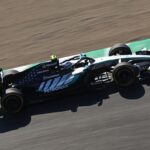
Initial photographs of the Mercedes W17 on the circuit reveal an aperture within its diffuser. This feature bears a slight resemblance to the ‘mouse holes’ observed on certain cars until 2022, though the present opening appears more substantial. Merely one day following Mercedes’ shakedown, an analogous aperture was visible in the diffuser of Ferrari’s latest car at Fiorano.
This aperture in the diffuser operates in concert with the recessed sidepods, which channel air currents beneath these side structures and along the floor’s extremities. By means of this gap, teams endeavor to leverage that air movement to enhance the diffuser’s performance. A more rapid redirection of airflow towards the diffuser facilitates greater downforce generation. To achieve this, constructors must ensure the airflow remains attached, akin to the operational principle of a sharply angled wing component.
The current diffuser opening stands apart from designs employed under prior regulatory frameworks. Previously, it was paramount to seal the diffuser, a design feature intrinsically linked to the floor configurations. During the 2022–2025 period, the majority of downforce stemmed from Venturi tunnels situated beneath the floor, allowing teams to utilize that air stream for the diffuser. Maintaining a sealed diffuser was critically important for establishing the maximum pressure differential and effectively exploiting the air moving under the floor.
The current season presents a distinct scenario, as the FIA has streamlined floor designs, introducing flatter profiles, which implies the airflow is no longer sufficiently potent to achieve an equivalent impact. This clarifies why teams are seeking external mechanisms to intensify the airflow directed towards the diffuser. Utilizing a slotted diffuser enables the air stream originating from the sidepods to assist in accelerating flow towards the diffuser ramp, although through a modified approach compared to previous seasons.
Inwash Additionally Impacts Floor Efficiency
An additional element contributing to diminished floor efficiency is the re-emergence of components bearing a likeness to the older barge boards. The primary distinction, notwithstanding, lies in their altered functional role for this iteration.
While teams historically deployed barge boards to channel turbulent air from the front tires away from the car, generating an ‘outwash’ effect, the FIA now predominantly envisions these features as ‘inwash mechanisms’. The principal component is required to angle inwards, with the aim of lessening the impact of disturbed air on trailing vehicles.

George Russell, Mercedes W17
Photo by: Mercedes AMG
Inherent to their design philosophy, teams endeavor to minimize the ingress of this turbulent airflow, and numerous strategies are already apparent; however, some degree of inward pull is unavoidable. This phenomenon detrimentally impacts not only the floor’s efficacy but also the diffuser’s output. To counteract this consequence, teams must devise alternative approaches, a path Mercedes and Ferrari appear to have taken by directing airflow from their undercut sidepods towards the diffuser’s aperture.
Conceptually, an intensified airflow in this region could also assist in mitigating the impacts of ‘tyre squirt’ to a certain degree. This term describes the turbulent air disturbed by the rear tires that disperses laterally, potentially compromising diffuser efficiency. By establishing a more robust airflow in that zone, teams aim to control it with greater proficiency, suggesting the proposed remedy might offer dual benefits.
“A Compelling Insight, Yet Not Entirely Unexpected”
Competing teams have characterized Mercedes’ methodology as ‘intriguing, yet not wholly unforeseen’. David Sanchez, Alpine’s technical director, commented during his team’s Barcelona car reveal:
“It’s a bit unusual, it’s an interesting interpretation, but not a total surprise.”
Sanchez indeed recognized the critical role of the diffuser and suggested that substantial advancements are anticipated within this particular domain.
“For sure, the interaction between the bodywork, the diffuser, the rear corner is going to be very much a work in progress,” he explained. “There’s been a few ideas around. You would say from the distance that it doesn’t look too far off. But for sure, as much as there is no more ground effect, I think people will still be keen to see a picture from the underside to see what the diffuser looks like.”