Follow us
Set us as a favorite source on Google
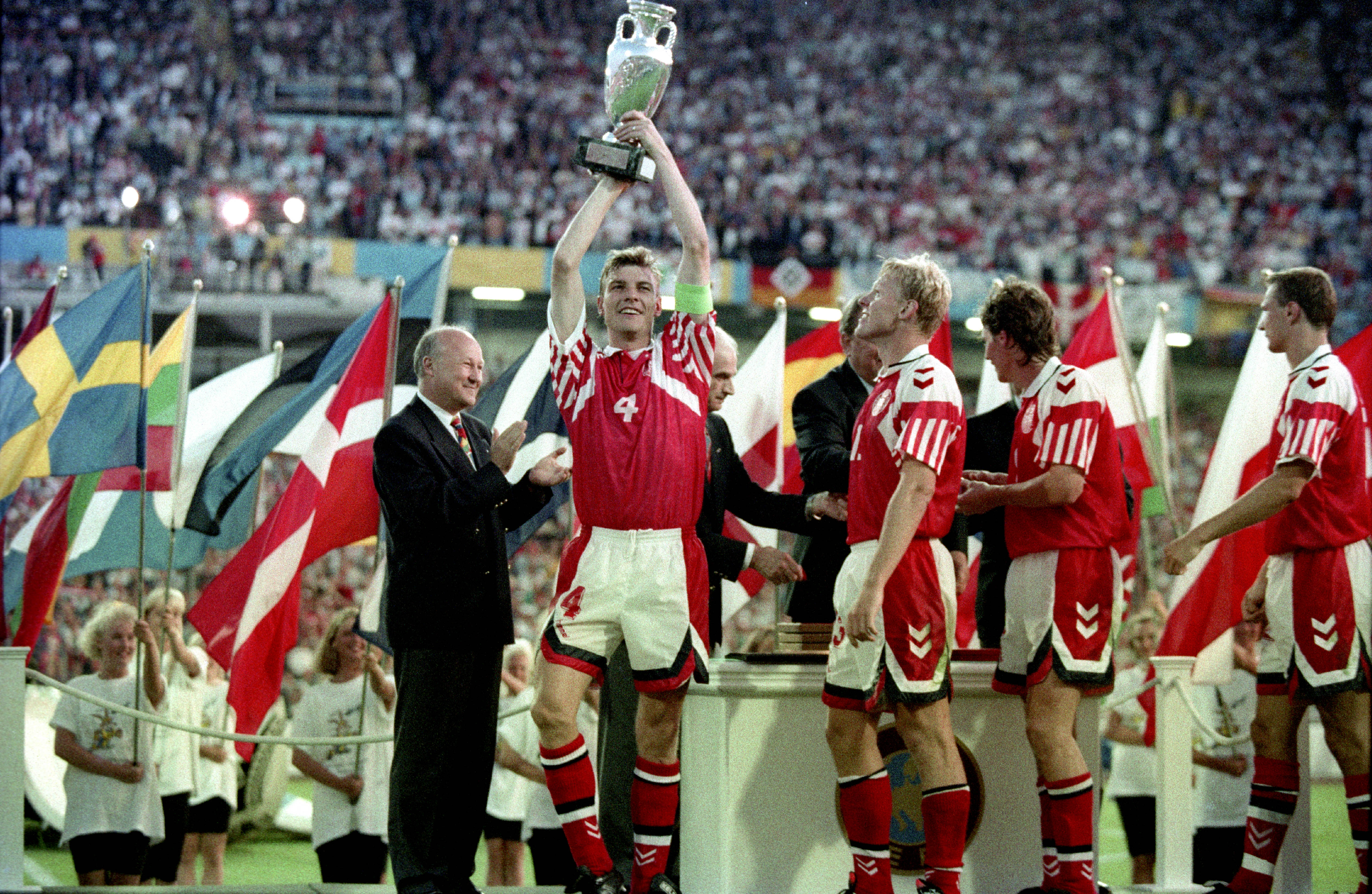
Over three decades later, Denmark’s victory at Euro 92 remains among the most extraordinary tales in international football history.
After failing to secure qualification through the normal route, the team went on to claim the trophy by capitalising on Yugoslavia’s removal following the breakup of that nation.
Strikes courtesy of John Jensen and Kim Vilfort sealed a 2-0 triumph over Germany during the final match, enabling the Danes to pull off an astonishing triumph without one of their all-time great players—following Michael Laudrup’s choice to step away from the national side two years prior to concentrate on his club duties at Barcelona.
Laudrup reflects on absenting Euro 92
The highly gifted midfielder served as a cornerstone of the “Danish Dynamite” era—the exciting squad that advanced to the Euro 84 semi-finals before capturing the imagination of football fans everywhere at the 1986 World Cup. However, opting to focus on his domestic club career meant he missed out on Denmark’s grandest triumph.
Discussing the Danish national squad throughout the 1980s, Laudrup attributed their growth to their head coach and his team-mates’ decisions to move to top-tier European leagues.
“A substantial portion of the squad was playing for top European clubs during a period when teams were strictly limited in how many foreign players they could sign,” Laudrup tells FourFourTwo. “Our team possessed immense individual quality. Bringing in Sepp Piontek as manager in 1979 proved pivotal—he enabled us to realize our true capabilities. We competed in the European Championship and crushed Yugoslavia 5-0. We also had an incredible encounter against Belgium, coming from 2-0 behind to win 3-2. In the end, we were eliminated only on penalties during the semi-final clash with Spain.
“At the 1986 World Cup, we defeated Uruguay 6-1 and overcame West Germany 2-0, only to be knocked out by Spain in the round of 16. We had taken a 1-0 lead, but a disastrous second half cost us dearly, resulting in a 5-1 loss. Major footballing nations possessed crucial tournament experience. We learned from those moments and applied those lessons in 1992 and 1998, where we secured strong results in the knockout stages.”
And what prompted his choice to step down from the national team in 1990?
“During our second qualifying match, we were held to a draw in Northern Ireland, followed by a home defeat to Yugoslavia, who fielded a phenomenal side,” Laudrup explains. “I concluded they were bound to qualify, even if we defeated them in the return fixture. Furthermore, I was in the initial phases of my tenure with Barça, which demanded my full commitment, and the two teams played contrasting styles of football. I wasn’t particularly comfortable with our tactical approach in the national setup, though such decisions rest with the head coach. All the same, I thought, ‘Under this system, I can never reproduce the form I show at Barcelona.’
“Since qualification seemed out of reach, I decided to devote 100 per cent of my focus to Barça. Yugoslavia finished top of the group, yet due to the conflict, Denmark were unexpectedly handed their spot. People inquired if I wanted to participate, but I chose not to join at the eleventh hour, despite having the option. I felt doing so would have been unfair to the rest of the squad.”
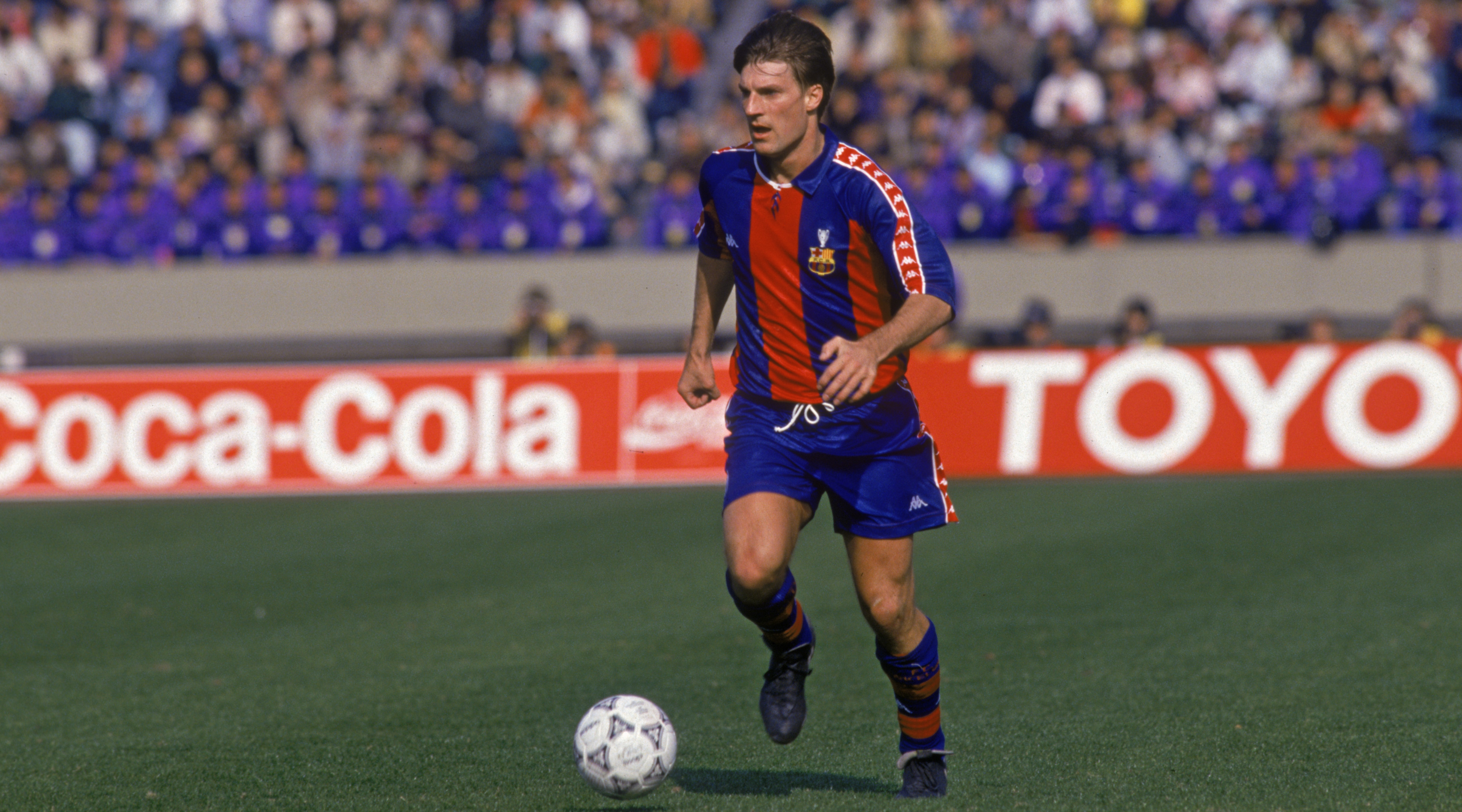
Laudrup ultimately returned to the Danish national squad in 1993.
“Having captured three league titles alongside the European Cup with Barça, they continually asked if I would return,” he details. “I had fulfilled all my ambitions with Barcelona, so I accepted. Regrettably, we dropped a World Cup qualifier to Spain—the third occasion they stood in our path, having eliminated us in 1984 and 1986. It is intriguing how much Spain provided me at personal and club levels, yet how much it took away when playing for my country! Nevertheless, we subsequently competed in Euro 96 and the 1998 World Cup.”
He reached his 100th appearance for the national team during the 1998 World Cup, bringing his international career to a close after their quarter-final loss to Brazil.
“It served as a wonderful stage on which to conclude,” he reflects. “Upon departing Real Madrid, I moved to Japan—I wanted a venue where I could continue playing while enjoying a degree of personal freedom after residing in Southern Europe since 1983. I contemplated stepping away from international duty, but the manager encouraged me to keep playing. I realized that although I appreciated life in Japan, I preferred to finish at an elite level. There was interest from teams in Turkey and France—Marseille were keen—yet I wanted to move past the intense pressure of Southern Europe! [Laughs]
“I signed for Ajax—that squad was remarkable, featuring the De Boer brothers, Danny Blind, Edwin van der Sar, and Jari Litmanen. We captured the domestic Double, prompting me to remain with the national squad; we secured qualification for the World Cup and were eliminated in the quarter-finals by Brazil. We pushed them hard, making it a fantastic conclusion to my playing career.”