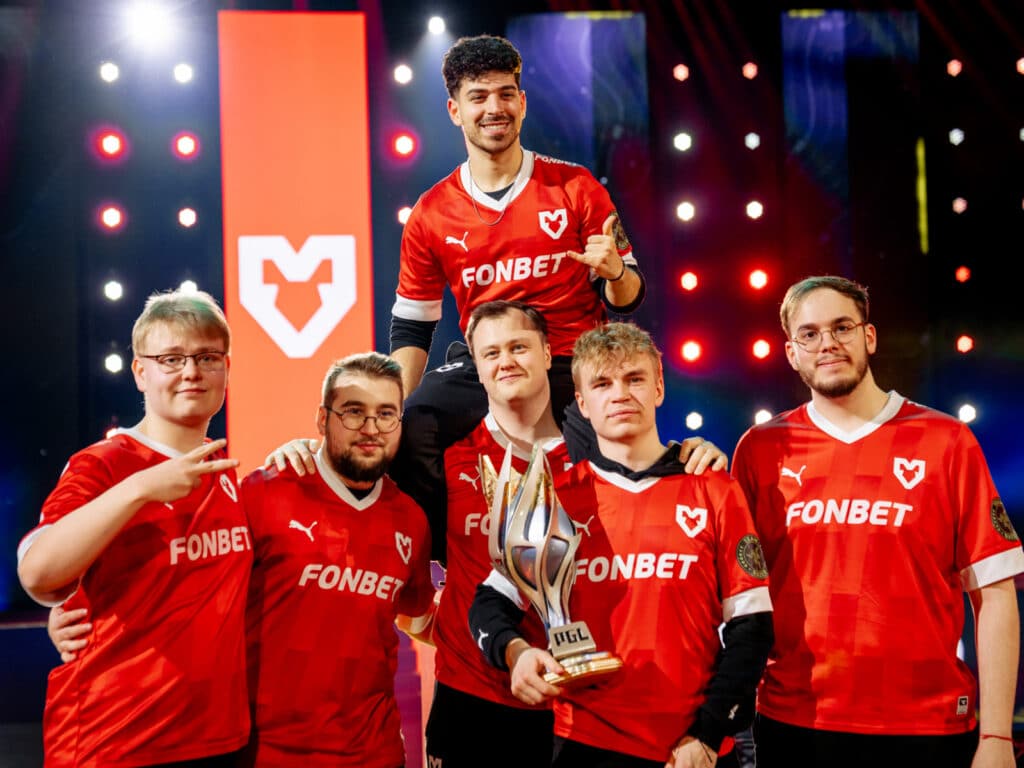
The German esports organization, **MOUZ**, has declared its intention to cease participation in **VALORANT** competitions, thereby concluding a four-year period involved with Riot Games’ tactical shooting game.
Through an announcement issued via the team’s X account (previously known as Twitter), the organization communicated that the existing framework of the **VALORANT Champions Tour** (VCT) does not correspond with its long-term objectives and that it does not ‘perceive an appropriate role’ for itself within the current operational setup.
“Our determination has been made to discontinue our involvement with VALORANT,” the statement outlined. “The present VCT format does not align with our organizational aspirations, and we find no suitable position for ourselves within the prevailing environment.”
The organization also conveyed its appreciation to its various collaborators, players, and coaching staff for their collective contributions throughout their journey in VALORANT.
Obstacles within VCT and the Second Tier
While the organization did not elaborate on specific points, MOUZ’s departure contributes to an expanding roster of organizations reconsidering their participation in VALORANT’s secondary competitive ecosystem. Since its entry into the field in 2022, the organization largely contended in the DACH Challengers circuit, frequently vying for national championships and spots in Ascension.
Despite numerous strong performances domestically — including triumphing in VALORANT Challengers 2024 DACH: Evolution Split 2 and securing qualification for VCT Ascension EMEA 2024 — MOUZ failed to secure advancement. Their Ascension campaign concluded with a ranking of fifth to sixth place, underscoring the narrow margins and significant risks associated with the route to the premier tier.
Under the current VCT framework, teams operating outside the designated partnered leagues largely depend on brief competitive periods, limited prize funds, and a singular path to promotion via Ascension. For organizations, this necessitates ongoing financial commitment without any assurance of sustained stability or revenue distribution unless promotion is achieved.
Concerns regarding the economic feasibility of this arrangement have been repeatedly voiced across the competitive landscape. Last year, the VALORANT Players Association released a report warning that the prospects for tier-two competition ‘remain uncertain,’ pointing to minimal returns on investment, condensed schedules, and an absence of financial incentives for participating organizations.
Riot Games has undertaken certain measures to enhance sustainability. In June, the publisher confirmed its decision to permit betting sponsorships across VALORANT and League of Legends esports within North America and EMEA, affirming that this initiative was part of ‘investing in a sustainable ecosystem.’
According to Riot, a portion of the income generated from this initiative will be reinvested into the tier-two landscape, encompassing larger prize pools and expanded development programs.
Nevertheless, MOUZ’s recent decision indicates that, for some organizations, these adjustments have yet to fundamentally alter the risk-reward equilibrium of competing outside the top tier.
The announcement regarding MOUZ’s discontinuation of VALORANT participation, citing incompatibility with the existing VCT structure, was originally published by Esports Insider.