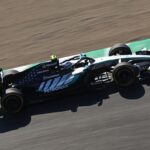
During the presentation event for Aston Martin’s eagerly awaited 2026 Formula 1 racing car, Adrian Newey articulated a fundamental truth regarding innovation: while an engineer may step away from their workplace, their conceptual thinking continues unhindered.
The designer, responsible for twelve constructors’ championship triumphs, disclosed that he utilized his mandatory period of ‘gardening leave’ following his departure from Red Bull to contemplate vehicle designs for the upcoming regulatory framework. This disclosure is scarcely unexpected, given that Formula 1 engineering is inherently an inventive endeavor, and it would be impractical to presume that highly influential figures could entirely disengage their minds when transitioning between companies.
The concept of a mandatory break period serves primarily as a legal workaround, particularly in professions that rely heavily on intellectual output. By proactively engaging with the impending regulations instead of focusing on personal leisure, Newey merely replicated a highly successful approach he had employed previously.
“The underlying approach, I believe, emerged during my period of gardening leave [from Red Bull], starting in late April [2024], when I was no longer actively involved with the [Red Bull] Formula 1 squad,” Newey stated.
“The regulations were known to everyone, having been released, so I simply took time to reflect and consider, ‘Right, I must approach these rules from fundamental principles. What potential answer might exist?'”
“I devised a core concept, and subsequently, upon commencing my role with the [Aston Martin] team on March 2nd [2025], I reviewed that concept with Aston Martin’s aerodynamic specialists and designers. We collectively concurred that it appeared to be a feasible strategy, and we have adhered to it continuously since then.”

Aston Martin AMR26
Photo by: Aston Martin
Following his indication of leaving Red Bull, Newey continued to be formally involved with non-F1 endeavors (like the speculative RB17 road vehicle) for a period, and his transition to Aston Martin was not publicly disclosed until early September 2024. Although his contract would have precluded direct communication with Aston Martin staff prior to his formal commencement, no stipulation prevented him from documenting his concepts independently.
A common assertion is that Newey possesses the ability to “perceive air” and mentally map its movement across a Formula 1 car; however, he personally downplays this capability. Regardless, the field of aerodynamics operates through such a cyclical refinement that any initial forms sketched on paper will invariably serve as mere foundational elements.
Within his memoir, How To Build A Car, Newey detailed his activities during the interval between his departure from Williams in November 1996 and his arrival at McLaren on August 1, 1997, a period when teams were adapting to fresh regulations mandating slimmer vehicles equipped with grooved tires – a further instance of FIA president Max Mosley’s aggressive efforts to curb vehicle performance by significantly reducing downforce.
“I was unable to hold any discussions with McLaren’s engineering staff before my employment began,” he penned. “Such interactions would have constituted a violation of my Williams agreement, which was still undergoing legal dispute [Newey had alleged a breach of contract by Williams, and the team was pursuing a counterclaim to stop him from commencing work at McLaren until his contract concluded].”
“However, I acquired a drafting table and a set of the revised regulations, then started drawing at my residence in Fyfield, attempting to ascertain the optimal vehicle configuration for these new stipulations. It served as a sort of ‘reassurance’ to have it present. I derived a sense of peace from it, a feeling I continue to experience.”
“I prefer to operate in quiet surroundings and have cultivated a strong capacity for complete focus throughout my career. Sometimes I might pause for a hot beverage and a snack (a Hobnob biscuit) if I encounter an impasse and perceive a need to step away for a momentary respite.”
Adrian Newey, Managing Technical Partner of Aston Martin F1 Team
Photo by: Mark Thompson / Getty Images
“Even a brief, five-minute intermission frequently suffices to ignite new concepts. I employ a 0.7mm HB mechanical pencil for informal drawings on A4 paper and a 0.3mm 4H pencil for precise technical drafts on a drawing board using transparent sheets.”
“Approximately one-quarter of my time at the drafting table is dedicated to broad layout designs, aimed at resolving mechanical and aerodynamic clashes; the remainder is focused exclusively on aerodynamic forms.”
Clearly, an August commencement for developing a vehicle for the subsequent year is quite tardy. Thus, upon Newey’s initial arrival at McLaren (which was then situated in a cluster of industrial buildings adjacent to the primary rail line connecting London Waterloo to Woking, contrasting with its current Norman Foster-designed pyramidal facility), the team’s engineers already had a fairly advanced design underway. He confessed in his publication that when the outcome of his gardening-leave drawings first entered the wind tunnel, its performance was “at least 10% or greater inferior” to the design advanced by Henri Durand’s established aerodynamics group.
Nevertheless, several components from Newey’s preliminary vision proved beneficial and were kept: he believed the vehicle ought to possess an extended wheelbase compared to the 1997 models, instead of being proportionally reduced with the decrease in width. Furthermore, and critically, he had pinpointed regulatory exceptions that allowed McLaren to implement lower-profile head restraints for the driver and preserve a subtle V-form at the chassis’s front.
“Looking back,” he noted, “it felt somewhat presumptuous to imagine that a novel form conceived from my personal reflections at home would surpass a design that McLaren had dedicated months to perfecting in their wind tunnel.”
In the subsequent weeks, Newey directed the integration of a combined rendition of both designs, which evolved into the MP4-13. With this car, Mika Hakkinen achieved widespread success in the 1998 world championship. Notoriously, he also provoked team principal Ron Dennis by recoloring his drab office walls to a livelier hue of pale blue.
Newey’s McLaren MP4/13 dominated a 1998 season in which cars were 20cm narrower and had grooved tyres.
Photo by: Getty Images
Formula 1 has undergone substantial transformations in the approximately three decades since that period; aerodynamic capabilities have become more refined, every component of the vehicle exhibits increased intricacy, and the size of engineering teams has expanded to meet these requirements. The AMR26 might not closely mirror the initial drawings Newey brought to the Aston Martin Technology Campus, and its potential as a race victor is yet to be determined.
However, Newey has not needed to expend effort selecting a fresh shade for his workspace’s partitions…