Following an arduous beginning to the racing calendar, Red Bull seems to have made considerable advancements in Miami, a development Max Verstappen characterized as a “glimmer of hope” for the squad.
While his fifth-place finish at the Miami Grand Prix didn’t completely showcase this improvement, Red Bull demonstrated significantly greater raw speed compared to their performance in the initial three race events of 2026.
Rectifying a problem within the steering mechanism was a crucial factor, although the modifications – featuring substantially redesigned sidepods and a fresh floor – similarly achieved their intended outcomes.
In contrast to Verstappen’s previous assessment that the season’s initial enhancements, launched during the Japanese Grand Prix, yielded minimal change, this latest set of improvements fulfilled all anticipations.
This outcome aligned perfectly not just with Verstappen’s hopes, but also with the projections of Red Bull’s technical director, Pierre Wache.
“Indeed, it met our expectations. The package itself was effective. And after resolving various other problems, it also unlocked some [additional] performance from Max that we might not have foreseen,” the French director conveyed to Autosport.
In his concluding remarks, Wache was referencing the alterations to the steering, enabling Verstappen to apply greater pressure once more.
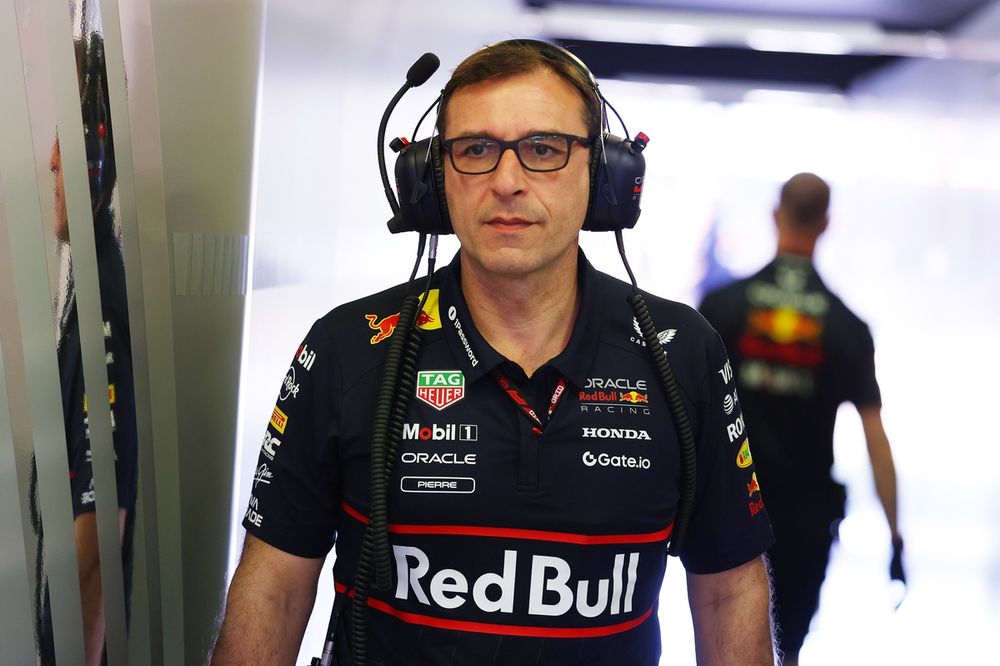
Pierre Wache, Technical Director Red Bull Racing
Photo by: Red Bull Content Pool
This marks Red Bull’s inaugural substantial advancement in 2026, a notable progression even when compared to McLaren and Ferrari, both of whom likewise introduced significant enhancement packages to Florida.
Mercedes has signaled its intention to counter with a substantial set of updates in Montreal, while Red Bull, predictably, will not instantaneously reciprocate. Wache clarified that his squad plans only minor adjustments for the Canadian Grand Prix, primarily allocating their development efforts towards the European leg of the season.
“We need to exercise a bit more patience, just a small adjustment for Montreal,” he affirmed.
Regarding the subsequent significant upgrade, mass optimization remains a primary objective. In Miami, Red Bull successfully trimmed the RB22’s surplus weight from twelve to six kilograms. Following this achievement, strategies are in place to bring both Verstappen’s and Hadjar’s vehicles to the FIA’s minimum weight specification of 768kg within a two-month timeframe this year.
“Yes, I anticipate a further improvement. I’m unsure of the exact timing, but we anticipate a weight reduction potentially around the Austrian Grand Prix,” Wache elaborated.
Such adjustments are expected to progressively enhance Red Bull’s competitiveness, though Wache finds particular satisfaction in the apparent conclusion of the season’s arduous initial stages. The technical director experienced considerable pressure to rectify a demanding predicament, and it seems the inaugural stride towards resolution has been made.
“It presents a challenge, and I am certainly dissatisfied with the outcome,” he stated. “I believe the final position [in Miami] fails to reflect our true speed. However, it is beneficial for the team to demonstrate that the car possesses significant pace and that we are once again contenders.”
We want to hear from you!
Let us know what you would like to see from us in the future.
Take our survey
– The Autosport.com Team