Following a string of first and second-place finishes for Max Verstappen since the F1 mid-season break, the Mexico GP weekend presents a stiffer challenge for Red Bull.
While the Dutch driver recorded the fastest times on Friday, he conceded that their performance on long runs was not satisfactory: “You’re not going to win like this,” he stated. The following day, this observation appeared accurate, as Verstappen secured only fifth place in qualifying, commenting that “nothing worked” with the RB21.
That concluding remark aligns with the continuous exploration for an improved set-up approach undertaken between Friday and Saturday.
“That’s something you’re constantly addressing, naturally. However, we experimented with various options leading up to qualifying, and none truly improved the situation,” Verstappen noted, adding that one particular set-up offered a marginally enhanced sensation, but lacked the requisite outright pace.
This might seem unexpected, given Verstappen’s five previous victories at this circuit. However, he explained: “Those were different eras. Last year’s performance was unsatisfactory, which is my most recent reference. And now, things are again proving problematic.”
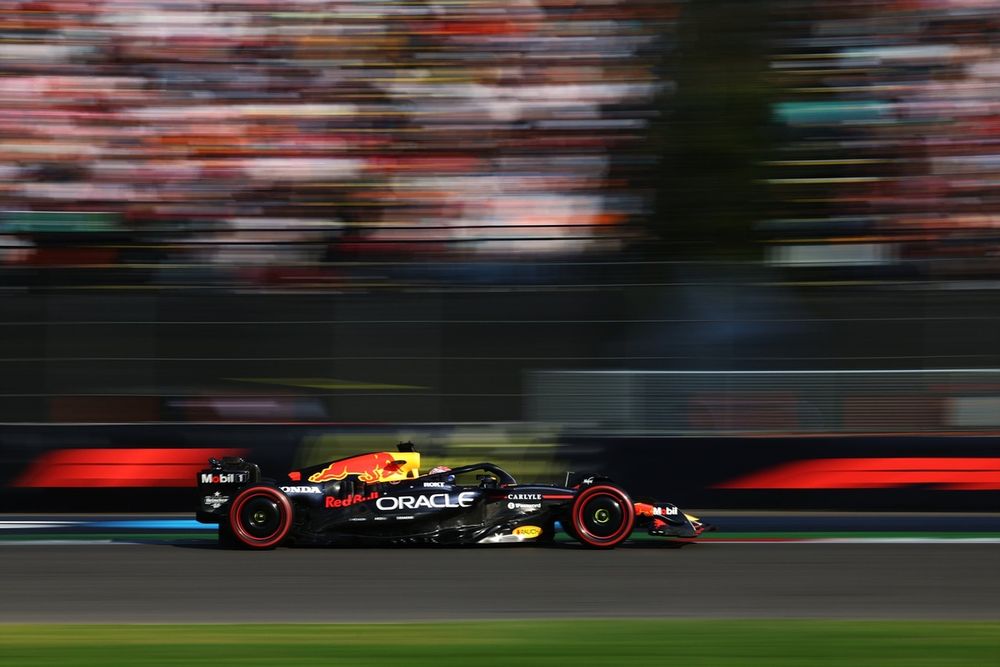
Max Verstappen, Red Bull Racing
Photo by: Colin McMaster / LAT Images via Getty Images
Cooling variations between McLaren and Red Bull
The matter arises as to what specific challenges Red Bull encounters. As per usual, multiple contributing elements exist. McLaren’s team director, Andrea Stella, proposed one possible explanation on Saturday evening.
“The effectiveness of the cooling apparatus plays a pivotal role on this circuit,” the Italian clarified. “If aerodynamic attributes must be sacrificed to attain sufficient cooling, then the consequent compromise to aerodynamic efficiency can manifest rapidly.”
This suggests that the degree to which teams need to expose their vehicle’s framework to augment cooling, through the addition of cooling vents, correlates with the degree to which the car’s aerodynamic capabilities are affected.
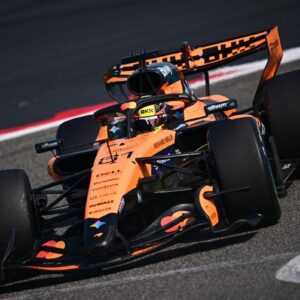
According to Stella, Red Bull is compelled to implement more substantial compromises in this domain compared to McLaren. This is visually confirmed through the expansive cooling inlets featured on the RB21.
“We are witnessing the dividends from the investments made towards the 2025 car concerning its cooling system, engineering, and technology,” Stella elaborated.
Consequently, McLaren seems less reliant on introducing supplementary apertures within the car’s frame. This may confer a competitive edge at venues similar to Mexico. Stella posits this as a contributing factor to the difference in performance in comparison to recent weeks, though he advises against extrapolating definitive conclusions for forthcoming races. “Mexico doesn’t present an ideal setting for evaluating a vehicle, as cooling considerations can significantly influence performance.”
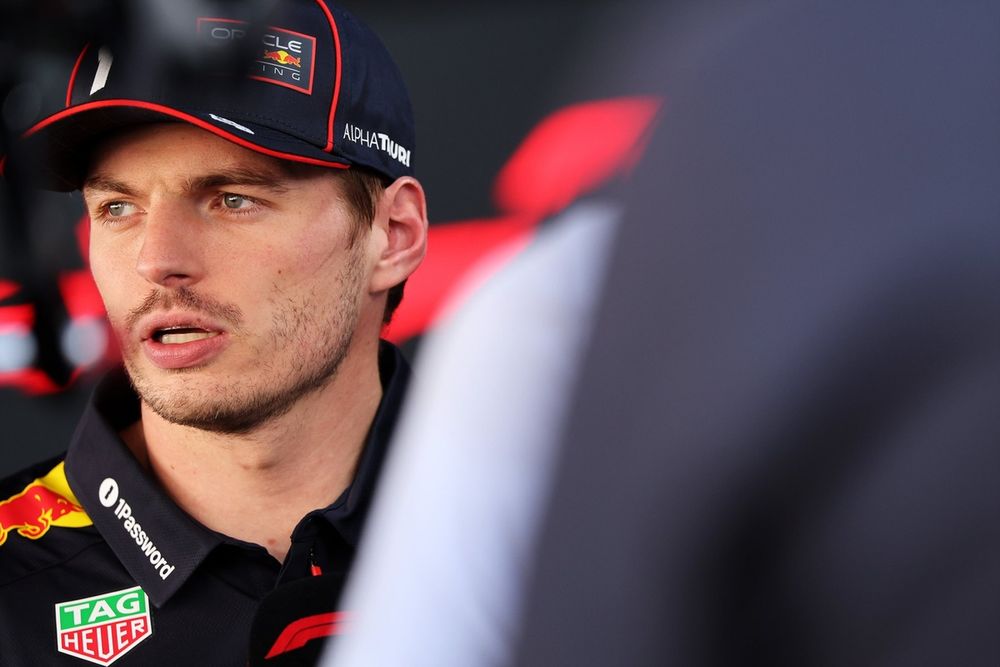
Max Verstappen, Red Bull Racing
Photo by: Andy Hone/ LAT Images via Getty Images
A cyclical challenge? Skidding and excessive tyre heating
Although cooling indubitably constitutes a vital facet in Mexico, Verstappen contends that it does not represent the primary determinant behind Red Bull’s current difficulties. During his interaction with Dutch media representatives within the paddock, the reigning world champion accentuated a separate concern – the propensity of Pirelli tyres to overheat.
“Our management of tyre overheating has generally been suboptimal throughout the season. This is particularly problematic here. The elevated altitude induces skidding, leading to rapid and substantial tyre temperature elevation. This scenario is clearly not advantageous for us.”
To some degree, this embodies a self-perpetuating issue. All competitors utilise high-downforce wing configurations. However, attributable to the altitude, the resultant downforce remains less pronounced than observed in Monza. Consequently, the significance of mechanical grip escalates, making cars more susceptible to skidding.
This encapsulates Verstappen’s perspective. Upon the onset of skidding, the tyres overheat, even within a solitary lap. The resultant compromise to grip precipitates additional skidding, which, in turn, exacerbates overheating. This creates a reinforcing pattern that proves especially disadvantageous in Mexico.
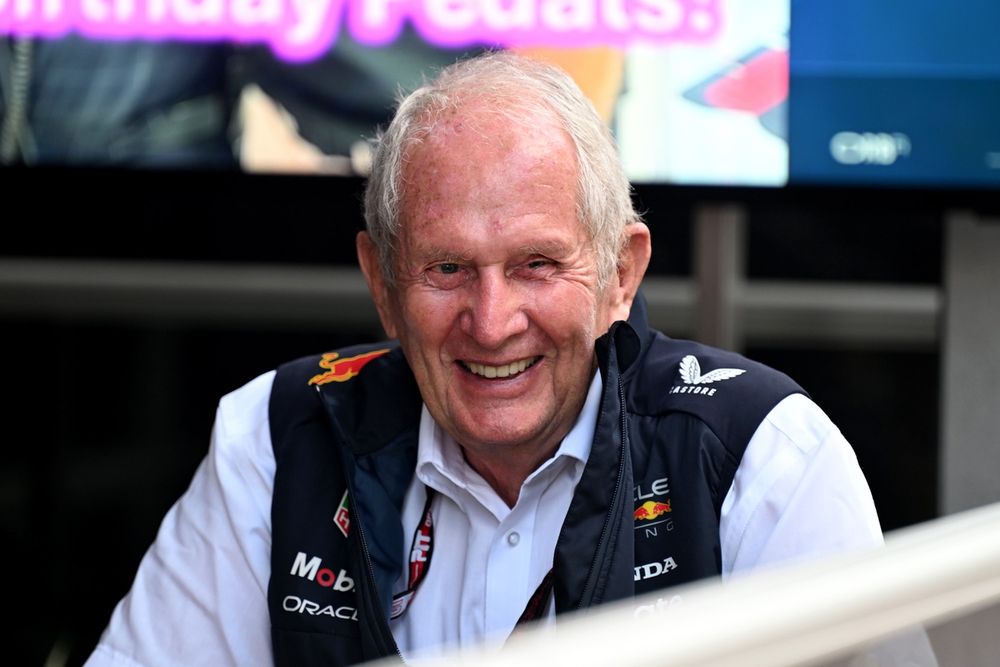
Helmut Marko, Red Bull Racing
Photo by: Mark Sutton / Formula 1 via Getty Images
Marko acknowledges: “We may have adopted an overly extreme ride height”
Ultimately, a third variable warrants mention: ride height. Verstappen encountered difficulties specifically in the second sector, chiefly around Turn 9, where he encountered multiple incidents. When questioned regarding the challenges presented by the limited number of high-speed corners at the Autodromo Hermanos Rodriguez, Verstappen responded: “Refer to the onboard footage, amplify the audio, and the events will become evident.”
Verstappen alluded to the Red Bull car bottoming out in Turn 9. According to Red Bull advisor Helmut Marko, this resulted from selecting an overly aggressive ride height for the weekend. “Ride height is paramount. However, our configuration in the middle sector was perhaps slightly excessive,” admitted the 82-year-old Austrian.
Optimising ride height is vital for maximising the ground effect capabilities of these vehicles and ensuring proper sealing of airflow beneath the floor. However, exceeding optimal parameters introduces two potential risks: excessive wear to the plank through contact with the track, which could result in disqualification, and diminished ride quality due to excessive bottoming.
The latter constrained Verstappen’s qualifying performance. Due to Red Bull’s bold selection of ride height, each undulation had the potential to destabilise the car, as demonstrated by multiple incidents at Turn 9.
The combined effects of these variables have contributed to a more challenging weekend for Red Bull in Mexico. Marko anticipates that the ride height issue will be less pronounced on Sunday, as drivers navigate the faster corners with reduced velocity in race trim, resulting in a slightly elevated car position. “The increased height and weight of the car will mitigate ground contact.”
Red Bull’s motorsport advisor retains optimism regarding a potential podium finish. However, Verstappen expresses less confidence: “The car is currently underperforming, and I don’t foresee improvement on Sunday. Let’s simply conclude at that point.”
If this diagnosis holds true, Verstappen recognizes the potential ramifications for his aspirations of securing a fifth consecutive world championship.
“With four races remaining after this, numerous positive developments must unfold,” he explained. “I stated previously that optimal performance from our side is imperative, and that condition is not satisfied this weekend. Should we succeed in the title contention, it would be exceptional. Should we ultimately fail, it would not be a source of excessive concern.”
We want to hear from you!
Let us know what you would like to see from us in the future.
Take our survey
– The Autosport.com Team