Certain aspects of Formula 1 remain consistent, despite the introduction of fresh rules. Carlos Sainz’s achievement of ninth place exemplified this through a clever approach during the Chinese Grand Prix.
Rather than deploying the Overtake mode as intended in Shanghai, he opted to employ it for protecting his position against the trailing car. Such circumstances truly highlight a driver’s sharp thinking during crucial instances.
Even during the contest involving Charles Leclerc and Lewis Hamilton, the two Ferrari racers momentarily reduced speed prior to reaching the line that enables the overtaking feature, thereby maximizing their energy and power for an assault on their teammate. For the Spanish Williams competitor, conversely, the situation unfolded quite distinctly.
Operating with a heavier vehicle, Sainz was acutely aware that fending off Franco Colapinto’s Alpine would pose a considerable challenge. Colapinto, having begun on hard tires, switched to mediums and was quickly gaining on Sainz.
Nevertheless, an opening arose when, with only a handful of laps remaining, George Russell found himself needing to overtake both the Spanish and Argentinian drivers.
As the British driver passed Colapinto on the extended straight approaching Turn 14, Sainz checked his rear-view mirrors and decided to ease off the accelerator upon exiting, even if it meant sacrificing a small distance. This choice, however, served a precise objective: immediately preceding the last bend is the marker that dictates eligibility for employing overtaking mode, contingent on being less than a second behind the vehicle in front.
The Overtake mode functions akin to the previous drag reduction system; even when a driver is being lapped, if they are under one second behind the leading vehicle at the detection zone, Overtake mode will engage.
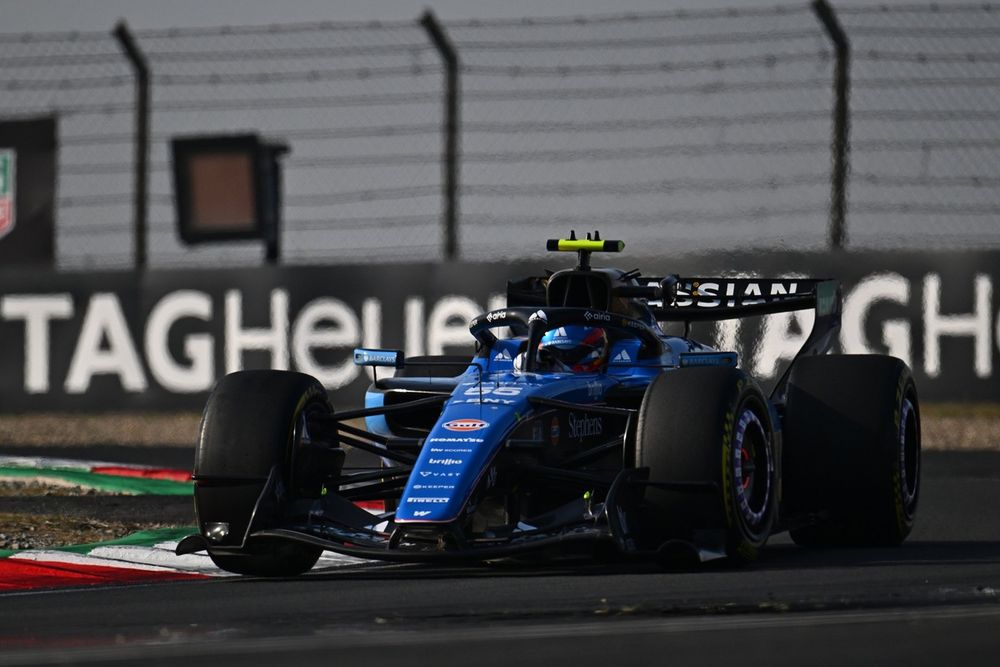
Carlos Sainz, Williams
Photo by: Guido De Bortoli / LAT Images via Getty Images
Consequently, Sainz capitalized on this by deploying Overtake mode defensively against Colapinto, utilizing the additional electrical power provided to complicate the Alpine driver’s efforts to narrow the distance.
“Achieving a ninth-place finish. I understood that if he challenged me, I wouldn’t engage in anything overly reckless, given my potential for a top-10 position. For the squad, earning a point remains a favorable outcome,” Sainz stated.
“Therefore, I wasn’t planning to drive assertively, but then I noticed the blue flags approaching and I thought, ‘if I manage this skillfully and create turbulent air for him, activate my Overtake mode, create turbulent air for him, activate my Overtake mode.’ Essentially, an Overtake mode sequence instead of a DRS sequence,” Sainz elaborated.
This maneuver proved effective, earning Williams their initial championship points of the season, an unforeseen outcome considering the vehicle’s present capabilities, which remains considerably heavier than its rivals – though a multitude of retirements undoubtedly contributed, notably Max Verstappen’s – who held fifth place at the time of his compulsory pit stop due to a cooling problem – and both McLarens.
Nevertheless, this provides a genuine uplift in team spirit, motivating the squad to persist in their efforts and progressively lessen the car’s mass in the forthcoming months, through a weight-reduction initiative that James Vowles has verified will now span approximately six races, exceeding the initial projection.
“Ultimately, it’s still ninth place; it isn’t my ultimate desire. While these are valuable points for both myself and the team, I genuinely hope they act as an impetus, a stimulus for everyone at the base to strive harder and exert maximum effort,” the Spanish driver commented.
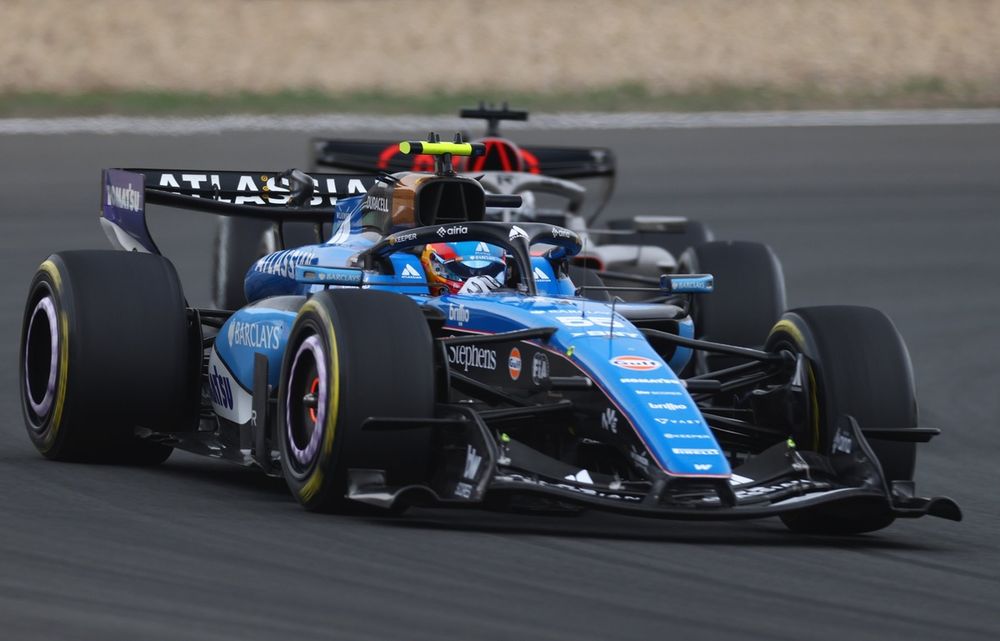
Carlos Sainz, Williams
Photo by: Alastair Staley / LAT Images via Getty Images
“This isn’t the seasonal commencement we envisioned; it didn’t align with our anticipations for this vehicle, so I believe this outcome should strongly motivate efforts back at the manufacturing facility. The truth is, today, even contending with the mid-field vehicles, I perceived no possibility of success. It’s exasperating, yet simultaneously, it’s a commendable achievement to secure, and we trust it will benefit all involved.”