It would have been understandable if expectations for Haas as a leading midfield contender in 2026 were low. The squad had concluded 2025 in eighth place, following a tight season-long contest against Racing Bulls, Aston Martin, and Sauber.
Just as large ocean storms pose a greater danger to smaller vessels, a minor racing team is considerably more susceptible to the impact of comprehensive rule changes.
However, after performances across three distinct tracks, Haas has found favorable conditions, positioning itself fourth in the constructors’ standings, ahead of its usual midfield adversaries and even Red Bull. This achievement is particularly noteworthy considering that Williams and Alpine, both Mercedes clients, have channeled all their efforts into the 2026 season. Whether Haas can maintain this standing remains uncertain, but the initial look at 2026 demonstrates that F1’s smallest team possesses a solid base to develop from.
Haas was well aware of the difficulties ahead, so as team principal Ayao Komatsu explains, the organization had to make tough decisions on how to allocate its relatively limited resources, especially given the extra difficulties associated with the intricate new power units. “Regarding the personnel working on the car, our numbers essentially remain constant,” Komatsu states. “However, there must be a clear division of responsibilities, which is quite different from the previous year.
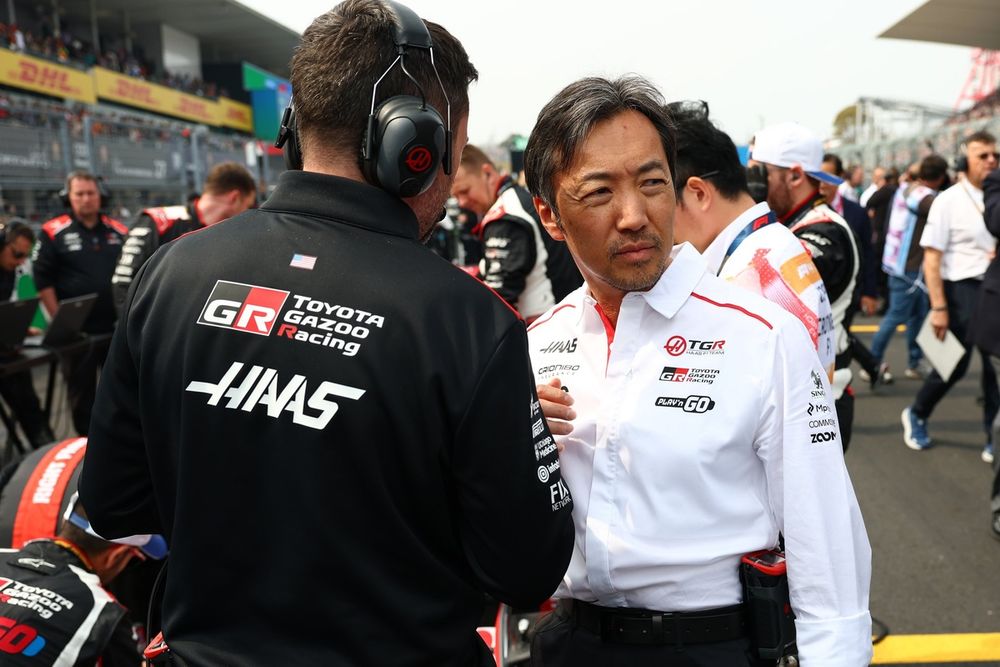
Ayao Komatsu, Haas F1 Team
Photo by: Simon Galloway / LAT Images via Getty Images
“One must set priorities. You cannot simply ask individuals to undertake ten additional tasks without giving anything up, can you? So, the capacity for work is finite. It’s much easier said than done, but you must concentrate on the fundamentals. If you neglect the basics, focusing too narrowly on specific areas, you risk overlooking something significant. By the time you become aware of your error, qualifying will be over. It’s too late. You will have lost half a second. Truly, yes. That’s the alarming aspect.”
Haas had to overcome early difficulties in Australia, starting slowly in Friday practice but managing to recover for qualifying. A contributing factor to this challenge is the team’s lack of access to its own simulator until mid-year, which places a heavier burden on the trackside crew.
However, Haas demonstrated its ability to swiftly address issues, mirroring its response last year in Australia when it quickly managed a fundamental floor problem affecting high-speed corners over subsequent races. Komatsu observes a similar efficient problem-solving approach in how the team identified and resolved challenges during pre-season testing, and how it bounced back from a sluggish start during Friday practice in Melbourne.
Following Bearman’s seventh-place finish in Australia, the Ferrari protégé then secured fifth in China, significantly improving Haas’s position. Japan proved more challenging, with Esteban Ocon earning a single point while Bearman was involved in a frightening incident during the race. Nevertheless, the general sentiment within the team is optimistic, as they have largely avoided many of the potential pitfalls associated with the new regulations.
“Indeed, it’s highly encouraging,” Komatsu notes. “These new regulations present an enormous, immense challenge for all, as is evident across the pitlane. We are the smallest team, and we also vigorously pursued development late last year. Even getting the car ready for Barcelona’s initial testing week was an enormous endeavor.
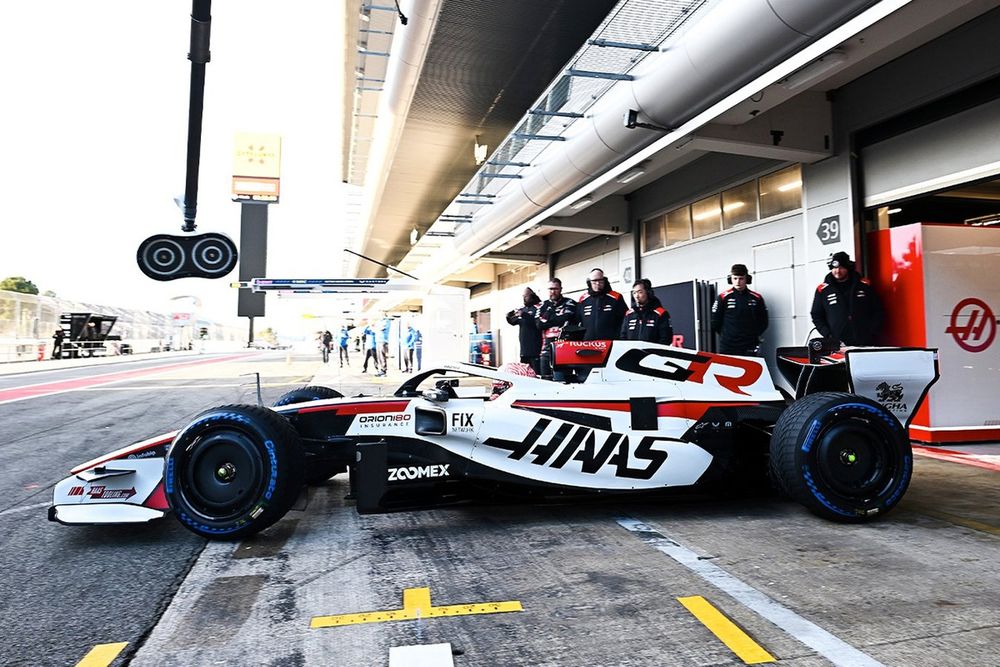
Esteban Ocon, Haas
Photo by: Haas F1 Team
“Each year, our teamwork improves, and we learn from the errors of prior seasons. The construction of this vehicle, the VF-26, is not faultless, but it exhibits consistent performance traits. Again, such things don’t materialize instantly.
“I don’t believe we could have envisioned a superior start to the season, but the true challenge now lies in this developmental competition. Again, as the smallest team, we face an uphill battle, but as long as we remain focused, collaborate continuously, and maintain transparent and open communication, I am confident we can refine the car.”
The 2026 car’s robust framework assists in alleviating some of Haas’ inherent limitations, including the restricted amount of time available for driver simulations. It also enables the trackside personnel to concentrate on the most significant performance differentiator seen so far – how teams optimize their power unit’s energy deployment.
“When we deploy the car on the circuit, there’s still fine-tuning required, but it’s not as though in FP1 the drivers are reporting the car as uncontrollable or unstable,” Komatsu highlights. “Imagine if that were the situation, it would have been exceedingly difficult for us to manage everything – aerodynamic characteristics, setup adjustments for deployment, and tires.
“That isn’t the situation. Because the vehicle possesses a strong foundation, we can truly concentrate on the areas where we are still striving to catch up, which involves maximizing the potential of our power unit through our deployment strategy.
“We are actually competing against four different power unit manufacturers, correct? We contended with a Racing Bulls powered by a Red Bull-Ford [engine], an Audi, and then Pierre Gasly’s Alpine utilizing the Mercedes. When we race against these rivals, we observe distinctly varied deployment capabilities and strategies, necessitating very rapid learning on our part.”
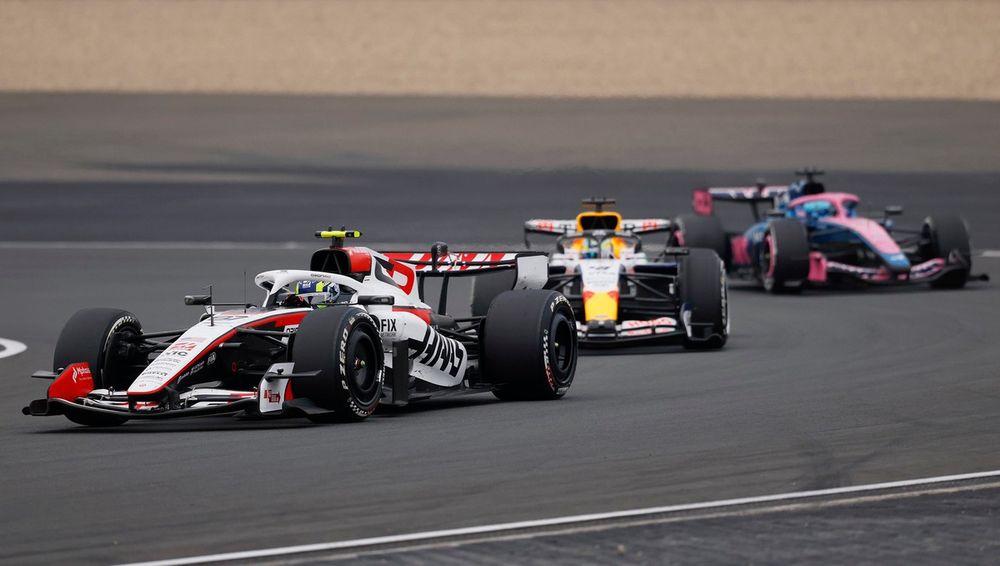
Oliver Bearman, Haas F1 Team, Arvid Lindblad, Racing Bulls
Photo by: Lintao Zhang / LAT Images via Getty Images
Ferrari’s power unit is clearly not yet on par with Mercedes’ in terms of capability, but it appears to have engaged in more transparent communication and collaboration with its customer teams compared to Mercedes. This might be because Ferrari feels less threatened by its customer teams than Mercedes does by defending world champion McLaren.
“I must state that Ferrari has been remarkably candid and exceptionally supportive in guiding us on deployment strategy and providing all possible information to assist us,” Bearman commented. “I believe our relationship with Ferrari differs from that which McLaren and Mercedes share.”
Has this differing approach favorably influenced Haas’s outcomes? After a difficult start in Australia with its Mercedes power unit, Alpine has made significant progress and is now much closer to fully exploiting what appears to be an inherently strong car.
Komatsu suggests, however, that vehicle and power unit performance disparities will continue to shift depending on the circuit. Consequently, the competitive hierarchy in Miami, where vehicles will experience less energy depletion, might look considerably different from the conditions observed in Suzuka. Miami also marks the occasion for the initial significant upgrade deployment across the grid.
“I believe it’s highly dependent on the circuit,” he remarked. “The competition among us, Alpine, Audi, and Racing Bulls is very close. We are all extremely tight. Therefore, I think whichever team arrives at each race weekend with superior preparation, and performs strongly from FP1, can effortlessly oscillate between the top and bottom of the midfield. So, I don’t believe anyone is definitively ahead – including ourselves.”