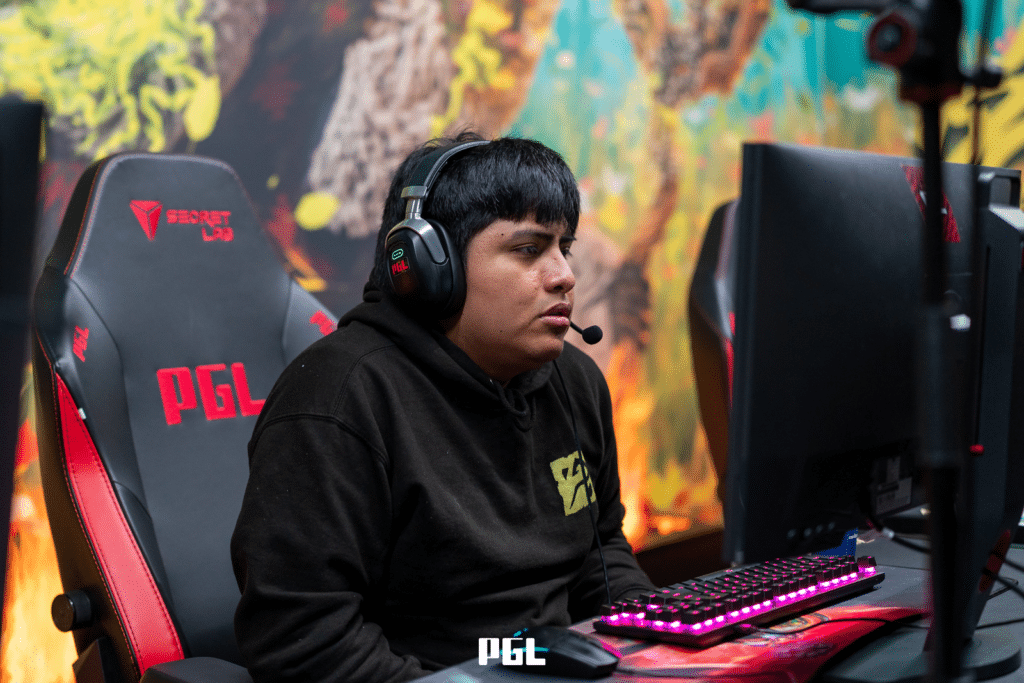
The South American Dota 2 community has just experienced one of its most devastating setbacks in recent memory. During the Dota 2 championship at the Esports World Cup, a premier global event, PlayTime‘s mid-lane player Gonzalo “DarkMago” Herrera along with coach Juan “Vintage” Angulo received temporary suspensions from ESIC due to alleged violations of its Anti-Corruption regulations.
It was subsequently revealed that the “integrity concerns” behind their suspension pointed toward potential match-manipulation activities. Consequently, both individuals were disqualified from the Esports World Cup mere hours prior to their squad’s planned series against Vici Gaming.
Since both figures were prohibited from participating, PlayTime could not secure stand-ins on such short notice. Because of this, the South American roster suffered a forfeit in their do-or-die match, resulting in their immediate elimination from the $2 million tournament without ever stepping onto the virtual stage.
Under typical circumstances, this would register as just another disappointing episode in Dota’s notorious history with competitive manipulation, but considering the upward trajectory of the South American scene throughout the 2026 season, this incident carries a much harsher sting for local fans.
South America was finally making real progress
For a long time, the South American scene was often dismissed by the wider community, treated as an afterthought in the global landscape. Historically, teams from this territory were viewed as easy targets in the group stages, typically securing only a single qualification spot before getting knocked out long before the bracket stages began.
Nonetheless, that perception has shifted dramatically over the past few years, particularly during the 2025-2026 competitive cycle. South America is now represented by LGD Gaming (formerly known as Heroic) alongside a formidable second squad: PlayTime, who have proven themselves to be genuine Tier 1 competitors.
For the first time in memory, the region was sending multiple dangerous lineups to major tournaments rather than just a lone representative. South American squads were routinely reaching the bracket stages of elite competitions, with either LGD Gaming or PlayTime consistently securing top-eight finishes in prestigious S-tier events.
A large portion of the fanbase, myself included, anticipated that Valve would finally award South America two qualifying spots for this year’s edition of The International. Unfortunately, Valve maintained a single slot for the region, which LGD Gaming ultimately claimed over PlayTime during the qualifiers.
Failing to qualify for TI may have shifted the dynamics
The International remains the pinnacle event on the professional calendar. Despite experiencing a notable decline in its prize pool recently, it is still the championship that carries the highest prestige and significance.
Because PlayTime fell short against LGD Gaming for that coveted spot, the Esports World Cup served as their final major competitive appearance of the season. Their performance in Paris was essentially the defining moment of their year before the post-TI roster shakeups began.
Inevitably, a massive wave of roster changes occurs around the time of The International. Organizations that missed out on qualifying usually initiate player changes, and rosters that fail to achieve their goals at the main event often opt for complete rebuilds afterwards.
Consequently, this background information might be more crucial than it initially appears. Team Spirit’s manager, Dmitry “Korb3n” Belov, noted rumors that DarkMago’s position on the roster was already insecure and that he was set to be replaced following the conclusion of the Esports World Cup.
It is entirely possible that DarkMago was aware of his impending departure. One could speculate that he sought to secure a quick financial payout before parting ways with the organization.
While the player’s actions are shocking enough, the situation is compounded by the fact that their coach, Vintage, was suspended alongside him. Vintage is not merely the squad’s coach; he also serves as PlayTime’s sporting director, making the situation even more absurd.
With someone in his position implicated, it raises serious questions about the internal operations of the organization.
Regardless of their motivations, attempting such a scheme at the Esports World Cup is incredibly reckless. An event of this scale, featuring a $2 million prize pool, draws intense scrutiny from the entire global community. Such actions suggest extreme desperation or a misplaced belief in their own cleverness, neither of which is a wise excuse.
Anger grows in South America as progress is derailed
Predictably, the feedback from the broader Dota 2 community has been overwhelmingly negative, with widespread outrage and disappointment.
On his Not for Broadcast podcast, Dota 2 commentator Avery “SVG” Silverman expressed his disbelief: “Even if you look at the situation, the cost-benefit analysis is terrible—you are throwing away your entire professional future for a payout that isn’t even supposedly that large.
“It’s an incredibly foolish move. Truly idiotic. Individuals who do this completely undermine trust within the competitive Dota landscape. It damages the game, compromises the tournament, and discourages Valve from investing further. It’s incredibly frustrating.”
The remaining members of the PlayTime squad also shared their perspectives. Via an Instagram story post, the roster’s position-five support Yelsthin “Elmisho” Hurtado went as far as to suggest that those who engage in “322” (match-fixing) activities deserve actual prison sentences.
Former professional player Mariano “Papita” Caneda voiced his deep sadness, pointing out how unfair it was that the accused individuals completely spoiled the debut Esports World Cup experience for their talented 18-year-old carry, Máximo “Wits” Orozco Alza.
Even though he is a newcomer to the elite tier, Wits has displayed incredible potential. My heart goes out to him—he was giving it his absolute all while his mid-laner was sabotaging their efforts from the inside.
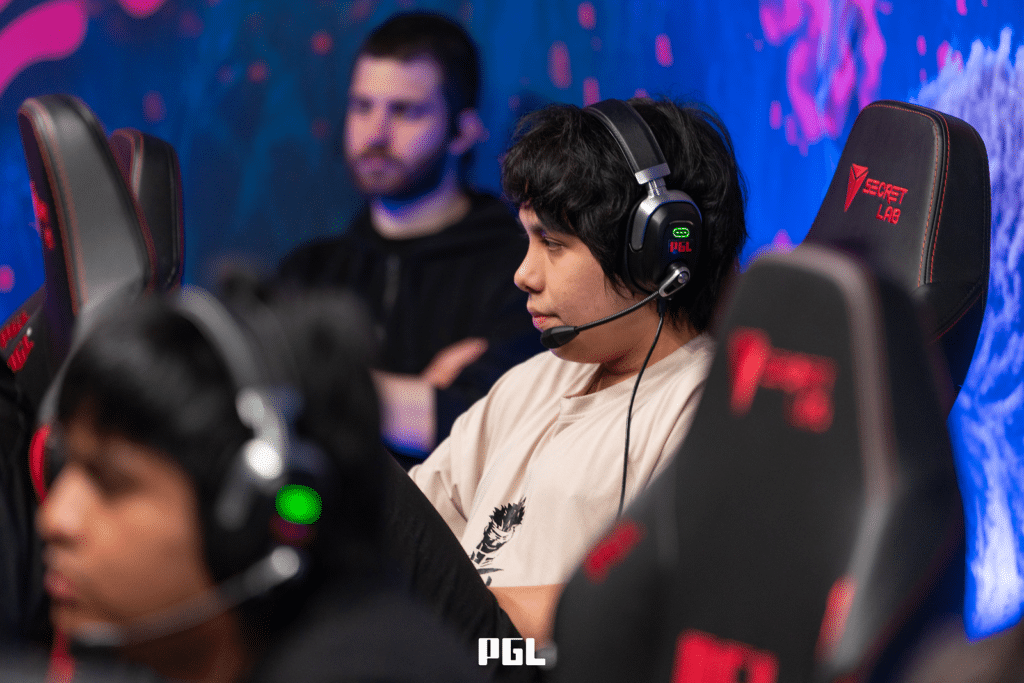
An official inquiry is currently ongoing, meaning their guilt has not yet been definitively proven. Nonetheless, if the suspicions are confirmed, the fallout could be disastrous for the South American Dota community, dragging the region backward just as it was establishing real momentum.
The Esports World Cup was meant to serve as a platform to elevate the region’s global standing. PlayTime put up a respectable performance in the group phase, leaving fans to wonder if they might have achieved even greater heights had all players been competing with complete honesty.
Many observers, including myself, have long advocated for the global community to recognize South America’s growth. The region has evolved beyond relying on a single dominant team; it now boasts multiple rosters capable of challenging the world’s best. Tragically, this hard-won reputation is being jeopardized by the selfish actions of two individuals looking for an easy payout.
For tournament organizers and Valve to confidently allocate additional qualifying spots for major championships to South American teams, integrity is crucial. A corruption scandal centered on one of the region’s elite competitors severely damages that case.
Is a recovery possible for PlayTime in the upcoming season?
In the wake of the public accusations and their subsequent exit from the tournament, PlayTime parted ways with DarkMago, Vintage, and their offlane competitor Frank “Frank” Ayala. While it is unfortunate that Frank was released alongside them, he has strongly asserted his complete innocence in the matter.
At the very least, it is a relief that Wits and Elvis “Scofield” Peña have not been linked to any wrongdoing and remain on the roster. They represent the most promising assets on the team and serve as the perfect foundation for reconstructing the lineup.
The club has already announced that a newly assembled roster is being put together, indicating that the organization remains committed to staying in the scene.