In contemporary rugby, physical stature is essential. The most significant encounters are frequently determined by collisions, those instances when physics dominates and the smaller individual is forced backward. It’s evident that French rugby, drawing inspiration from the NFL, has established comprehensive systems to convert sheer size into match-winning assets.
Throughout Australasia – from Sydney’s suburbs to Rotorua’s schools and the Pacific Islands – the fundamental potential abounds, yet these imposing figures often transition to alternative sports or different rugby-playing nations.
Will Skelton should have been a cornerstone of the Wallabies. Instead, he was compelled to relocate to demonstrate his capabilities. Standing at 6’8 and weighing 145kg, he was perceived as a Super Rugby curiosity rather than a national priority.
Europe capitalized on that innate power, transforming it into a formidable advantage. Saracens reconstructed him. La Rochelle designated him as the linchpin of a Champions Cup lineage.
Upon his return in the national colors this year for the Lions series, the impact was immediate and evident.
The Lions struggled to counter him. During his approximately 55 minutes on the field in the second and third Tests, Australia appeared to possess a focal point of command.
It served as a stark illustration of the consequences when an athlete with that physical makeup is appropriately developed – and of the repercussions of allowing him to leave your system initially.
It would be an oversimplification to assert that rugby is merely a game of fielding the heaviest squad. However, it’s also undeniable that when combined with the necessary fitness and skill levels, athletes of Skelton’s magnitude can unleash a specific, remarkable kind of devastation.

The 33-year-old’s actual worth is being recognized belatedly in his homeland, but it’s preferable to have it late than never. Increasingly, athletes of his stature are being entirely lost to Australian rugby.
Consider the instance of Emmanuel Meafou. At 6’8 and 145kg, he was part of the Melbourne Rebels’ development program, progressed through Melbourne Rising and Warringah, and then departed overseas. Presently, he’s a French international and a dominant lock for Toulouse, replicating Skelton’s impact on the Lions.
That specific profile? French club teams will structure their squads around it. Australian rugby permitted him to join another team’s second row without hesitation.
It’s not solely a rugby oversight. Jordan Mailata, another imposing figure at 6’8 and 166kg, was a rugby league player barely noticed by the NRL’s age-group system when the NFL discovered him. He now starts for the Philadelphia Eagles, earning substantial sums.

For rugby union enthusiasts, it’s challenging not to admire Mailata and ponder the type of second-row player he could have become [though subtracting 20 kilos]. Should rugby have surpassed the NFL in acquiring Mailata? More importantly: were they even cognizant of his presence?
Despite being widely referenced, Mailata’s journey is not unique.
Daniel Faalele also slipped through rugby’s grasp and is now establishing a successful career in the NFL. Another giant born in Melbourne, he stands at 6ft 8 and weighs approximately 170kg [among the league’s heaviest players]. He initially played rugby union before being recruited by American football scouts in 2017.
The Baltimore Ravens are currently compensating him with a base salary of $3.4 million.
Athletes of this caliber are the type that Southern Hemisphere rugby should be accumulating. Instead, it’s exporting them.
Laki Tasi’s narrative is the most recent illustration. Standing 6’6 with arm lengths exceeding 34 inches, the colossal figure was participating in club rugby in Queensland barely two years ago, weighing 200kg before losing 30kg. A family acquaintance steered him towards American football.
He’s presently a defensive lineman signed by the Las Vegas Raiders through the International Player Pathway, with rugby receding into the background.
Another loss.
Just this week, Thomas Yassmin assumed former Wallaby centre Jordan Petaia’s IPP position at the Los Angeles Chargers. The 6’5, 115kg former Scots College rugby winger [and erstwhile Petaia teammate] transitioned from Sydney to Salt Lake City to engage in college football with Utah, evolving from a complete beginner to a Rose Bowl touchdown scorer within a few seasons.
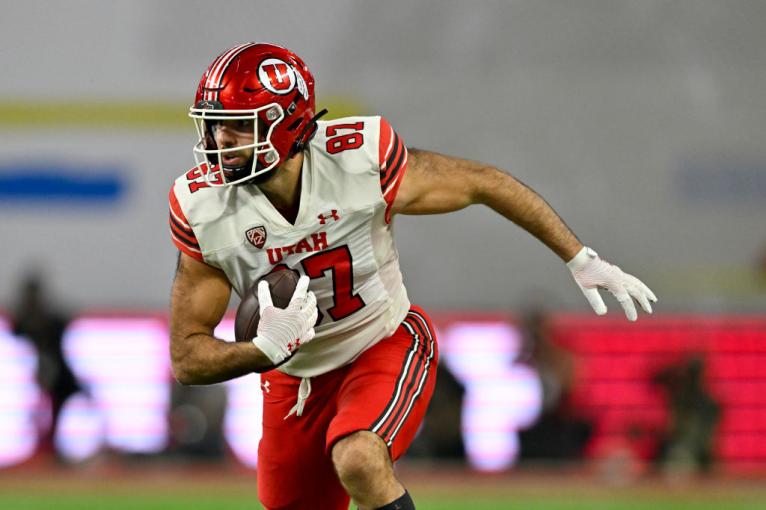
Ironically, he’s now vying for Petaia’s NFL position, following the frequently injured ex-Wallaby star’s hamstring strain. Two accomplished rugby union players competing for the same role in a different sport.
Admittedly, for every Mailata or Faalele who succeeds, numerous others do not.
The NFL’s International Player Pathway is a tempting enticement, but the majority who pursue it end up on the fringes of the sport – training camp participants, practice squad members, sometimes merely a footnote on a transaction report.
Prominent figures such as Christian Wade and Louis Rees-Zammit garnered attention on both sides of the Atlantic in recent seasons, but increasingly, lesser-known, large-bodied athletes are discovering the unforgiving and ephemeral nature of detours to American football.
Abandoned hopefuls including Christian Scotland-Williamson, George Smith, Daniel Adongo, Hayden Smith and Lawrence Okoye now populate an ever-growing roster of oversized athletes who departed rugby only to vanish into obscurity in the American sport.
The contention isn’t that Australian rugby should be surpassing the NFL in attracting athletes in terms of financial resources. It cannot. The crux is that the identical size, power and athletic attributes that entice NFL scouts should be immediate warning signals for rugby talent identification in the southern hemisphere. If an athlete is 6’6 and 140kg and possesses the raw athletic potential to complement that build, he should be on a development contract, not awaiting a phone call from Florida.
Instead, Antipodean rugby’s identification systems too frequently reward early refinement over undeveloped, malleable size. The French leagues are reversing that equation. In the Top 14, specifically, a giant with the right mindset is a project meriting years of commitment.
In Australia, if he’s not instantly a Super Rugby starter, he risks being disregarded. This explains why one observes Meafou in a French jersey or Skelton celebrating European championships.
Queensland Reds assistant Jon Fisher stated unequivocally to the BBC: “There are 50 to 100 individuals participating in the AFL and rugby league who, had they been raised in the Northern Hemisphere, would be playing rugby union. If rugby league and AFL were nonexistent in this country, I believe the Wallabies would be hard-pressed to ever lose a match.”
He’s correct. The athletic foundation exists. What’s absent is the system for consistently capturing and nurturing it.
Australian rugby isn’t the sole union overlooking giant athletes. An anecdote shared with RugbyPass by All Blacks coaching legend Wayne Smith suggests they’re not the only Antipodeans struggling to accommodate substantial athletes in the sport, especially during their developmental adolescent years.
“Approximately a year-and-a-half ago, I was touring with the World Cup. I took it back to my hometown. A child arrived from Rotorua with his father. He was 6’9, 180kg, and he was 13. 180kg. And he wasn’t genuinely overweight. I’d never witnessed anything comparable,” Smith recounted in 2019. “He was actually excessively large for rugby – he wasn’t permitted to participate. I inquired about his alternative activities, and he mentioned boxing! Children are becoming increasingly large, and I’m uncertain how the sport will adapt.”
It’s not an isolated incident. Another prominent Rotorua product, Steven Adams, grew up playing rugby before switching to basketball — a choice that has since transformed the 6’11, 120kg Kiwi into one of the wealthiest New Zealand athletes in history as an NBA star.
The wealth of physical anomalies in Fiji, previously largely unexplored by non-rugby sports, appears to be attracting attention as well. This year, the NFL’s IPP included its inaugural Fijian rugby athlete, Jeneiro Wakeham, in the program. The 6’10, 143kg plus lock had been contracted with Ealing Trailfinders and Stade Français but is now attempting gridiron.
“It wasn’t a difficult decision to seize this opportunity,” Wakeham stated. “The only challenge I encountered was departing from rugby.”
The message is unambiguous. Should rugby fail to utilize its hulks, other sporting codes will move swiftly.
Skelton’s Lions series served as a reminder of the possibilities when that system is effective – even if the majority of the work was conducted abroad. He wasn’t a luxury. He was the sole player the Lions couldn’t neutralize. It’s not an exaggeration to suggest that his absence in the first Test may have swayed the series. The Wallabies shouldn’t need to depend on a product refined in Europe to deliver that advantage. They should possess a production line of them.
But this necessitates vision. It involves investing in large, frequently unfit, young men who may be unpolished but possess distinctive physical characteristics that render them a rare and valuable asset in contact sports.
It entails safeguarding them from the attraction of other sports by rendering rugby union’s pathway both feasible and appealing.
And it entails acknowledging that in the professional era, size remains important – perhaps more than ever. The northern hemisphere recognizes this. The NFL acknowledges this. Currently, Australia, most acutely, but also its neighboring rugby nations, seem determined to relearn it through experience.
Should the lessons of Skelton, Meafou, Tasi, Faalele and Mailata not be assimilated, there will be more names to append to the list, more instances of giant Antipodeans excelling in different jerseys.
The fundamental resources exist. The query is whether rugby union is prepared to utilize them, or whether it will continue observing the world capitalize on its most substantial assets.