The 2026 Formula 1 season brought a major shake-up to the grid’s hierarchy, triggered by the introduction of comprehensive changes to chassis, aerodynamic, and engine rules. Mercedes quickly seized the advantage, establishing a lead in the constructors’ race, while Kimi Antonelli set the pace at the summit of the drivers’ standings.
Nevertheless, the Brackley-based squad has not been completely invincible this season, and outstanding displays from various competitors across the field prove that the battle remains wide open. In this review, we examine some of the standout performances from the campaign so far, proving that individual driver talent remains a critical factor in the 2026 era.
Lewis Hamilton’s Masterclass in Barcelona
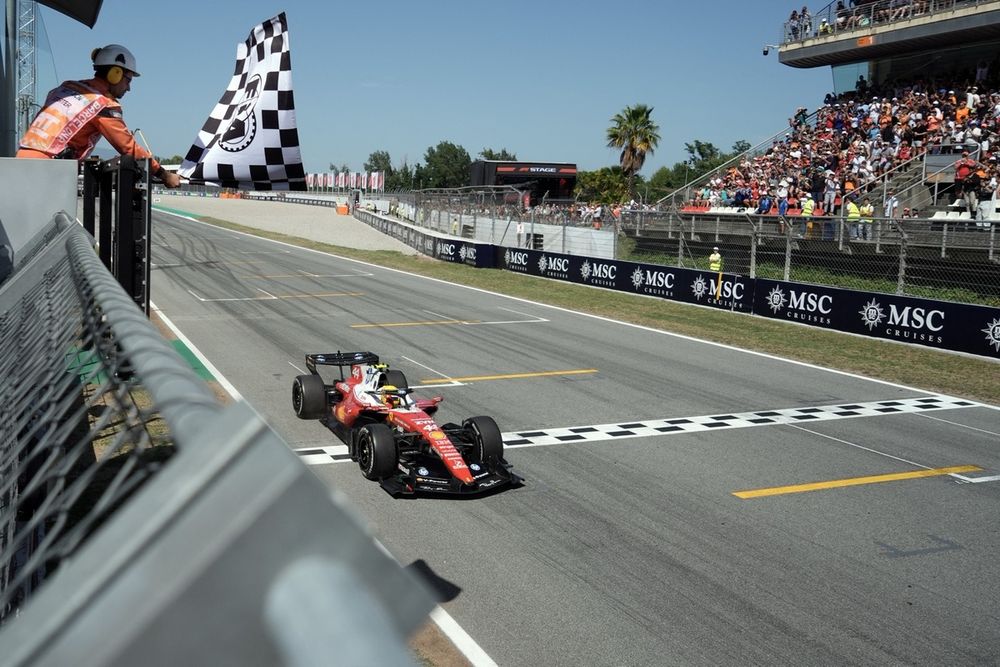
The outlook for Scuderia Ferrari in Spain looked bleak starting from the opening practice session. Lewis Hamilton sat out FP1 to allow rookie Dino Beganovic to take the wheel for a mandatory young driver session. Meanwhile, Charles Leclerc could only manage the third-quickest time, trailing George Russell’s leading Mercedes by half a second—an alarming gap considering Ferrari had introduced a fresh set of aerodynamic updates for the event.
In the second practice session, Hamilton struggled significantly, finishing more than a second adrift of the top spot while voicing heavy frustration over extreme tire wear. The intricate nature of managing the 2026 power units means that losing track time is far more costly now than in the past, even for a seasoned champion like Hamilton at a circuit he knows intimately.
It was only after a self-proclaimed “reset” ahead of qualifying—which involved stepping away from the paddock environment completely—that Hamilton unlocked his true pace. He narrowly missed out on the top spot by a fraction of a second, having pushed slightly too hard at the opening corner. Hamilton’s legendary ability to manage brake pressure perfectly matched the characteristics of the SF-26, which excelled in the medium-speed bends that define the Spanish venue.
For the grand prix, Ferrari threw a tactical curveball at Mercedes by opting to start Hamilton on a pre-worn set of soft Pirelli tires. While this aggressive choice failed to yield the early lead or track advantage they hoped for, Hamilton executed a complex three-stop game plan with absolute precision.
Mercedes’ initial strategy fell apart when they reacted to Hamilton’s early pit stop by bringing Russell in to prevent an undercut. This forced them away from their planned two-stop approach. As the race progressed, Russell and his teammate Antonelli became embroiled in an internal duel, with the Mercedes team focusing primarily on Lando Norris’s McLaren. Hamilton seized this opportunity, driving flawless middle stints to put himself in prime contention for the win.
A well-timed Virtual Safety Car period offered Hamilton a low-cost pit stop for his concluding stint on hard tires. Because the Mercedes drivers had already stopped, Hamilton was in the lead and managed to emerge from the pit lane without losing his position. Under standard racing conditions, he likely would have rejoined in fourth behind Russell, Antonelli, and Norris, though his fresher compound and superior pace would have still made him a formidable threat for the victory.
Hamilton’s historic maiden Grand Prix win with Ferrari—following his Sprint race triumph in China the previous season—marked another milestone in his illustrious career. He became the oldest race winner since Jack Brabham’s famous victory in 1970, a benchmark he could easily reset before hanging up his helmet.
– Stuart Codling
Kimi Antonelli’s Streets of Monaco Triumph
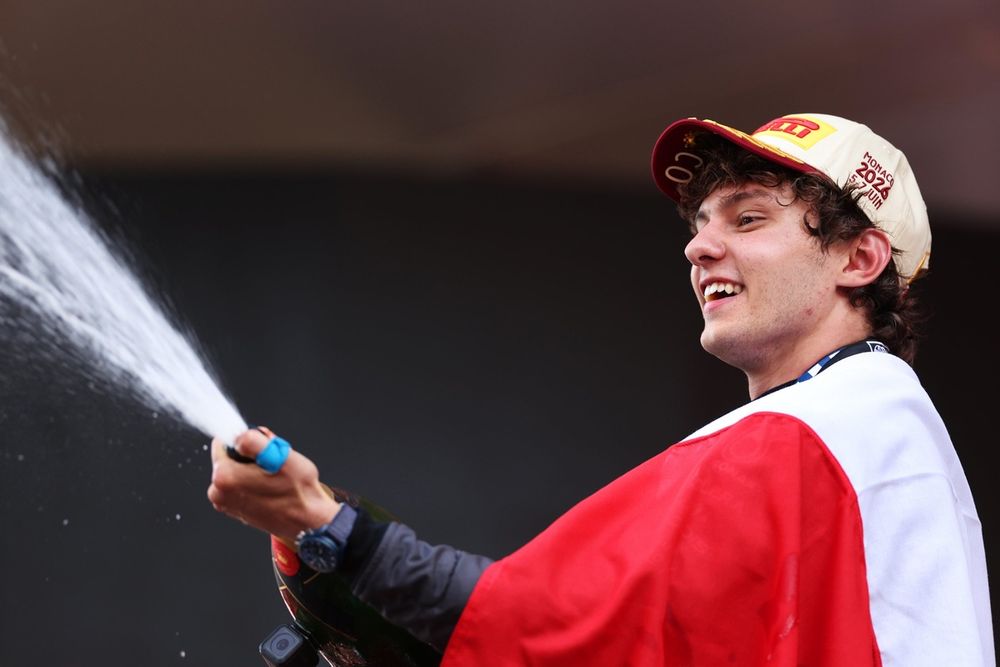
Any lingering skepticism regarding Antonelli’s capacity to handle intense pressure or his status as a title contender was thoroughly dispelled by his brilliant performance in Monte Carlo this June.
The weekend began with an intense qualifying session. Mercedes had seemed off the pace during practice on a tight street track that rewards chassis agility and downforce over raw engine performance—or, under the 2026 rules, sophisticated energy recovery systems. Hometown favorite Charles Leclerc, a proven master of Monaco qualifying, set the benchmark in Q1 with his well-suited Ferrari, while reigning champion Max Verstappen went fastest in Q2 for Red Bull.
However, Antonelli produced a sensational lap in Q3 to snatch pole position from Verstappen, outqualifying his teammate and championship rival Russell by five grid positions and a margin of almost four-tenths.
When the lights went out, the young Italian delivered a flawless drive, looking completely untroubled by the occasion as he confidently guided his W17 through the tight barriers. Although Verstappen’s race ended immediately due to a mechanical failure at the start, Antonelli still faced the daunting task of keeping a relentless Hamilton behind him.
Overcoming his previous struggles with race starts, Antonelli executed a perfect launch to retain the lead and proceeded to check out from the rest of the pack. He had built an enormous 30-second gap and even lapped Russell—who was struggling in traffic and hampered by penalties—when a crash by Lance Stroll triggered a safety car, followed by a red flag when Leclerc also crashed out.
This neutralization wiped out Antonelli’s massive advantage, forcing him to face a second standing start. Losing the race under these circumstances would have been incredibly harsh, but the rookie remained unfazed. He nailed the restart, rapidly pulled away once more, and put an exclamation mark on his performance by setting a blistering fastest lap on lap 76, a full 1.2 seconds quicker than any other driver’s best effort. A truly exceptional drive.
It might be a while before Antonelli takes a better win in F1. Then again, it might not…
– Kevin Turner
Max Verstappen’s Grit at the Red Bull Ring
Seeing a driver of Verstappen’s caliber down in sixth place in the driver ratings feels unusual, but that is the harsh reality of his 2026 season with the temperamental RB22. Red Bull’s challenger began the season overweight, and as the year progressed, it revealed further complications, including a highly sensitive setup window.
These struggles have dropped the team to fourth in the constructors’ championship, yet Verstappen’s talent remains undeniable. On the rare weekends when the RB22 operates within its sweet spot, the reigning champion is always ready to extract maximum performance.
He claimed his first podium of the year in Montreal, followed by recent top-three results at Spa and Budapest. However, his performance at the Red Bull Ring in Spielberg—marking his second rostrum appearance of the season—stood out as his finest hour, as he came agonizingly close to securing a historic sixth win at his team’s home track.
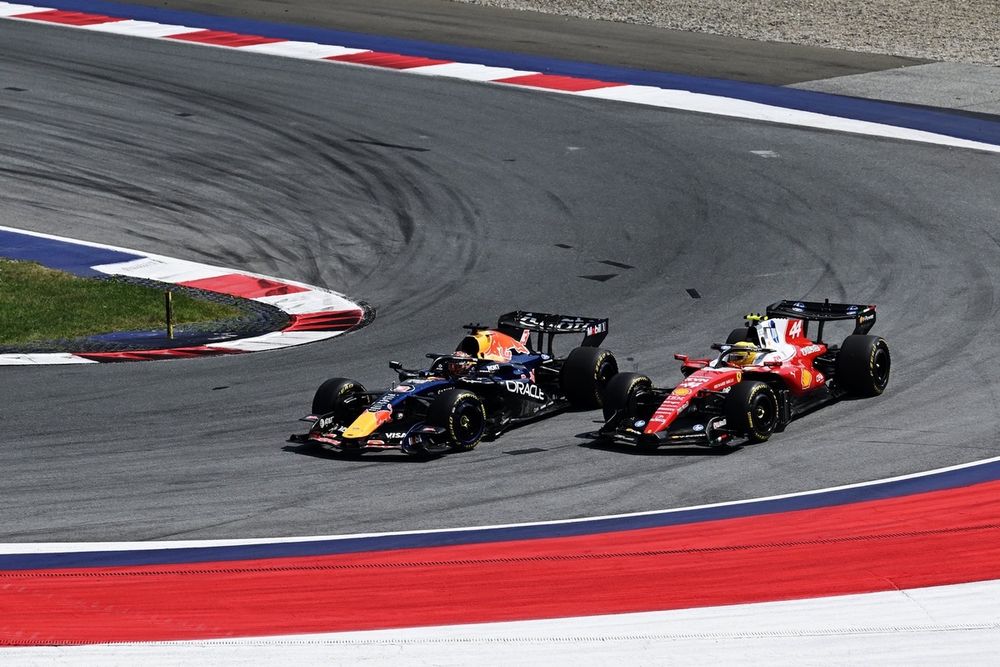
His weekend got off to a difficult start when a rear-wing malfunction caused a late crash in Q3, dropping him from third to fifth on the grid. Undeterred, Verstappen launched an immediate fightback, pulling off a brilliant double pass on both Antonelli and Leclerc on the second lap.
He then locked sights on his former rival Hamilton. After two intense, closely fought wheel-to-wheel encounters, Verstappen secured second place on lap 22 and began hunting down the leading car of Russell. However, just as he closed the deficit to two seconds, Mercedes pulled Russell in for a pit stop, while Red Bull miscalculated by leaving Verstappen out on track for an additional five laps.
This tactical error saw the Dutch driver emerge from the pits ten seconds behind, forcing him to mount another recovery charge. Showing relentless determination, Verstappen chipped away at Russell’s lead, reducing the gap to a mere 1.6 seconds by the checkered flag, leaving his team pondering a missed opportunity.
Had it not been for that strategic misstep, Verstappen looked highly likely to claim the win. It was a masterclass in resilience that highlighted his championship caliber.
– Ed Hardy
Oscar Piastri’s Suzuka Masterclass
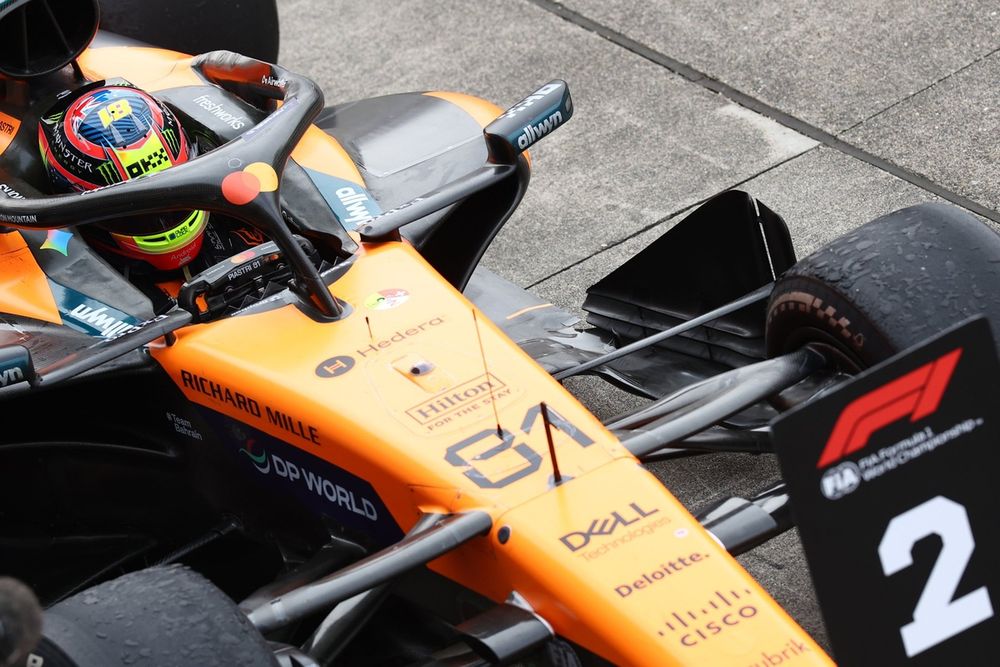
Take a moment to recall the last time Oscar Piastri stood on the top step of a Formula 1 podium. It might require some memory searching—indeed, it was at Zandvoort nearly a year ago.
That race on August 31, 2025, represented the peak of Piastri’s form, showcasing the talent of a future title winner. With teammate Norris sidelined by an oil leak, the Australian driver widened his championship lead to a seemingly commanding 34 points. Piastri was comfortably the class of the McLaren garage that weekend, holding a clear advantage over Norris in both raw pace and the championship standings.
Following that peak, the Australian struggled to replicate that same dominant Sunday form, with one notable exception during a spectacular weekend in Japan in late March.
Following a painful pre-race crash in Australia and failing to start the Chinese Grand Prix, Piastri appeared to be stuck in a spiral of bad luck after missing out on the previous year’s crown. However, Suzuka witnessed a resurgence that recalled his brilliant early 2025 performances.
He held a consistent quarter-second advantage over Norris throughout every qualifying session—a rare feat since his Zandvoort triumph. On Sunday, he delivered a brilliant launch off the grid, taking advantage of a sluggish start from the Mercedes drivers to snatch the lead from third place. Despite a brief, tense exchange with Russell on the eighth lap, the Australian managed to protect his position against a Mercedes car that was arguably the fastest package on track.
By lap 15, he calmly radioed his team to say, “If we maintain this track position, I believe we can secure the win,” delivering the message with the cool composure of an experienced pilot.
He maintained a steady gap over Russell through the first round of stops, but his hopes of victory were dashed when a heavy crash by Oliver Bearman triggered a safety car. This allowed Antonelli to complete a low-loss pit stop and jump ahead of both leaders.
Although he lacked the pace to challenge the Mercedes on the restart, Piastri drove a lonely but secure race to second, staying well clear of the frantic battle for third between Russell and the Ferraris, while Norris finished well down the order.
– Oleg Karpov
George Russell’s Melbourne Statement
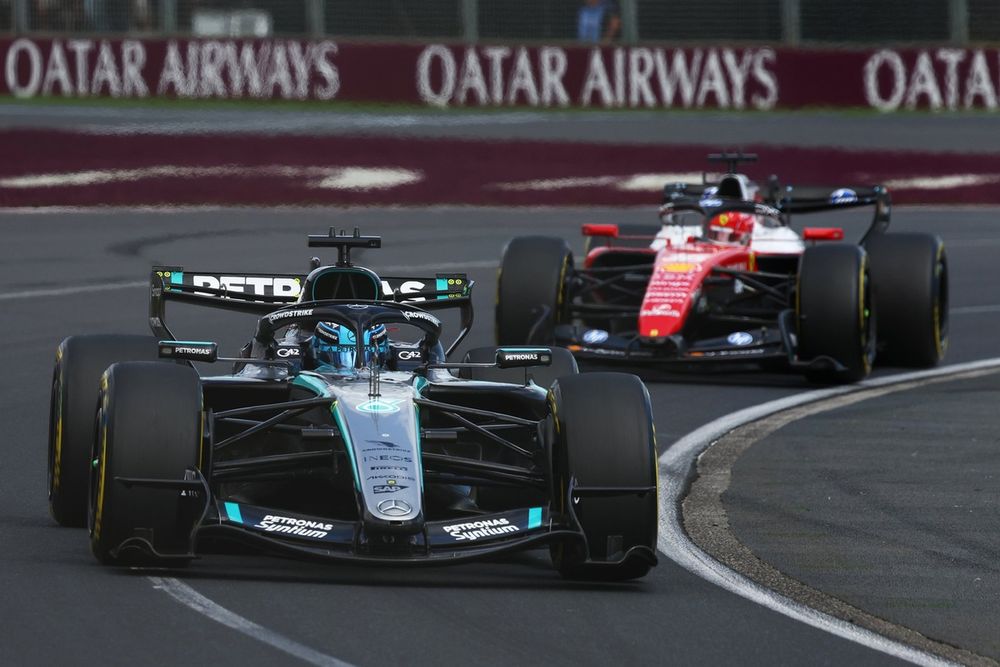
The current campaign has proved challenging for Russell, who currently finds himself third in the drivers’ championship, trailing his teammate Antonelli by 59 points. However, much like Piastri’s peak moments, Russell showed absolute champion-level form during the 2026 season opener in Australia.
Entering the year as many pundits’ championship favorite, he vindicated those predictions by claiming a brilliant pole position to lead a Mercedes front-row lockout, beating Antonelli by three-tenths and leaving third-place Isack Hadjar in the Red Bull some eight-tenths behind.
This was the peak version of Russell, looking every bit the established winner ready to mount a serious title campaign. Reflecting on his performance, he noted: “An excellent Saturday. We were confident in the car’s underlying pace, but you never truly know until the first qualifying of the year. The balance was absolutely perfect this afternoon.”
On Sunday, he faced a tougher challenge. A sluggish getaway—a recurring issue for Mercedes early in the season—allowed Charles Leclerc’s Ferrari to snatch the lead on the opening lap, setting up an intense battle between the two during the first stint.
After a series of close on-track exchanges, Ferrari’s strategy to extend Leclerc’s opening stint by 13 laps longer than Russell’s completely unraveled, leaving the Monegasque 16 seconds adrift after his stop. With his rival out of the picture, Russell managed his pace comfortably to lead home a Mercedes 1-2 by a three-second margin.
“Fantastic job, everyone,” Russell cheered over the radio. “The car and the power unit feel incredible—thank you!”
It was one of the most composed victories of his career; despite losing the lead in the opening stages, Russell always looked like the driver destined to stand on the top step of the podium.
– Ed Hardy
Pierre Gasly’s Standout Run in Japan
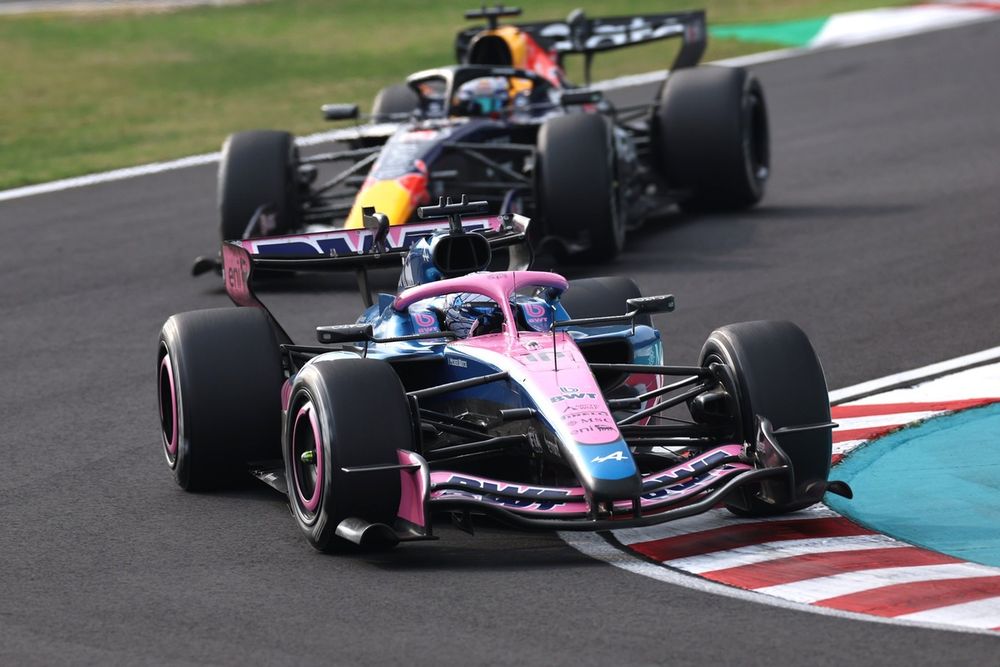
Pierre Gasly’s performance at Suzuka stands out as perhaps the most impressive drive from a midfield competitor so far this year.
The French driver excelled in qualifying, securing seventh on the grid by comfortably outpacing both Red Bull cars by a significant margin.
At the start, Gasly defended his position against countryman Hadjar. While the leading cars were out of reach, he managed to pull three seconds clear of Verstappen and established a commanding 14-second advantage over his closest midfield rival, Esteban Ocon, before the first round of stops.
A safety car period caused by Bearman’s heavy accident erased his lead and put him directly ahead of a charging Verstappen. Despite relentless pressure from the Dutchman over the final 26 laps, Gasly held firm.
“Max is always relentless,” Gasly explained after the race. “Our cars had different strengths around the lap, which made defending very tricky. I had to manage my energy deployment strategically whenever he closed in.”
By the finish line, Liam Lawson in ninth was left 18 seconds behind Gasly—a massive deficit built entirely in the closing stages of the race, representing an average pace advantage of seven-tenths of a second per lap.
“It was an flawless weekend for us,” Gasly concluded. His assessment is hard to dispute.
– Ben Vinel