During the recent Formula 1 winter testing sessions in Bahrain, beyond the ongoing discussions about engine compression ratios, a primary focus has been on how teams manage energy during races. A significant obstacle for competitors is maintaining consistent power deployment over extended periods.
Sergio Perez indicated that his performance still showed fluctuations of up to eight-tenths of a second between laps. The Mexican driver clarified that a key objective for Cadillac before the next week of testing is to comprehend these variations and stabilize energy output.
Moreover, managing energy over a single lap also presents difficulties, as drivers must strategically handle both power usage and recovery. George Russell previously explained that the quickest path through a corner might not necessarily yield the best overall lap time.
The Mercedes driver highlighted that there are situations where increasing cornering speed leads to higher energy expenditure and less energy regeneration. Consequently, over the full lap, there is less energy remaining to utilize. He suggested that while a few tenths might be gained in corners, a couple of tenths could be lost on the straights as a result.
Conflicting Demands for Tires and Battery Power
Drivers are tasked with optimizing this balance during a rapid lap, but Pirelli suggests additional factors are involved. The Italian tire supplier discovered from initial trials that preparing for a qualifying lap is more complicated under the 2026 regulations.
Achieving peak performance relies on bringing the tires to their optimal operational temperature, but this can conflict with teams’ desired energy deployment strategies for qualifying.
Pirelli motorsport head Mario Isola stated that to ready the tires for a hot lap in qualifying or a simulation, drivers must complete the out-lap at a specific pace. On tracks with low severity, cool conditions, or smooth asphalt, a greater effort is required to generate heat in the front tires.
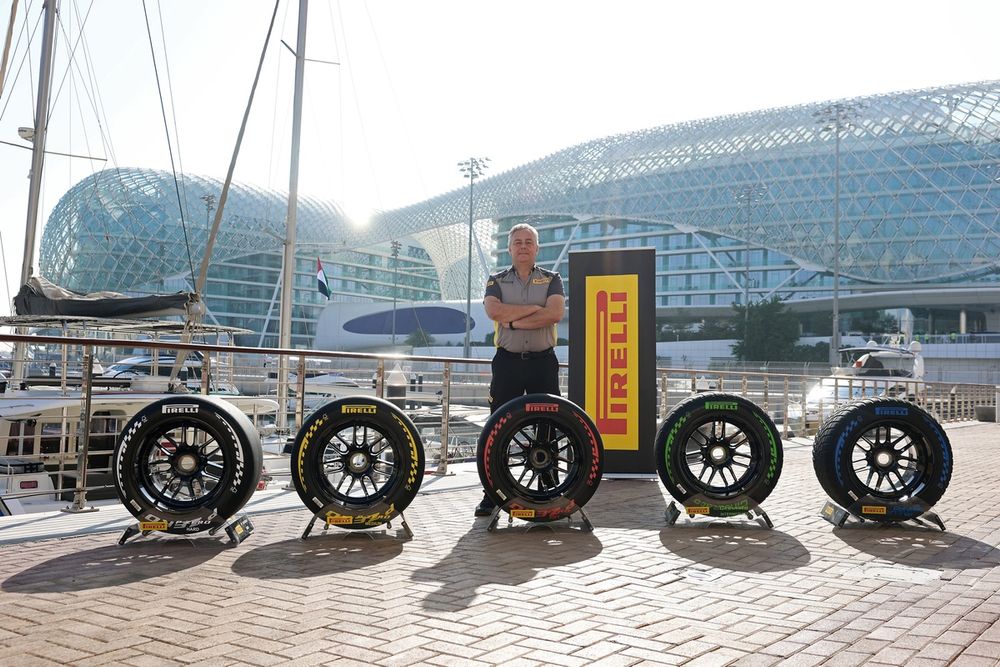
Mario Isola, Pirelli F1 Director with Pirelli 2026 F1 tyres
Photo by: Pirelli
However, Isola explained that with the forthcoming cars, teams aim to conserve electrical power for the hot lap. This presented a challenge for them to determine the optimal effort needed to warm the front tires while ensuring full power availability.
Practically speaking, this situation can lead to drivers completing two preparation laps. While this was sometimes necessary last year, it was solely for tire temperature. This season, the requirement is to strike a balance between two elements that can often be at odds.
Isola further commented that during testing, some teams completed an out-lap followed by an additional preparation lap, after which their tires were ready for the push lap.
He suggested that if such a strategy is observed during qualifying in some races this year, it likely indicates teams are attempting to find the right compromise between warming up the front tires and utilizing their available energy.
Isola conceded that this discovery was somewhat unanticipated for Pirelli by the conclusion of the first Bahrain test week. He mentioned that while it wasn’t completely unplanned, operating with actual cars reveals much more than with mule cars.
Nevertheless, he noted that the situation is more complex for the teams than for the tire manufacturer. According to Isola, these insights remain consistent with Pirelli’s established development path for the 2026 vehicles.
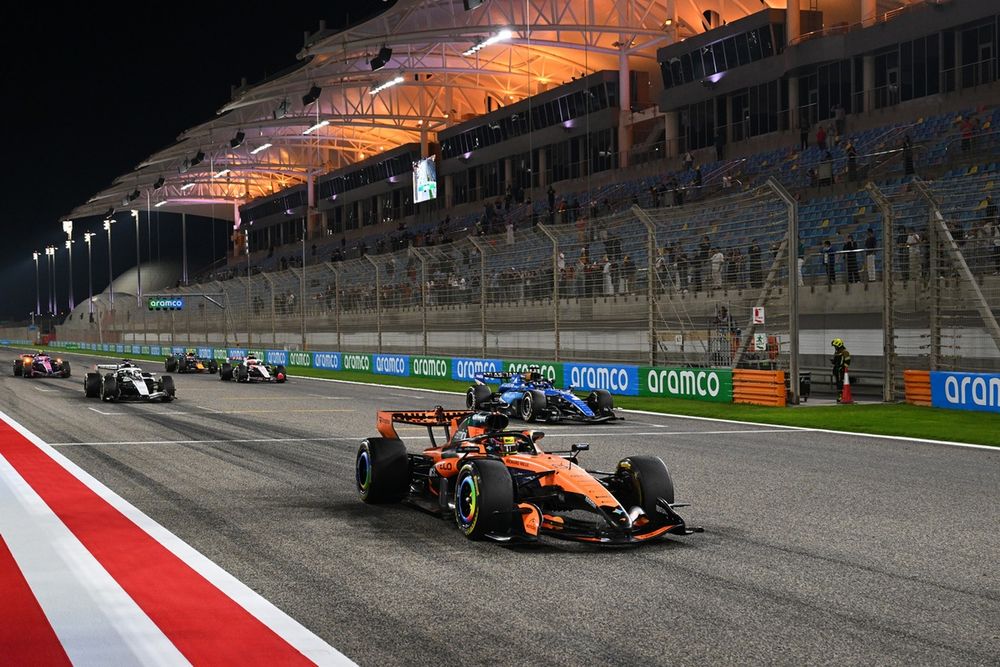
Oscar Piastri, McLaren, Alexander Albon, Williams
Photo by: Mark Sutton / Formula 1 via Getty Images
Isola mentioned that they sought tire compounds with a broader operational temperature window to mitigate overheating.
This expanded operating range is crucial because it can simplify operations for teams, especially when needing to balance it with preparing for optimal energy management.
However, this will largely depend on the specific circuit. Isola observed more instances of double preparation laps during the Barcelona shakedown compared to Bahrain. Bahrain’s notably abrasive tarmac makes it demanding on tires, facilitating tire temperature generation without excessive battery drain, unlike many other locations.
On circuits such as Las Vegas – where the track surface, layout, and cold conditions all contribute – the challenge intensifies. While theoretically, the battery can be replenished relatively quickly over a few corners, this demands an aggressive approach that risks lowering tire temperatures. To circumvent these undesirable outcomes, a more gradual warm-up over two laps might become a more frequent strategy.
Isola expressed his belief that drivers will begin with maximum power, then strive to maintain that full power while progressively bringing the tires into their ideal operating range.
Which F1 Circuits Will Pose the Greatest Difficulty?
Haas team principal Ayao Komatsu emphasized this predicament and highlighted several tracks where the necessary tire and battery preparation could conflict.
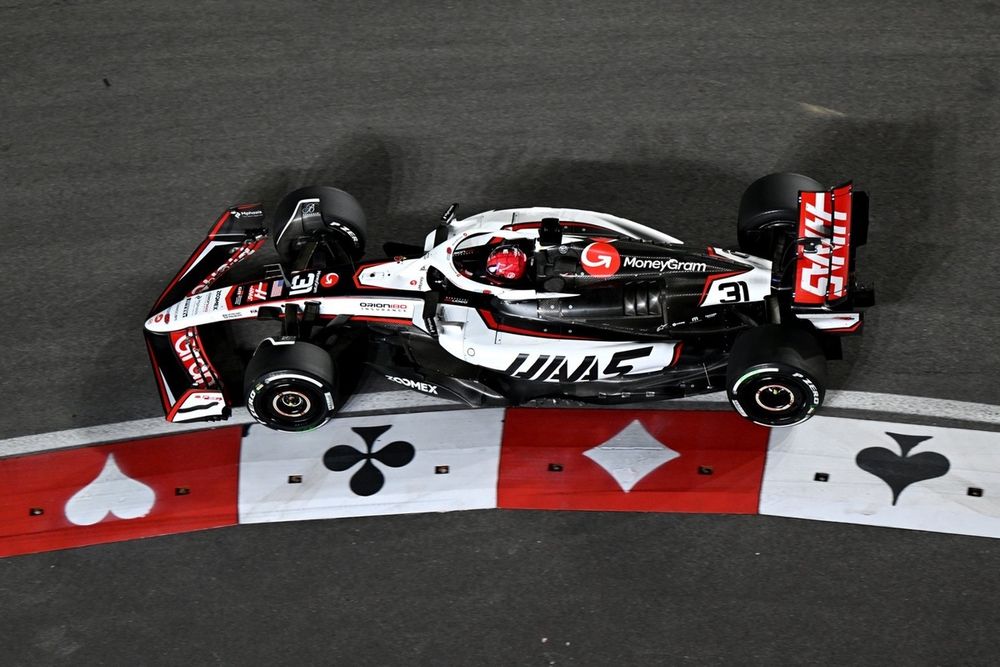
Esteban Ocon, Haas F1 Team
Photo by: Sam Bagnall / Sutton Images via Getty Images
Komatsu stated that while it is far off, tracks like Baku or Vegas immediately come to mind. He explained that on these circuits, getting the tires to perform optimally is very difficult, as is the out-lap. The demands of thoroughly preparing the battery and readying the tires are somewhat contradictory, he noted.
He suggested that this presents a multi-faceted optimization problem, requiring teams to find the right compromise, which he believes will be challenging.
Teams will require all available practice time each weekend to fine-tune their optimal strategy. Komatsu indicated that sprint weekends will become significantly more difficult due to the reduced opportunities for practice.
He added that this will be a massive undertaking. Komatsu expressed his apprehension for Shanghai, noting that preparing for sprint qualifying with only one hour of practice will be exceptionally challenging.
He concluded by saying that it’s an equal challenge for all participants, emphasizing a step-by-step approach. Komatsu believes they have made decent preparations and learned lessons so far, but now they must consolidate everything, refine procedures, and enhance accuracy in all aspects to get ready for a standard race weekend.
He mentioned they would complete one normal race weekend in Melbourne, hopefully under dry conditions, before heading to Shanghai for a sprint weekend. This represents a steep learning curve, but it applies to everyone, he affirmed.