Kimi Antonelli acknowledged his weakness, stating, “My poor starts will earn me a reprimand; I’ve earned it.” This was his reflection on a critical aspect needing refinement despite a phenomenal beginning to 2026, a period where, largely due to the cancellation of the Bahrain and Saudi Arabia Grand Prix events, he maintained the lead in the Formula 1 world drivers’ standings throughout April. Antonelli understands his responsibilities, regardless of any potential admonishment from team principal Toto Wolff. His conviction stems from three distinct instances that highlighted the necessity of improving his race starts under the current F1 regulations and vehicle specifications.
Achieving two victories in just three competitions nearly represented the most favorable outcome he could have envisioned for the year’s commencement, far surpassing initial forecasts. Antonelli’s potential for securing a top-three finish was evident during pre-season trials, as the Mercedes W17 demonstrated its capabilities. Nevertheless, the notion of the 19-year-old surpassing a highly formidable and seasoned competitor like George Russell, driving an identical machine, appeared to be an ambitious prospect, especially at the outset of the championship.
However, this improbable scenario materialized. Its occurrence can be attributed to fortunate circumstances, alongside an exceptional speed – particularly noticeable in Japan – which had been unrivaled since the simulated race runs during Friday’s practice sessions. In Japan, Antonelli was unequivocally the quickest driver on track. The unintended benefit derived from a strategically timed safety car deployment merely widened an opportunity that was already accessible.
While admiring the accolades displayed in his collection is gratifying, Antonelli is also committed to identifying areas for enhancement, understanding that minute aspects often determine overall success. The young driver from Bologna recognizes the imperative to rectify an issue that, on closer examination, is far from insignificant.
Across three of the four events (counting the sprint race in China), Antonelli committed several procedural missteps. A detailed review reveals these errors impacted him less severely than anticipated, largely due to his inherent speed and the favorable conditions that consistently benefited him.
During the Australian Grand Prix, Antonelli reached the starting grid having finished the formation lap with a depleted battery. This deficiency meant he could not perform the requisite tire burnouts to properly heat his rear tires, nor did he possess the necessary energy for the initial racing lap.
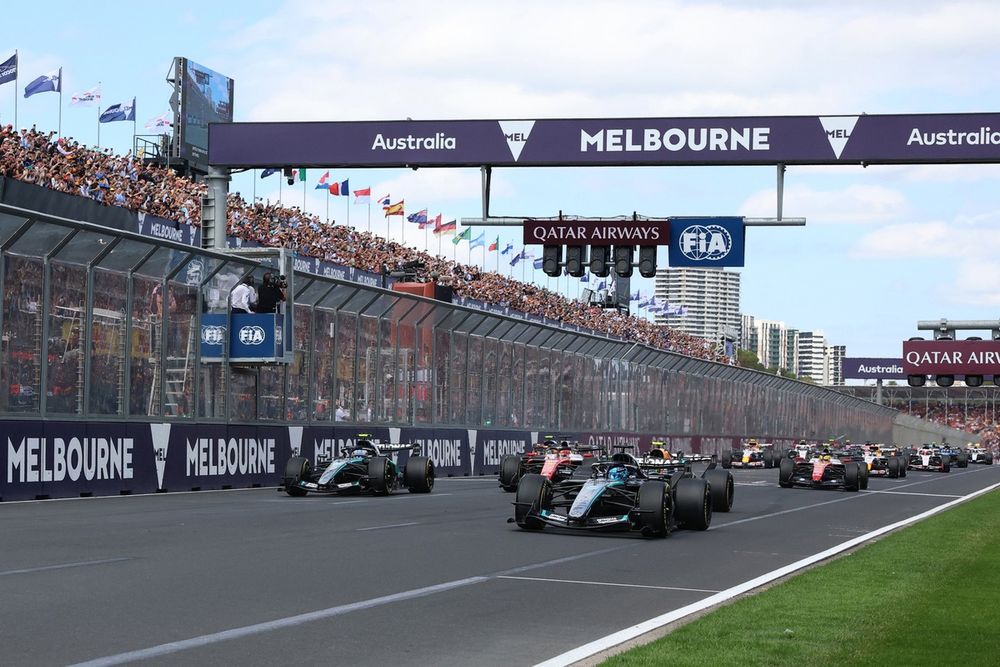
George Russell, Mercedes, Andrea Kimi Antonelli, Mercedes
Photo by: Steven Tee / LAT Images via Getty Images
“The beginning of the race significantly altered the outcome,” Antonelli stated following the event in Australia. “It was undeniably a high-pressure situation because I lacked power exiting the final corner, rendering the car unresponsive to my commands, which was extremely taxing. Consequently, my start was exceptionally weak, causing me to relinquish numerous positions and forcing me into a recovery drive.”
At that specific event, Ferrari’s capability during race starts became evident, representing its sole genuine edge over Mercedes’ engine systems. However, teams like McLaren – and Mercedes, notably through Russell – had, in fact, discovered methods to diminish Ferrari’s advantage during the opening phases of races.
Russell’s performance has demonstrated the Brixworth-manufactured power unit’s capacity for delivering robust race commencements. This observation has led Antonelli to identify his starting technique, rather than the W17 vehicle itself, as the primary area requiring his attention and refinement.
Conversely, in China, the sprint event presented the greatest challenges. During the lap preceding the start, a miscommunication between Antonelli and his race engineer, Peter Bonnington, resulted in the incorrect selection of the start mapping. This error proved detrimental to Antonelli, later culminating in an incident with Hadjar and a resultant 10-second penalty, which was served during his pitstop under the safety car period initiated after Nico Hulkenberg’s withdrawal on the thirteenth lap.
Nonetheless, the issues encountered in Japan were not linked to the formation lap protocols or engine settings. Instead, they stemmed from the way the clutch paddle was engaged and disengaged. Antonelli felt his actions were overly abrupt, and combined with rear tire temperatures falling outside the optimal range, the car’s rear wheels lost traction, nullifying the pole position he had claimed on Saturday.
“I must confess that my Sunday triumph in Japan didn’t bring me the full satisfaction I desired, as I was vexed by my initial launch,” Antonelli conceded. “Naturally, I recognized that despite the poor start, I had experienced considerable good fortune. I was pleased with my ability to capitalize on the given chance and also with my consistent race speed.
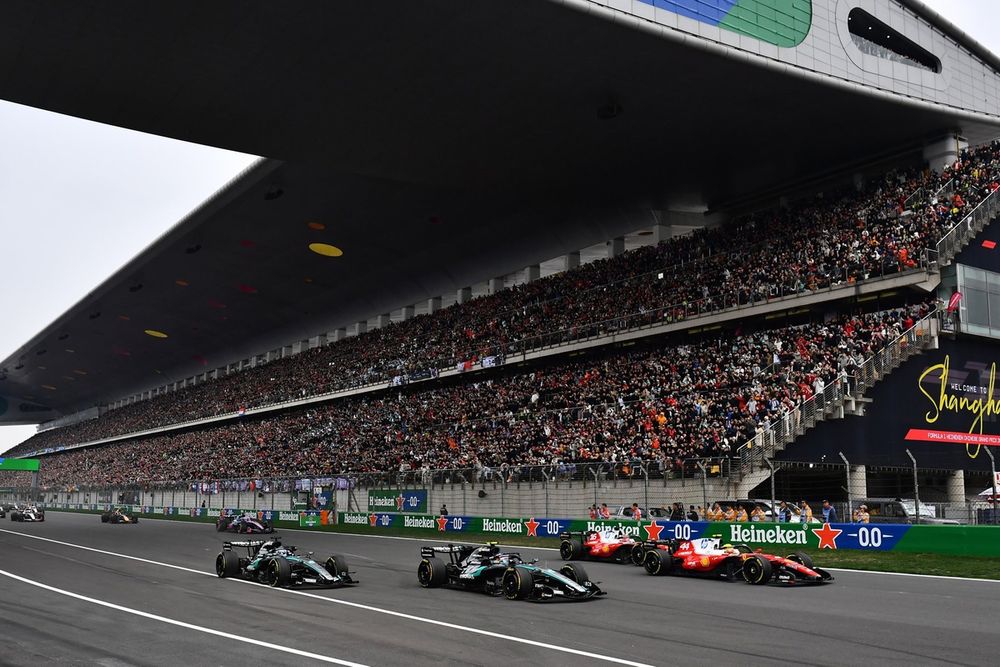
Charles Leclerc, Ferrari, Lewis Hamilton, Ferrari, George Russell, Mercedes, Andrea Kimi Antonelli, Mercedes
Photo by: James Sutton / Formula 1 / Formula Motorsport Ltd via Getty Images
“Nevertheless, I was profoundly frustrated by the start – it was genuinely appalling, the sort of performance that makes you want to tear your hair out. I am, however, already actively addressing this.”
Antonelli has clearly communicated his objective, channeling the vexation from his suboptimal starts into motivation for ongoing development. His aim is to progressively evolve into a comprehensive F1 driver, fulfilling Mercedes’ aspirations for him: a competitor proficient enough to secure the Formula 1 championship.
Antonelli has grasped the critical lessons from the initial events and intends to utilize the unexpected hiatus to meticulously refine elements that malfunctioned between the Australian and Japanese Grands Prix. This commitment led him to arrange for his steering wheel and its configurations to be sent to his residence, where he is diligently endeavoring to devise a dependable method. This system aims to avert future instances of reaching the starting line with insufficient power or erroneously engaging the clutch paddles, which results in the rear wheels losing grip.
The Formula 1 season’s month-long interruption this April presents a dual perspective for the Bolognese racer: it could be seen as an irritation, disrupting a truly exceptional phase, yet it also represents a significant chance. Antonelli is embarking on an evolutionary path to enhance his driving capabilities, a crucial stage he must navigate with the aspiration of becoming a primary contender for the F1 championship, not merely in years to come, but in the current season as well.
While considerable time remains for his further development, certain chances appear only momentarily. At the commencement of this year, Mercedes has assembled an outstanding vehicle and powertrain combination. Antonelli races alongside one of F1’s most formidable contemporary drivers, Russell; however, the responsibility to spearhead the championship challenge falls primarily on the seasoned Briton. Therefore, Antonelli’s vexation over his error in Japan is justified, as elite champions scrutinize every minute aspect. More accurately, it concerns a choice executed in mere milliseconds that can determine the attainment or loss of the sport’s ultimate reward.