Given that the squad from Milton Keynes exhibited positive results at the high-downforce track for the Singapore Grand Prix in Formula 1, it’s evident that their advancements in recent times extend beyond a single circuit configuration.
The upcoming Circuit of the Americas will present its own unique challenges, particularly in the medium-speed cornering sections – the specific areas where, as team principal Laurent Mekies mentioned at Zandvoort, the team was surpassed by McLaren’s performance.
While absolute triumph across all tracks isn’t guaranteed, Red Bull has undoubtedly identified beneficial adjustments following the summer break. Since then, Verstappen has amassed a greater point total than any other competitor, achieving consistent results including two second-place finishes and two first-place finishes.
The fundamental question lies in the nature of this ‘something’. As Andrea Stella has observed, Red Bull has continued to refine its car to a greater extent compared to McLaren. Mekies’ team implemented a revised floor design at Monza, along with a new front wing at Singapore – a component that chief engineer Paul Monaghan suggests might be the last substantial enhancement for the ongoing season. Conversely, McLaren has redirected its entire resources towards the 2026 car design at an early stage, even though the strategies adopted by both teams are logical.
McLaren’s advantage was pronounced enough that they could reallocate resources to the next iteration of cars early on. Red Bull, however, experienced a divergent predicament. For an extended duration, the team faced disparities between simulation data and real-world track performance. This issue needed resolution before fully engaging in the 2026 project to avoid potential missteps.
The optimal strategy to validate these simulations involved the current car, which rationalized Red Bull’s continued development of the RB21.
A revised methodology at Red Bull – and Mekies’ impact upon it
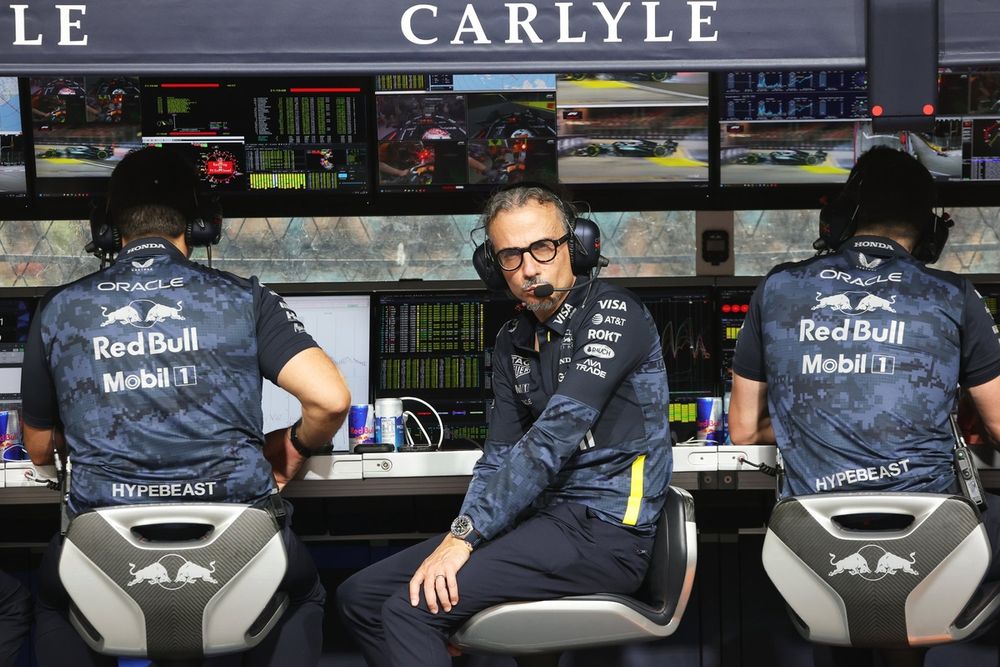
Laurent Mekies, Red Bull Racing Team Principal
Photo by: Sam Bloxham / LAT Images via Getty Images
The recent enhancements have yielded anticipated results, a positive sign indicating improved on-track performance and, crucially, enhanced alignment between Red Bull’s simulations and real-world outcomes.
“Validating our data evaluation methods and car development processes with this year’s car is of utmost importance,” Mekies emphasized. “It will instill greater confidence as we develop next year’s car during the winter.”
Regarding the current car, Verstappen acknowledged that while the floor enhancements were beneficial, they didn’t completely account for Red Bull’s renewed performance. When prompted about the key determinant, the reigning champion responded: “A shift in philosophy.”
Details were scarce, but Verstappen hinted at two crucial aspects. The team now commences Fridays with a more reliable baseline configuration, necessitating minor adjustments rather than extensive overhauls after the preliminary practice rounds. Moreover, Red Bull has refined its ability to identify the optimal operational range for the RB21, regardless of its narrowness. Helmut Marko noted that the updated floor broadened this operational range somewhat, underscoring the importance of operational improvements.
While team members have refrained from divulging specifics, Marko stated: “Our engineers possess extensive experience, and Max has accumulated considerable driving experience. We are increasingly dependent on their expertise, moving beyond a strict adherence to numerical data.”
This principle is applied during the preparations and execution of a race weekend. A tangible illustration of this was observed in Monza, where several senior members, including technical director Pierre Wache, advocated for increased downforce. However, Verstappen’s judgment ultimately took precedence.
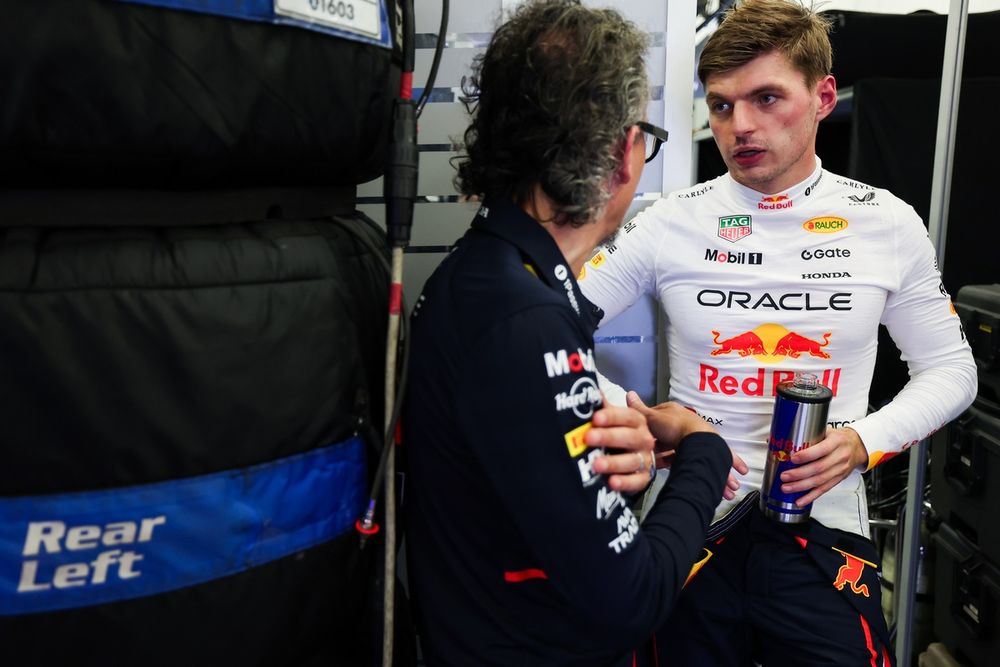
Max Verstappen, Red Bull Racing, Laurent Mekies, Alpine
Photo by: Mark Thompson – Getty Images
Mekies’ contribution should be recognized. Before each Grand Prix, he allocates approximately 20 minutes to discussing strategies and technical matters with Verstappen, a clear advantage stemming from having a team principal with significant engineering expertise. Nevertheless, Mekies maintains notable humility during public statements.
“My input remains minimal,” he affirmed, echoing his sentiments from Monza. “The enhancements in performance are primarily attributable to the collective efforts of the team, complemented by significant input from Max.”
Red Bull’s management appreciates this modesty, yet when Marko was presented with Mekies’ statement by Autosport, he responded with amusement, saying, “Zero contribution? That is simply not true!”
According to Marko, Mekies fulfills a critical function by facilitating communication with Verstappen and fostering collaboration among the engineering staff, including Wache and Monaghan. Verstappen himself complimented Mekies’ skill in “formulating pertinent questions,” enabling him to effectively challenge the technical team’s findings from a leadership position.
Did the RB21 demonstrate these capabilities earlier in the year?
This leads to the query: Was Verstappen accurate in his assessment that the RB21 possessed this potential all along? While a hypothetical, exploring Verstappen’s earlier triumphs this season provides some insight.
His victory at the Japanese Grand Prix was largely due to a strong qualifying performance and the inherent challenges of overtaking at Suzuka. However, the win at Imola was more indicative of the car’s potential. Verstappen executed an impressive pass on Oscar Piastri in the opening corners, and more significantly, he matched McLaren’s race pace and extended his stint on medium tires longer than Piastri.
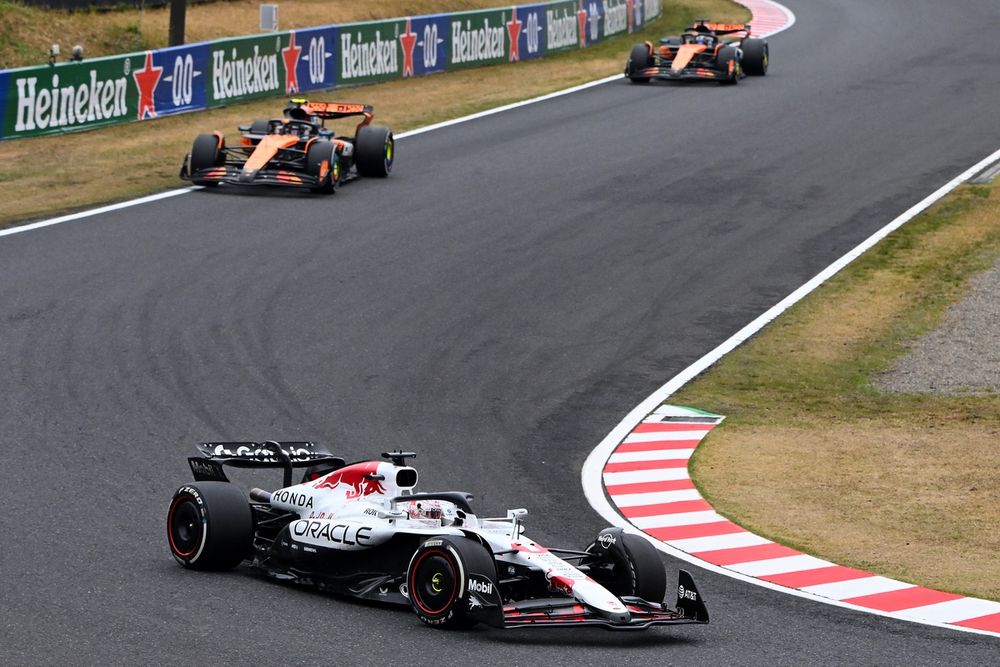
Lando Norris, McLaren, Oscar Piastri, McLaren, Max Verstappen, Red Bull Racing
Photo by: Clive Mason/Getty Images
Following this race, Verstappen mentioned that he didn’t fully comprehend the sudden improvements, a sentiment that aligns with his recent observations. The RB21 occasionally displayed potential, but the team struggled to consistently leverage it during the initial half of the season.
Imola was a rare occasion where Red Bull optimized its performance, and with months of accumulated insights, the team now possesses a more profound understanding of the car. This enhanced comprehension is a natural outcome of learning from past challenges and failures.
When Autosport inquired about Mekies’ agreement with Verstappen’s view that the Red Bull car had possessed this capability for some time, he provided a nuanced yet revealing response.
“Allow me to state that every member of our team in Milton Keynes has been working diligently since the very first race, consistently striving to unlock the full potential of the car,” he explained.
“It is accurate to acknowledge that the advancements made in recent weeks have been substantial, which credits the team’s unwavering dedication. Additionally, Max has been instrumental in this by encouraging us to investigate different possibilities, ultimately leading to the discovery of a strategy that unlocked enhanced performance.”
The response was thoughtfully articulated. Acknowledging the presence of numerous team members predating his arrival, Mekies adeptly avoided directly confirming that the performance was always latent within the car, while simultaneously validating Verstappen’s perspective by alluding to “new avenues.”
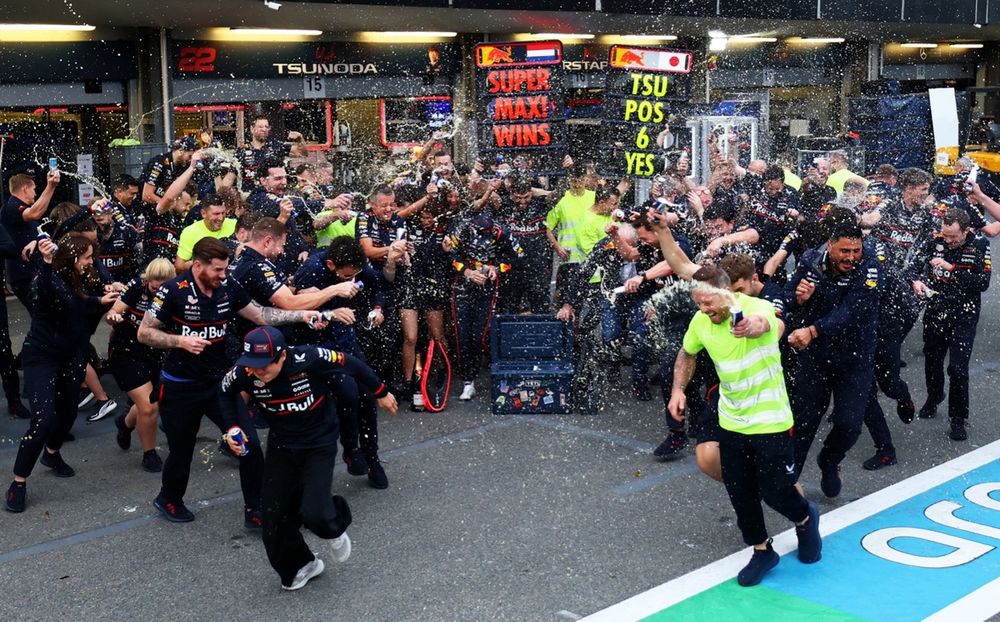
Max Verstappen, Red Bull Racing
Photo by: Mark Thompson – Getty Images
Mekies then underscored that contemplating the past is unproductive, emphasizing that the team should prioritize future objectives: “There isn’t a singular remedy. There has been a steady stream of upgrades, along with diverse methods of operating the car.
“Collectively, we now seem to possess a competitive setup on various tracks. However, it’s exceedingly difficult to retrospectively assess the impact of the upgrades from the beginning of the year. Our focus remains on the future.”
We want to hear from you!
Let us know what you would like to see from us in the future.
Take our survey
– The Autosport.com Team