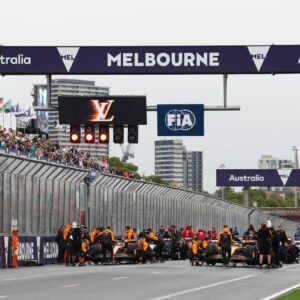
When Max Verstappen commented following the Hungarian Grand Prix that he didn’t anticipate Red Bull securing another victory in the 2025 season, circumstances unfolded quite differently. The Dutch driver triumphed in Monza, exhibiting a remarkable level of dominance. Verstappen established a substantial advantage of almost 20 seconds, prompting Lando Norris to quip during the post-race press conference: “It was 19, right? I want to ensure accuracy!”
Addressing the matter with greater gravity, Verstappen and Red Bull’s exceptional speed at Monza caught many within the racing community off guard, including McLaren. This development begs the question: to what extent was this performance specific to Monza, and how much of it fuels Verstappen’s optimism for the forthcoming races?
“A significant amount of adjustments are made specifically for Monza. Wings and setups are tailored accordingly, reflecting the challenges we faced last year. The team did an exceptional job analyzing last year’s performance and arriving with very specific solutions,” Red Bull team principal Laurent Mekies responded. “Therefore, to address your inquiry directly, our current assessment suggests that a significant portion of this performance is Monza-specific. However, we will ascertain in Baku how much of the insights gained from the new components [floor] and our car’s configuration can be applied to other tracks.”
Mekies promptly highlighted two pivotal aspects. Concerning the car’s attributes, a portion of the remarkable performance was indeed track-dependent. Red Bull not only possessed a considerably enhanced low-downforce package, in contrast to the previous year, but the RB21 generally excels on circuits like Monza. Verstappen concurs with this viewpoint: “I believe it remains somewhat track-dependent. Monza necessitates a low-downforce setup. It appears our car exhibits greater competitiveness in low-downforce to medium-downforce conditions. This doesn’t signify a sudden resurgence, nor does it imply that we can contend for victory every weekend moving forward.”
Nevertheless, it’s worth noting that Baku, with its extensive straights, could potentially suit Red Bull rather favorably. The street circuit in Azerbaijan presents a mixed bag for the team. The lengthy full-throttle segments should accentuate the RB21’s strengths, yet Verstappen has consistently emphasized that street circuits and bumps remain notable vulnerabilities. Baku encompasses both advantages and disadvantages for Red Bull – although, overall, it should still be a reasonable fit. Consequently, it’s not coincidental that Helmut Marko, even prior to the Italian GP, identified Baku as a viable opportunity for victory. The true assessment will follow in Singapore, a track that theoretically complements the RB21 to a lesser extent.
Can Red Bull apply the Monza lessons in Baku?
Mekies also alluded to how Red Bull “operated the car” in Monza. This ties into what the team has characterized as a “new philosophy” during the Italian GP weekend, which Red Bull intends to implement in Baku and beyond.
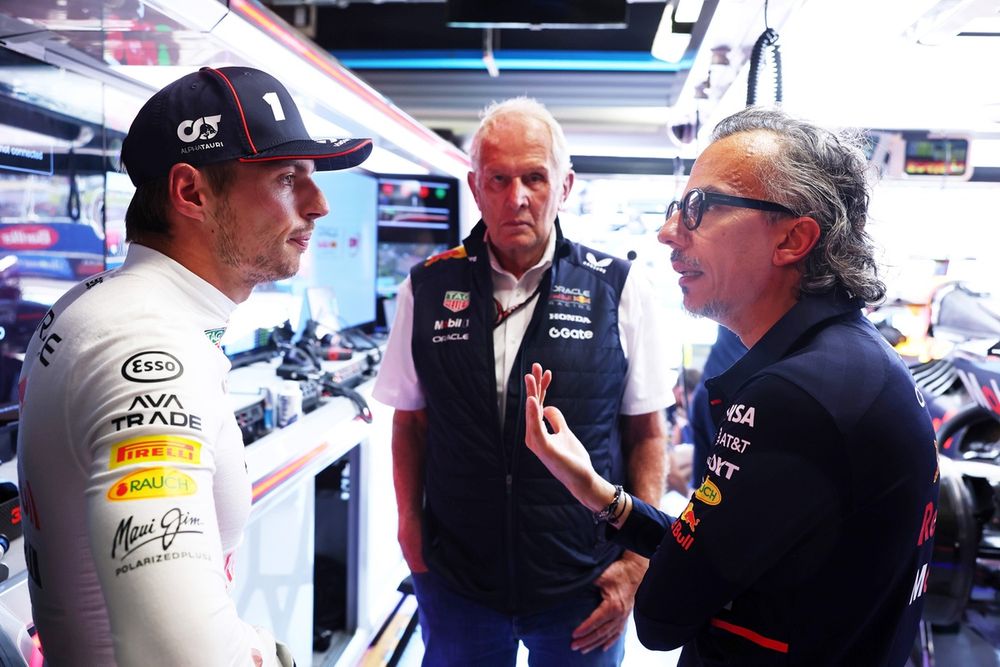
Max Verstappen, Red Bull Racing, Helmut Marko, Red Bull Racing, Laurent Mekies, Red Bull Racing Team Principal
Photo by: Mark Thompson / Getty Images
“The encouraging aspect is that we appear to have a better understanding of the adjustments required to enhance the car’s competitiveness. I anticipate that this knowledge will extend to the upcoming races, although certain tracks will be more accommodating than others,” Verstappen affirmed.
This comprehension pertains to Marko’s explanation in Monza: occasionally placing less reliance on the simulator and instead prioritizing driver feedback. “Our current strategy involves integrating Max’s expertise and the insights of our engineers, irrespective of the simulator’s projections,” the 82-year-old Austrian stated. “The entire technical team now adopts a more transparent and collaborative approach. They no longer blindly adhere to the simulator’s output.”
Pierre Wache maintains a significant role within the technical team that Marko mentioned, serving as the team’s technical director. The Frenchman also acknowledges that Red Bull’s approach to car setup has undergone subtle alterations following the summer hiatus.
“It has steered us toward a distinct direction in car setup. We initially identified this direction in Zandvoort, although it involved a notably different level of downforce, one that isn’t particularly advantageous for us. In Monza, we refined it further, and we will evaluate its effectiveness on other tracks as well.” When asked if this entails diminishing reliance on simulation tools moving forward, Wache responded: “We continue to utilize all available tools, while remaining cognizant of their limitations.”
Should Red Bull successfully identify the RB21’s operational parameters at other venues, the team harbors significant optimism regarding enhanced competitiveness – despite Wache’s skepticism about replicating Monza’s outcome: “Evidently, they [McLaren] are exceptionally quick. And they consistently perform well. However, rebounding from last year’s struggles in Monza was crucial for us.”
The challenges in Baku were less pronounced than those in Monza. Sergio Perez remained in contention for a podium finish until his late contact with Carlos Sainz, during a race that marked Oscar Piastri’s second Formula 1 victory and reignited the debate surrounding flexi-wings within the racing community.
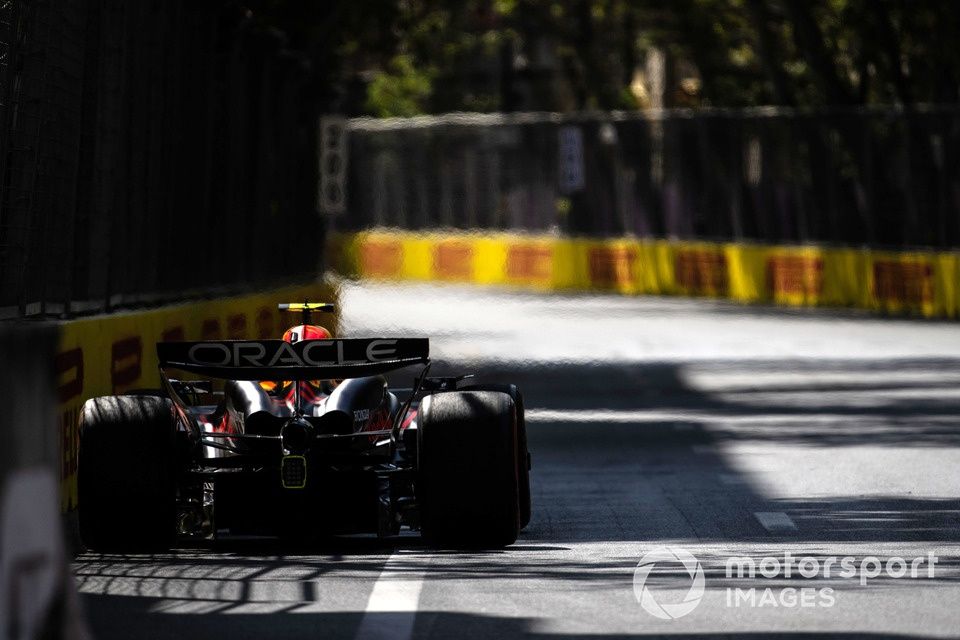
Sergio Perez, Red Bull Racing RB20
Photo by: Simon Galloway / Motorsport Images
Considering last year’s performance and the subtly revised strategy, Marko expresses measured optimism leading up to next weekend: “I am very optimistic about Baku and those high-speed circuits. Singapore is the only race we haven’t won yet, and slower circuits typically pose more challenges for us. However, I believe that anything is attainable at this moment.”
Above all, Red Bull anticipates that the insights gained from Zandvoort and Monza will facilitate the identification of the RB21’s optimal setup window more consistently – regardless of how narrow it may be. If the team can effectively harness the car’s sweet spot, the RB21 might not always underperform as significantly as was feared, even internally.
Whether this translates into greater success on the track still hinges on the track’s characteristics and McLaren’s performance, but it could at least enable Red Bull to remain a relevant contender at times. While Monza-style dominance may not be guaranteed, another noteworthy result is far from impossible on the right track – despite Verstappen’s pessimistic outlook heading into the summer break.
In this article
Be the first to know and subscribe for real-time news email updates on these topics